Africa-Press. In the suburb of Adjei Koto, south of Accra, the body of young musician Frederick Tiko Ofuri was not placed in a traditional coffin. Mourners carried a large coffin carved in the shape of a guitar, painted with a shiny finish and adorned with fuchsia strings, to accompany the young man’s beloved instrument on its final journey.
“We were not bidding farewell to a body, but completing his unfinished melody,” says his sister Emanuela with sadness and resolve during the memorial service, adding: “The guitar was not just a tool for Frederick; it was his soul. Burying him inside it is the only promise that ensures his rightful place among the ancestors.”
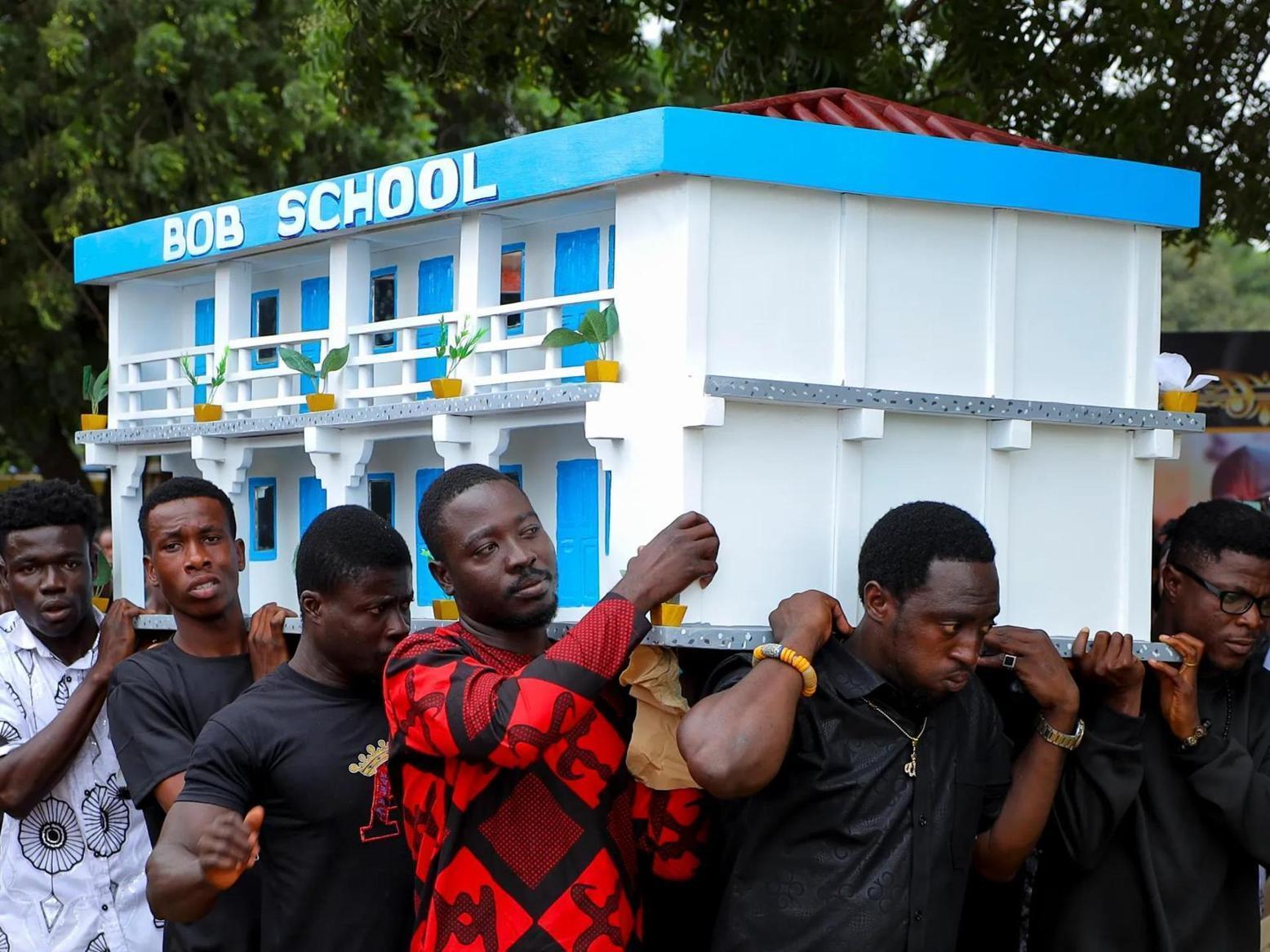
This scene encapsulates a deep-rooted cultural and artistic tradition within the Ga community in Ghana; where death does not signify an end and oblivion, but rather a celebration of a person’s journey, known locally as “Abibiman Adikay” (coffins of proverbs).
Voices of Craftsmanship
These coffins transcend being merely colorful wooden forms; they become an anthropological text that reflects the deceased’s status and passions. The choice of shape goes beyond the actual profession, extending to embodying unfulfilled dreams.
Veteran carpenter Daniel Obli Mensah, who recently designed a giant pencil-shaped coffin for a deceased teacher, explains: “The coffin here is a vessel for spiritual and psychological passage. We might bury someone who never left their village in a coffin shaped like an airplane, granting them in death the flight they were denied in life, or we may choose a peanut to symbolize the hospitality and generosity of the deceased.”
This craft dates back to the 1950s when carpenter Seth Kin Koi made an airplane-shaped coffin for his grandmother, who always dreamed of traveling, shifting the practice from being exclusive to tribal chiefs to a public right accessible to all.
Clash of Beliefs and Institutions
This art raises a sharp ethical and institutional dilemma; the revivalist vision of the Ga community clashes with the dominant church institution, which views these forms (like cigarettes, bottles, and animals) as “worldly” symbols that contradict the dignity of death and Christian rituals.
Many churches impose strict bans on bringing these coffins into worship halls, placing families in an ethical quandary between respecting the religious institution and fulfilling their cultural duty to the deceased.
This rejection drives families to seek hybrid solutions; they may rent a traditional coffin to lay the body during the church service, then secretly transfer the body outside the church walls to the artistic coffin before burial, in a community effort to find a middle ground that preserves their spirituality without erasing their cultural identity.
Economic Dilemma
These rituals highlight another social and ethical paradox between poverty and extravagant spending, as the price of a coffin can reach around $900, a burden for low-income families.
To secure a funeral that honors the ancestors and maintains the family’s pride in the community, many families are forced to take on heavy debts or sell possessions. Here, the cultural pressure transforms the honoring ceremonies into a constant economic burden, prioritizing appeasing symbols over the financial stability of the living.
Wood of the Earth vs. Wood of Eternity
As these works reach global museums like the Metropolitan in New York, a structural shift has occurred in the craft, creating an artistic and ethical distinction in materials based on their destination.
Lawrence Okoi Anang (26), who runs his family workshop and participated in carving a crocodile-shaped coffin for a local priest, comments: “Coffins intended for local burial are deliberately made from lightweight and quickly decomposing woods like ‘wawa’ so they can decay and merge with the soil quickly, in line with the philosophy of returning to the earth. However, pieces directed to global museums are carved from durable mahogany wood and chemically treated to withstand time.”
This distinction reflects how spontaneous spiritual practices, when interacting with globalization, transform from a ritual that embraces the earth into an artistic commodity subject to the logic of eternity and museum display in the West.