
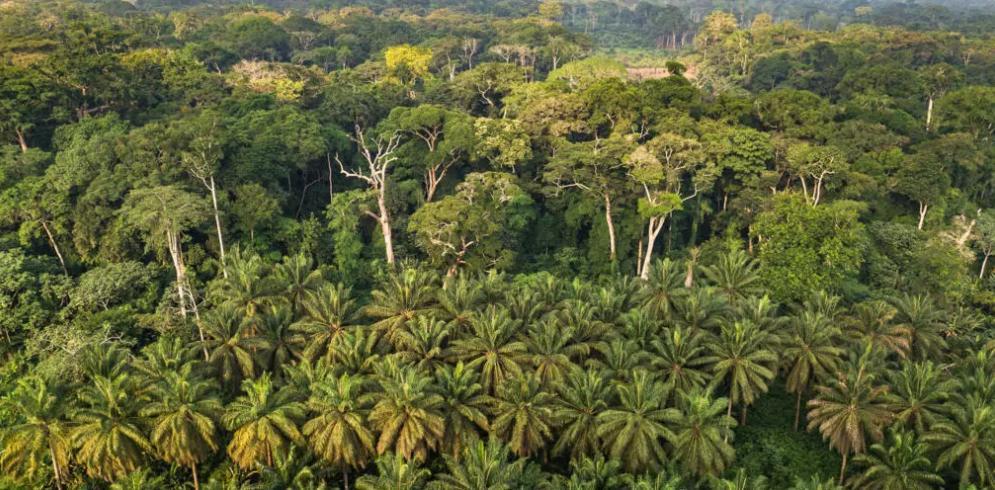
Africa-Press. Kenya’s capital hosted ministers and senior officials from Kenya, Cameroon, Gabon, the Republic of the Congo, Liberia, Tanzania, Zambia, Zimbabwe, and Mozambique to discuss the future of Africa’s forests and to launch a new continental initiative called “Zamba Heritage,” or “Africa’s Forest Heritage.” The initiative aims to mobilize up to $400 million over ten years to strengthen sustainable forest management.
The initiative comes amid a striking paradox often repeated in discussions: while Africa holds about 16% of the world’s forests, its share of global trade in forest products is only around 2% to 4%.
Participants attributed this gap to long-standing obstacles, including weak infrastructure, difficulties moving goods, and the timber sector’s reliance on exporting raw materials without sufficient local processing.
As a result, despite rising demand for timber as urbanization accelerates, many African countries find themselves importing manufactured products made from raw materials extracted from their own lands.
The new initiative seeks to reshape the relationship with forests—not merely as areas to be protected, but as an organized economic sector capable of generating value.
“Zamba Heritage” aims to support sustainable management, rehabilitate forests, boost local manufacturing, develop traceability systems, and improve access to markets. This approach is intended to create new economic opportunities, especially for local communities living near forest areas.
In parallel, participants drew a comparison with the AFR100 initiative launched in 2015, which targeted the restoration of 100 million hectares of degraded land by 2030, using an approach focused primarily on ecological restoration and reforestation.
While the two initiatives are complementary, participants emphasized that “Zamba Heritage” goes beyond the restoration mindset, proposing a strategy to build an integrated forest economy based on higher value added, stronger intra-African trade, and attracting investors—under strict environmental safeguards.
In the context of calls to improve governance and traceability, Cameroon said it is going through a sensitive phase. Jean Daniel Mendomo Biang, director of the country’s forestry administration, said Cameroon stands at a “critical turning point” that requires balancing industrial development with climate commitments, while opening space for investment in industrial plantations and tackling illegal logging.
This highlights the importance of certification and traceability systems, which participants described as essential tools for ensuring transparency and gaining access to the most stringent global markets, especially in Europe and North America.
The key question now is how these ambitions will be translated into concrete action. The meeting is scheduled to conclude on Thursday with the signing of a final declaration, which will indicate whether the continent is on the brink of building a new African forest economy—or whether these promises will remain largely theoretical.