
What You Need to Know
A recent study indicates that key indicators of ocean acidification have entered a danger zone for marine life since 2020. Significant changes have been observed in the upper layer of ocean waters, which could lead to irreversible damage to marine ecosystems and the communities that depend on them, highlighting urgent environmental concerns.
Africa. A recent study reveals that key indicators of ocean acidification have indeed entered a danger zone for marine life since 2020, with particularly sharp changes observed in the upper layer of water, reaching depths of about 200 meters.
The study indicates that this threshold is part of what scientists call the “safe operating space” for Earth, meaning that exceeding it increases the risk of exposing marine ecosystems and the people who depend on them to irreparable damage, or what are termed tipping points in planetary boundaries.
In 2009, scientists proposed the concept of planetary boundaries, a scientific framework that identifies nine critical processes within the Earth system. These include climate change, or long-term shifts in Earth’s temperature and weather patterns, biosphere integrity (the health, functions, and resilience of living systems on Earth), and land system change due to human activities such as agriculture.
Other factors include freshwater availability, biochemical flows, new entities (such as synthetic chemicals or plastic particles), ozone depletion, aerosol loading (air pollution), and ocean acidification.
The analysis found that by 2020, ocean chemistry had already surpassed the safe boundary, with 40% of surface waters and 60% of waters down to 198 meters deep falling outside these limits.
Habitat Destruction
Scientists use the term ocean acidification to refer to the long-term decrease in seawater pH, primarily resulting from increased carbon dioxide absorption. The ocean absorbs a significant portion of human carbon emissions, altering its chemical composition.
These chemical shifts are critically important due to their impact on marine organisms that build hard parts from calcium carbonate, which are foundational to many marine food webs. As ocean acidity increases, suitable habitats for these building organisms shrink and fragment.
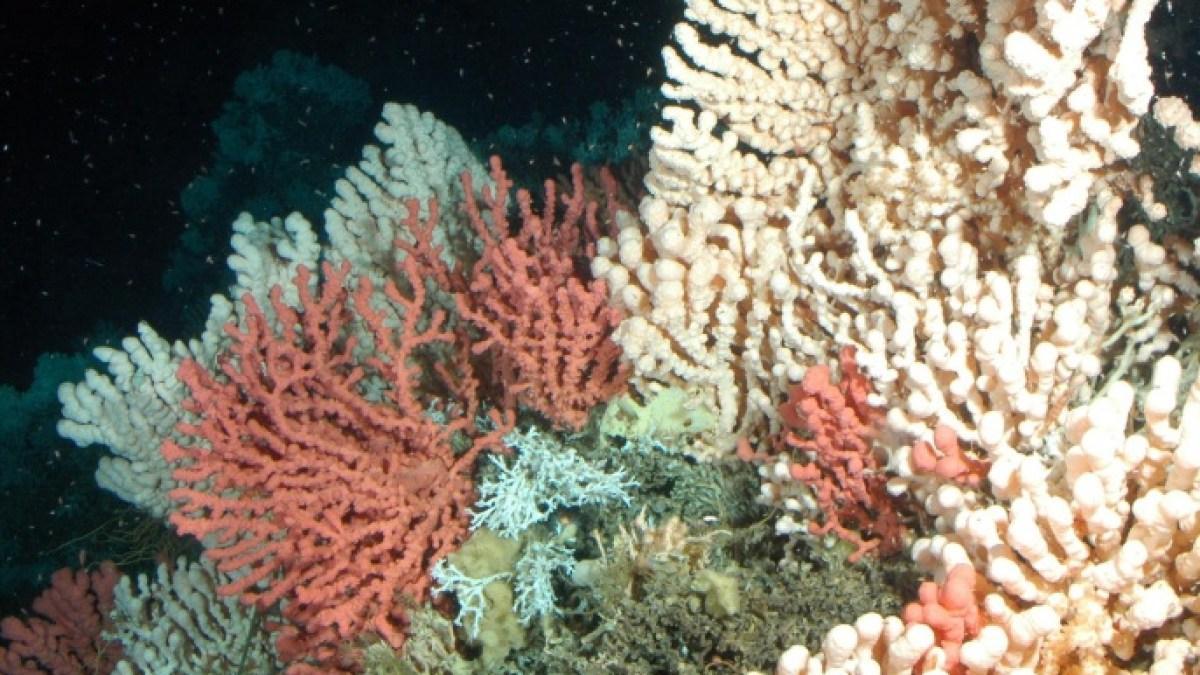
The study found that suitable chemical habitats for coral reefs in warm waters have already decreased by about 43% in tropical and sub-tropical regions, meaning less space for millions of species that rely on coral reefs for habitat, nursery, or fishing grounds.
In polar waters, small mollusks with fragile aragonite shells are particularly vulnerable to corrosive conditions. Their suitable habitat has decreased by up to 61%, raising concerns about the polar food webs that depend on them as prey.
Coastal bivalves, such as oysters and mussels, show a smaller yet concerning contraction, with about 13% of suitable habitats lost in coastal areas experiencing chemical stress.
A broader review of the impacts of ocean acidification indicates that shellfish fisheries and aquaculture are among the most vulnerable industries, with negative implications for coastal livelihoods and food security.
In many regions, species are already coping with higher temperatures, lower oxygen levels, and more acidic waters simultaneously, making survival thresholds much more challenging than any single stressor might suggest.
The study emphasizes that the ocean is quietly moving outside the safe zone, even in places where its surface still appears blue and calm. It indicates that maintaining effective marine ecosystems and the food and climate services they provide will require addressing this chemical threat in the water with the same seriousness as air temperature targets.
In 2009, scientists proposed the concept of planetary boundaries, which outlines nine critical processes within Earth’s system, including climate change and ocean acidification. These boundaries serve as a framework for understanding the safe operating space for humanity and the planet’s ecosystems, emphasizing the need for sustainable practices to protect marine environments.
Ocean acidification refers to the long-term decrease in seawater pH due to increased carbon dioxide absorption. This phenomenon poses significant risks to marine organisms that rely on calcium carbonate for their structures, affecting food webs and biodiversity.