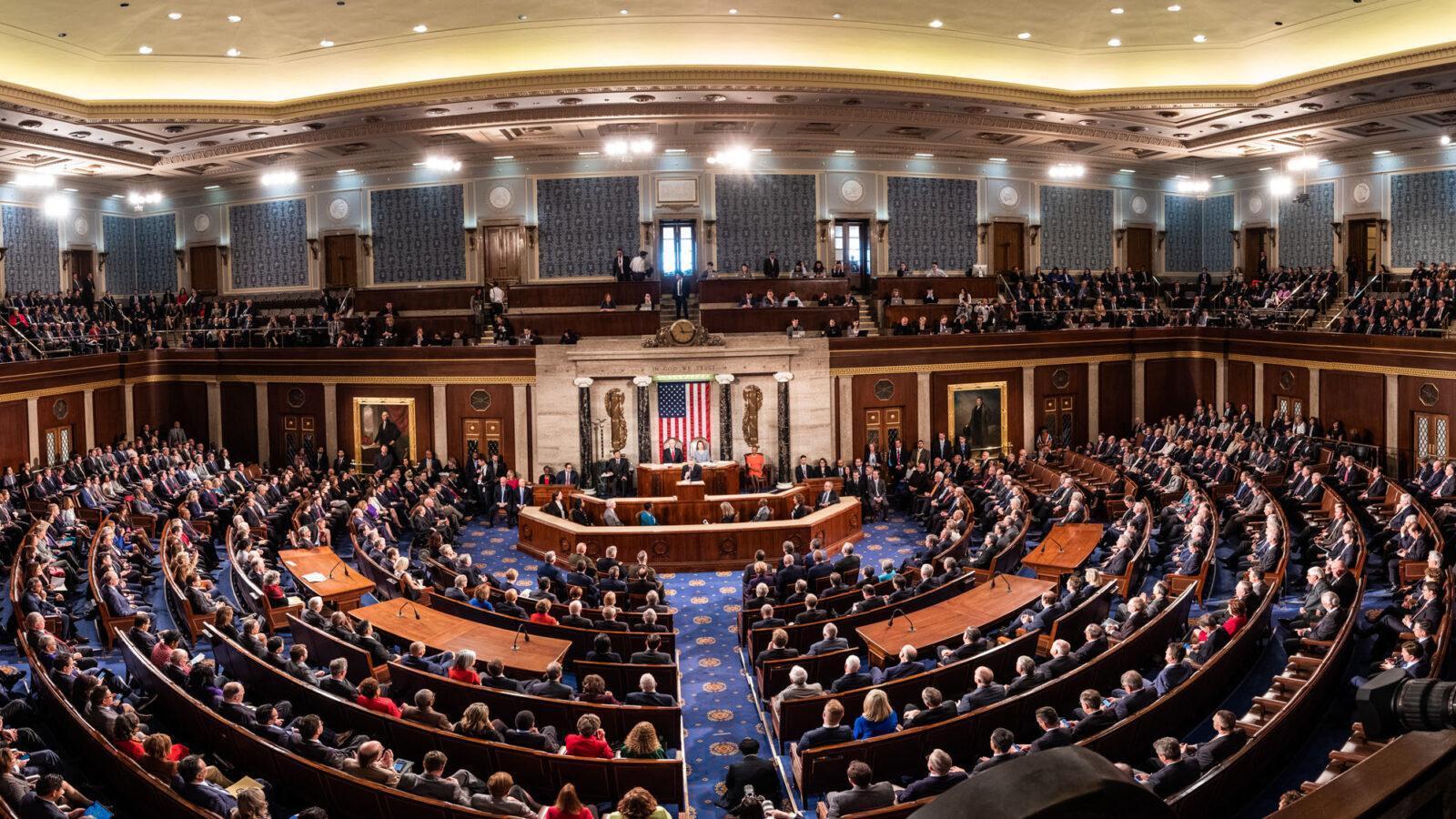
Africa-Press. The U.S. House of Representatives approved a legislative amendment that could lead to the suspension of nearly one billion dollars in American aid to Nigeria, justifying this by “allegations” of the Nigerian government’s failure to protect Christians and other religious minorities.
The amendment, introduced by a Republican representative from Florida, was added to the U.S. State Department appropriations bill for the fiscal year 2027, before the House passed the bill with a majority of 217 votes to 209.
If the amendment becomes law, funding for aid provided to Nigeria will be prohibited.
Nigeria is one of the largest African recipients of American aid, with assistance focused on health, humanitarian relief, and economic development.
Over the past years, Nigeria has been one of the largest beneficiaries of American aid in sub-Saharan Africa, receiving nearly one billion dollars annually through programs that support healthcare, humanitarian assistance, economic development, and security cooperation.
Official U.S. data shows that the amount of aid increased from about 227 million dollars in 2005 to a record high of 1.163 billion dollars in 2022, before dropping to 1.035 billion dollars in 2023, and then to about 929 million dollars in 2024. Preliminary data for 2025 indicates that more than 614 million dollars have been allocated.
A significant portion of this funding has gone to HIV/AIDS treatment programs under the President’s Emergency Plan for AIDS Relief (PEPFAR), as well as malaria control programs, maternal and child health improvements, emergency humanitarian assistance, and governance support programs.
This amendment follows previous attempts within Congress to link continued American support for Nigeria to progress in the area of religious freedom, according to allegations from lawmakers and officials in the U.S. administration.
A previous proposal called for withholding 50% of the funds allocated to Nigeria until the Secretary of State confirmed that the Nigerian government had taken effective steps to prevent religious violence and hold those responsible accountable, according to U.S. allegations.
The House vote coincides with Nigeria’s ongoing struggle with multiple security challenges, including the Boko Haram insurgency and the West Africa Province of ISIS in the northeast, alongside the spread of banditry and communal violence in parts of the Middle Belt region.
However, the amendment still faces several legislative hurdles before it can become law.
It must pass negotiations with the Senate and be included in the final appropriations bill approved by both chambers before being signed by the U.S. President for the aid restrictions to take effect.
Currently, the House vote reflects increasing bipartisan scrutiny in Washington regarding security challenges in Nigeria, raising a new level of uncertainty about the future of one of the largest American aid relationships on the African continent.
Previously, the President hinted at military action in Nigeria to protect Christians, whom he claimed were facing genocide at the hands of terrorists, alleging that Nigerian authorities were accused of failing to protect them.
Nigeria has repeatedly rejected these accusations, stating that its military is making significant efforts to combat terrorism, denying any link between terrorism and religious identity, and noting that terrorists target both Muslims and Christians.