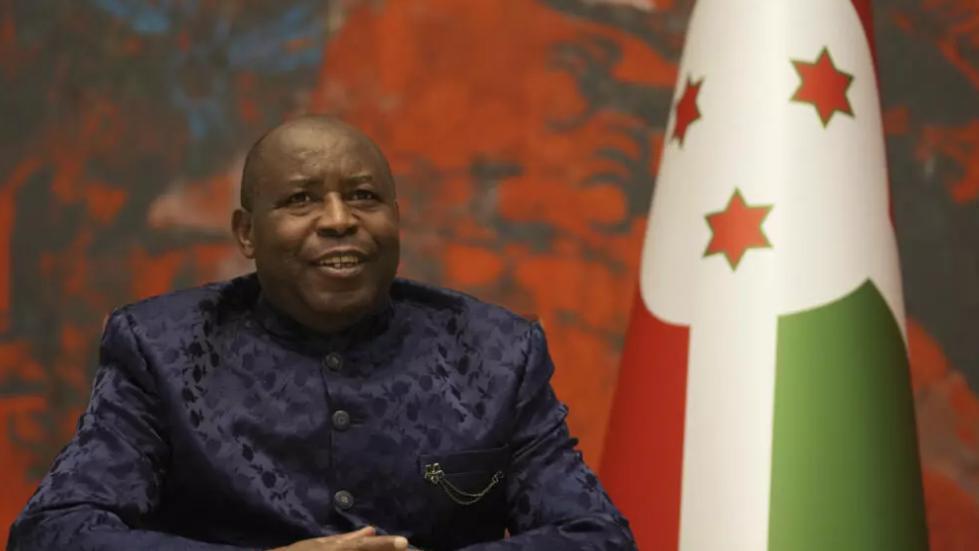
Africa-Press. The President of Burundi, Evariste Ndayishimiye, has arrived in the Congolese capital Kinshasa for a two-day state visit, where he was welcomed by the President of the Democratic Republic of the Congo, Felix Tshisekedi. The visit comes at a time when the region is facing increasing security, health, and political challenges.
The Burundian president and his wife received an official welcome in accordance with the highest protocols for state visits, with a red carpet laid out and the national anthems of both countries played before the official talks began.
Following the welcome ceremony, the two presidents held a closed meeting, the first of the visit’s agenda, with a joint statement to be issued later addressing the outcomes of the discussions and the issues that were raised.
During this visit, Ndayishimiye holds two important roles: he is the President of Burundi and currently serves as the Chairperson of the African Union for 2026, adding a continental dimension to the bilateral nature of the visit. Security issues top the agenda, given the ongoing armed conflicts in eastern Democratic Republic of the Congo.
Burundi is one of Kinshasa’s key political and military allies, as its forces participate in operations against armed groups active in the South Kivu region, including the March 23 Movement and its allied groups.
The two sides are also discussing developments in peace efforts that have faced setbacks in recent weeks, as well as ways to combat the outbreak of Ebola affecting several eastern provinces, including Ituri, North Kivu, and South Kivu.
On the diplomatic front, Kinshasa seeks support from Burundi, as the current chair of the African Union, for the candidacy of Congolese Juliana Lumumba for the position of Secretary-General of the International Organization of La Francophonie.
Lumumba faces competition from several candidates, notably Rwandan Louise Mushikiwabo, who is vying for a third term, alongside Kumba Ba from Mauritania and Dacian Cioloș from Romania.
This visit reflects the importance of relations between Burundi and the Democratic Republic of the Congo, and the increasing role both countries play in addressing the security, political, and health challenges facing the Great Lakes region and the African continent as a whole.