What You Need to Know
Ghanaian police have arrested Evans Eshon, known as Ebo Noah, for alarming the public with false prophecies about the end of the world. His arrest follows concerns over his social media claims and a controversial appearance at a high-profile concert. Authorities are investigating his activities, which have drawn significant attention online.
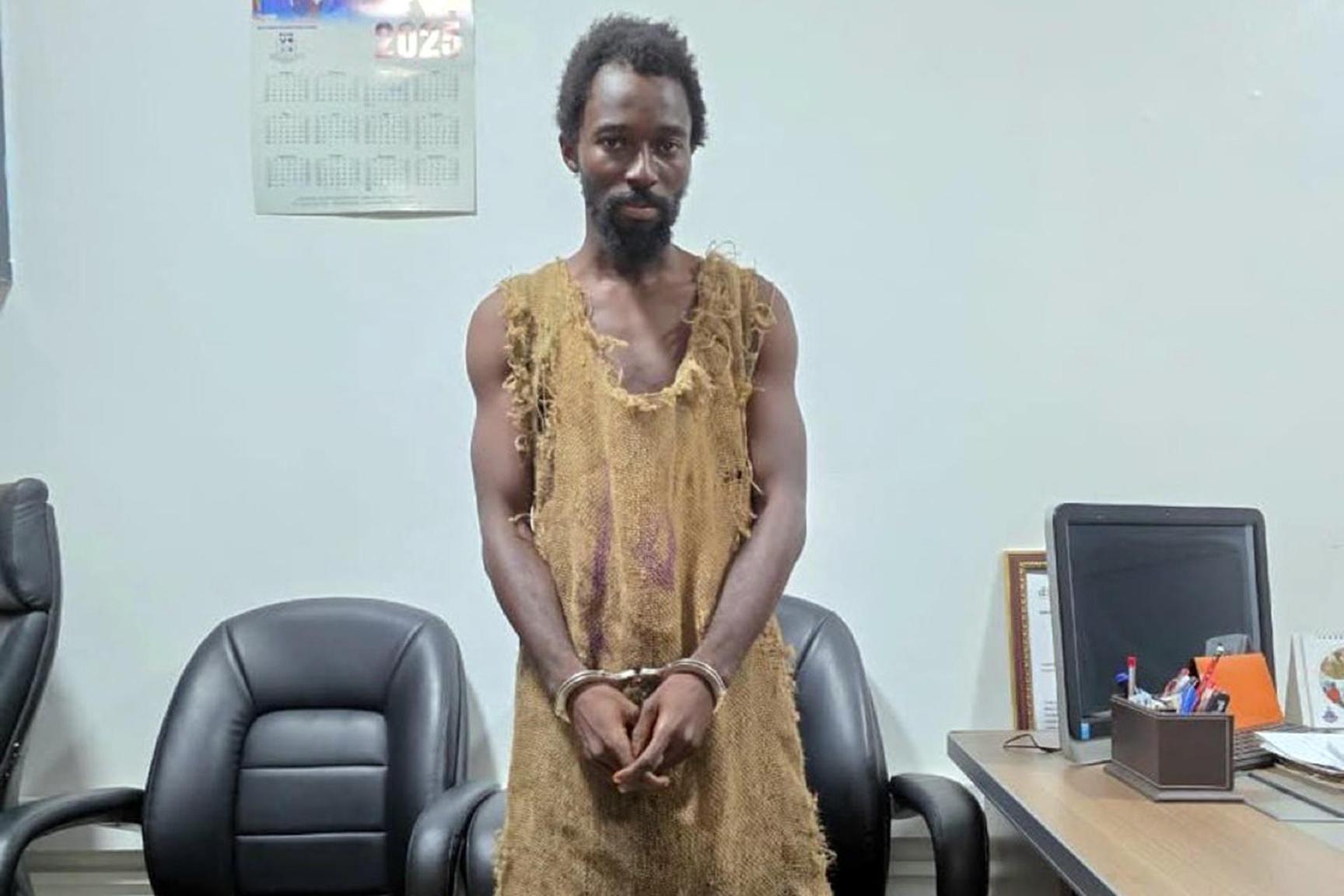
Africa. Ghanaian police have arrested Evans Eshon, known as “Ebo Noah,” after he caused alarm and controversy among the public by spreading false prophecies about the end of the world and making a bizarre appearance at a high-profile concert, according to official sources.
Images of the alleged “prophet” in handcuffs while in police custody circulated widely on social media.
Local media reports cited a statement from the Ghanaian police confirming that Eshon’s arrest was part of efforts to monitor activities that threaten public safety and social order.
The statement indicated that Eshon had recently made alarming statements on his social media pages, which caused concern and panic among citizens.
The police statement, published by local press, noted that the arrest followed “warnings issued by security agencies regarding individuals making public statements and prophecies that could incite fear or disrupt public order.”
The Ghanaian police confirmed that Evans Eshon is currently in custody and under investigation, with no official charges or court dates announced yet.
In recent months, Ebo Noah has become a controversial figure on social media platforms after claiming to be a prophet and asserting that God commanded him to build ships to save people from an imminent end of the world.
He quickly attracted over a million followers on TikTok, promoting a controversial narrative that the earth would face a “great flood” in December 2025, which would drown the entire world and wipe out humanity, except for those who boarded the ships he claimed to be instructed to build, asserting that the flood would last for three to four consecutive years.
His story gained widespread attention in August on social media, especially after he revealed a massive wooden structure he called the “Noah’s Ark,” claiming it was built under divine instruction. This attracted extensive media coverage and drew visitors from across Ghana and beyond.
Reports indicated that many people rushed to reserve spots on the ship, fearing the “predicted flood.” After the year 2025 passed without any of the disasters he prophesied, Ebo Noah released a new video claiming that “God answered his prayers and fasting and postponed the disaster.”
In recent years, the rise of self-proclaimed prophets in Ghana has sparked debates about religious authority and public safety. Many individuals have gained large followings on social media by making sensational claims, often leading to public panic and concern. The government has increasingly scrutinized such figures to maintain social order and protect citizens from potential harm.
Ebo Noah’s case is part of a broader trend where charismatic leaders exploit religious beliefs for personal gain. His alarming predictions about a catastrophic flood have resonated with many, prompting fears and reactions that highlight the intersection of faith, media, and societal responsibility in Ghana.