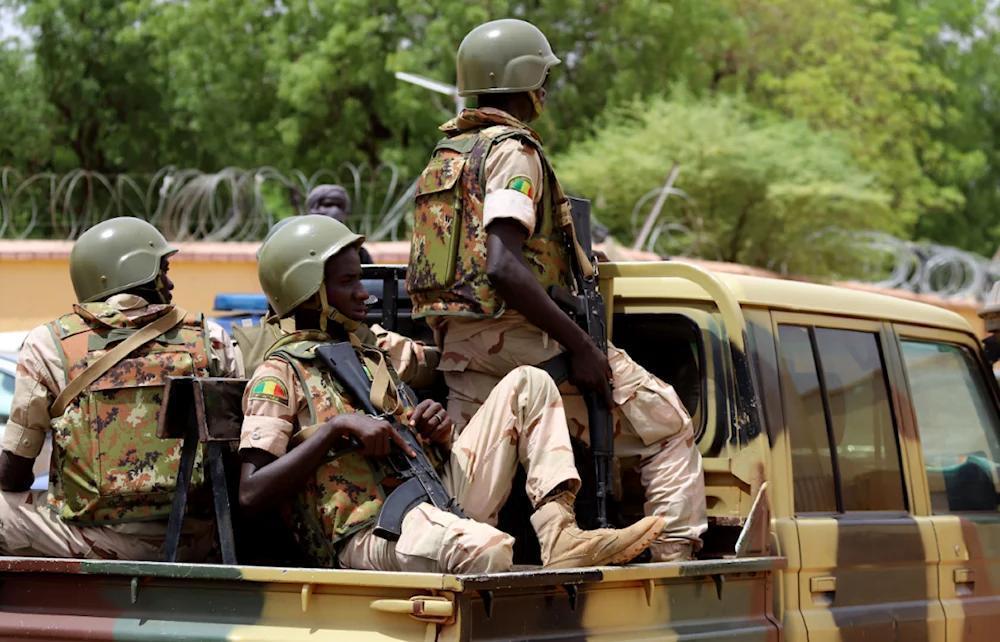
Africa-Press. On Thursday morning, June 18, 2026, the Nigerian capital Niamey experienced a tense security situation following reports of heavy gunfire and explosions around the city’s international airport. Security forces intervened and imposed a strict cordon around the area while search and sweep operations continued.
Local sources reported that residents of the capital awoke around 6 a.m. to the sound of continuous gunfire that lasted for more than two hours, particularly concentrated in the civilian area of Niamey International Airport, where it is believed the attack targeted the main entrance of this vital facility.
According to preliminary information, military and security units quickly moved to the airport’s vicinity, fully cordoning off the area and closing access roads, while imposing strict movement restrictions in the surrounding neighborhoods.
The security measures also extended to areas near sovereign institutions in the capital, including the vicinity of the presidential palace and the prime minister’s office, amid a heavy presence of checkpoints and identity verification operations on various streets of Niamey.
Field reports indicated that a state of maximum alert was declared within the capital, with forces continuing to spread across multiple locations. However, Nigerian authorities have not yet issued any official statement clarifying the nature of the attack, the responsible party, or the extent of human and material losses.
This security development comes about five months after a previous attack targeted Niamey Airport and the adjacent military base in late January 2026, which lasted for hours and was later claimed by a terrorist organization. The Nigerien armed forces, supported by allied forces, managed to contain that attack, which, according to official data, resulted in injuries and material damage to the targeted facilities.
Authorities had indicated following the January attack that security gaps allowed it to occur, while military leadership in the country emphasized that targeting air facilities aims to weaken the military capabilities of the Nigerien army.
Abdel Rahman Tiani, the military governor of Niger, accused the leaders of France, Benin, and Ivory Coast of sponsoring the January attack without providing any evidence, and he vowed to seek revenge.
In recent times, there have been increasing security measures around the airport and sensitive areas of the capital, including partial evacuations of certain neighborhoods under security pretexts.
As tensions continue, security forces are conducting search and sweep operations around the airport and nearby areas, amid a state of concern and anticipation among residents, awaiting an official statement that reveals the details of what occurred and clearly defines the extent of the damages and losses.