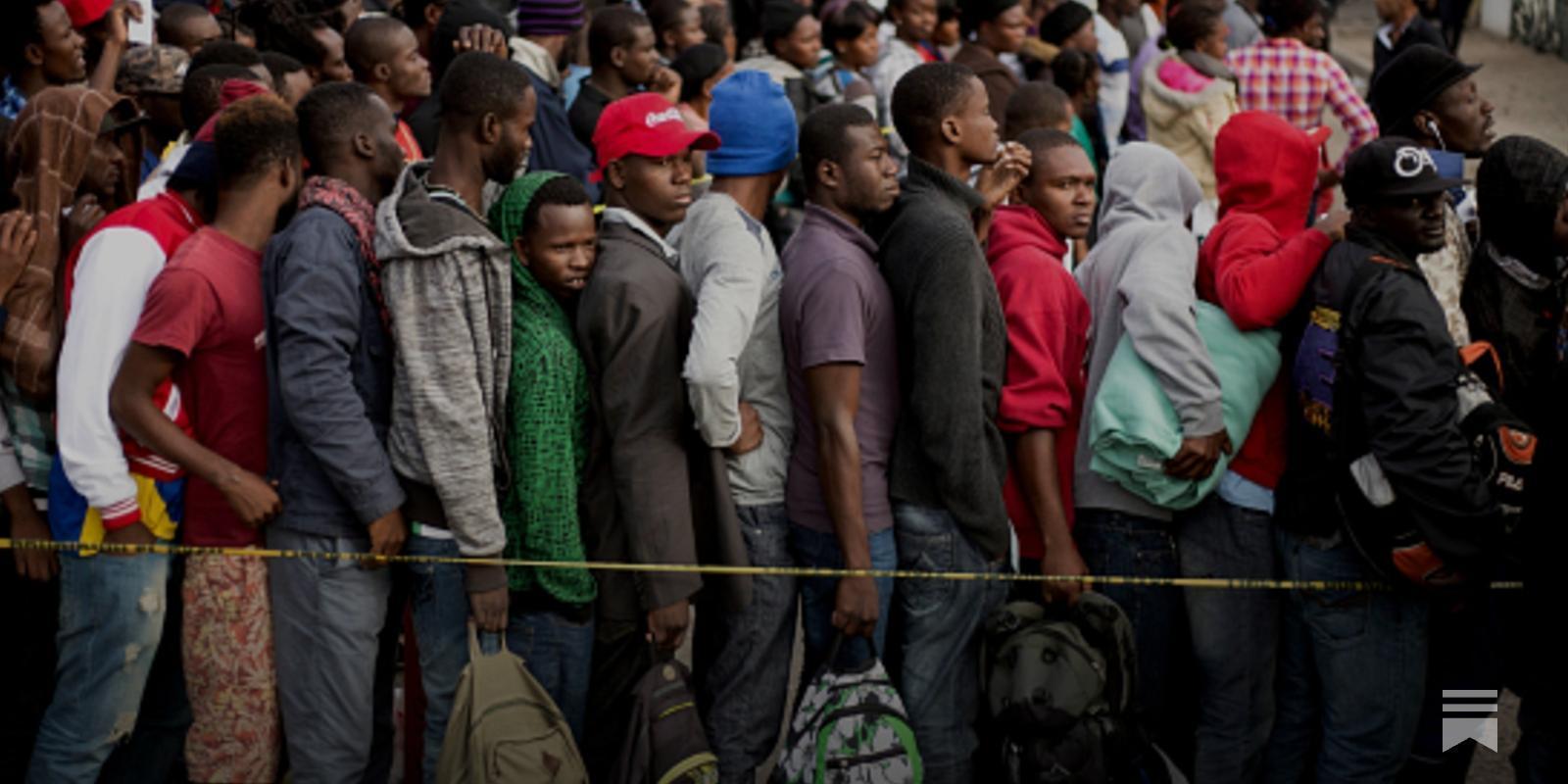
Africa-Press. Lawyers and human rights groups have filed a lawsuit before the highest African human rights body against Equatorial Guinea, accusing the Central African nation of returning deported migrants from the United States to their home countries in violation of their fundamental rights.
The lawsuit calls on the African Commission on Human and Peoples’ Rights (a quasi-judicial body tasked with promoting and protecting human rights and individual freedoms in Africa) to urgently order Equatorial Guinea to immediately halt any further deportations, transfers, or removals of migrants, as well as to improve the conditions of detained deportees. It also demands compensation for individuals who have already been returned to their home countries.
The lawsuit was presented by a coalition of human rights organizations, including the Global Strategic Litigation Council, on behalf of 14 African migrants who were deported from the United States to Equatorial Guinea between November 2025 and April 2026.
The African Commission on Human and Peoples’ Rights has the authority to issue urgent decisions and measures, and it can refer cases to the African Court on Human and Peoples’ Rights, although its decisions are not legally binding.
Nevertheless, human rights advocates say the case represents an important precedent that could increase pressure on African governments that have agreed to accept deportees from the United States.
Beatrice Ngiri, the regional lawyer for the Global Strategic Litigation Council in Africa, stated that this is the first case of its kind in the region concerning individuals who were under legal protection from deportation but were sent back to countries where they may face persecution.
Last March, the African Commission had already agreed to consider a case regarding the prolonged and unlawful detention of deportees to Eswatini under a program for deportation to third countries.
A month later, the Supreme Court in Eswatini ruled to allow four deportees to meet with a lawyer for the first time after they had been barred from direct communication with legal counsel for nine months during their detention in a high-security prison.
According to human rights organizations, the administration of former President Donald Trump deported thousands of individuals to nearly twenty countries where they do not hold citizenship, under a series of agreements often made out of the public eye.
Immigration attorneys say the U.S. administration uses deportation to third countries as a legal means to indirectly return asylum seekers to their home countries, despite some having legal protections against such actions.
Equatorial Guinea is one of at least eight African countries with which the United States has arrangements to accept deported migrants from its territory.
Human rights organizations report that Equatorial Guinean authorities returned six deportees to their home countries in East Africa last week, describing the move as a “systematic forced return,” meaning individuals are indirectly returned to places where they may face persecution or torture.
Lawyers added that these migrants face risks related to political, religious, or ethnic persecution in their home countries. Some have previously been arrested or detained by security or military forces, while others reported experiencing torture or sexual violence.
The lawyers noted that all these individuals had previously received decisions from U.S. immigration judges preventing their return to their home countries under U.S. federal immigration laws.
After two deportees arrived in their home countries, they fled to another country and disappeared for fear of persecution, while the fate of a third individual remains unknown since their deportation last week, according to the lawyers.
Three others were returned again to Equatorial Guinea after their home countries refused to accept them due to a lack of valid travel documents and failure to notify local authorities in advance of their arrival.
According to human rights organizations, these individuals remain stranded in Equatorial Guinea without a clear legal status.
Bella Muslims, director of the Global Strategic Litigation Council, stated that the deportees have effectively become stateless and described their situation as a “never-ending hellish cycle.”
Under a $7.5 million agreement with Washington, Equatorial Guinea has accepted at least 32 deported individuals from the United States, according to human rights advocates.
Gene Shaheen, the senior Democratic member of the Senate Foreign Relations Committee, has described the government of Equatorial Guinea as “one of the most corrupt governments in the world.”
Media reports have revealed the conditions of some deportees who were returned to their home countries, and journalists were allowed to visit a hotel converted into a detention center for asylum seekers deported from the United States by orders from Equatorial Guinea’s President Teodoro Obiang Nguema Mbasogo.
Despite Equatorial Guinea being one of the wealthiest African countries due to its oil resources, U.S. officials and human rights organizations accuse it of widespread corruption and human rights violations.
Human rights organizations and the U.S. State Department also accuse the authorities in Equatorial Guinea of arresting, torturing, and even killing some opponents or critics of the government.
At the same time, American companies are the largest foreign investors in the country, and the Equatorial Guinean armed forces receive U.S. funding allocated for military training programs.