
What You Need to Know
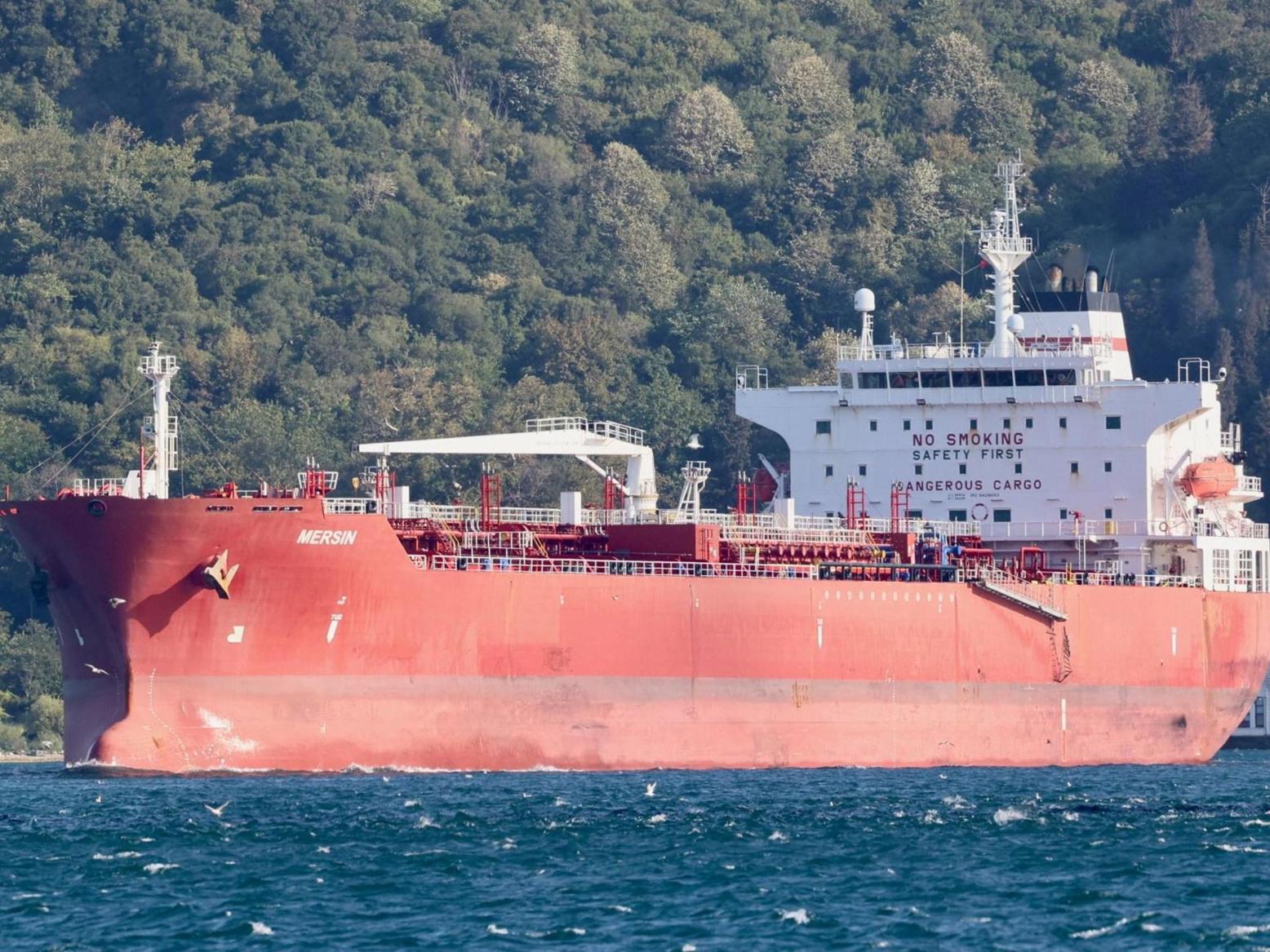
A Russian-linked oil tanker, the Mersin, experienced four external explosions off the coast of Senegal on November 27, prompting a significant response from local authorities due to environmental concerns. The vessel, carrying 39,000 tons of fuel, did not sink, and the crew was rescued without any signs of fuel leakage.
Africa. A Russian-linked oil tanker, the Mersin, experienced a serious incident off the coast of Senegal on the evening of November 27, involving four “external explosions,” as reported by the Turkish company that owns the vessel.
According to a report by a local source in Dakar, the incident occurred approximately 19 kilometers from the capital and triggered a widespread alert among Senegalese authorities due to fears of an environmental disaster, especially since the tanker was carrying 39,000 tons of fuel.
The crew of 22, mostly Turkish nationals, was rescued, and authorities at the Port of Dakar confirmed that the ship “did not sink” and that the situation is stable, with no indications of fuel leakage, as stated by the correspondent.
An initial investigation led by the Senegalese Maritime Safety Agency is seeking to understand the nature of the “external explosions” and does not rule out the possibility of a deliberate attack, including the potential involvement of Ukraine in an “unprecedented” operation outside the Black Sea.
This hypothesis is supported by maritime experts who believe that the tanker, due to its double-hulled structure, could not have suffered an explosion from an internal malfunction. They noted that its prolonged stationary position near the coast for two months may have made it an easy target.
Russian military blogs have bolstered the theory of a Ukrainian attack, suggesting that Kyiv may have used civilian ships to transport naval drones to the Atlantic Ocean, given Turkey’s restrictions on the passage of these drones through the Bosporus and Dardanelles.
If this theory is confirmed, it would represent the first Ukrainian attack of its kind in the Atlantic, outside the usual operational areas of the Black Sea and Sea of Azov, and its success would pose a new threat to the Russian fleet beyond the Black Sea.
The incident comes just days after Ukrainian attacks targeted two oil tankers from the “shadow fleet” of Russia near the Turkish coast, provoking anger from Moscow and condemnation from Turkish President Recep Tayyip Erdoğan regarding the concerning escalation.
Kyiv aims to undermine Russia’s oil infrastructure and transport routes to disrupt its ability to export oil covertly, circumventing Western sanctions to fund its war in Ukraine, according to the correspondent.
Analysts believe the incident may carry a message to both Turkey and Senegal to distance themselves from Russian interests, especially since the ship’s position allowed Ukraine, if responsible for the incident, to plan a low-risk attack on the cargo.
The incident involving the Mersin highlights the ongoing tensions in maritime security, particularly in relation to Russian interests in the region. Historically, the waters off Senegal have been relatively stable, but recent geopolitical shifts have increased scrutiny on vessels linked to Russia, especially amid the ongoing conflict in Ukraine. This incident could signify a new phase in maritime confrontations, particularly as Ukraine seeks to disrupt Russian oil exports.