What You Need to Know
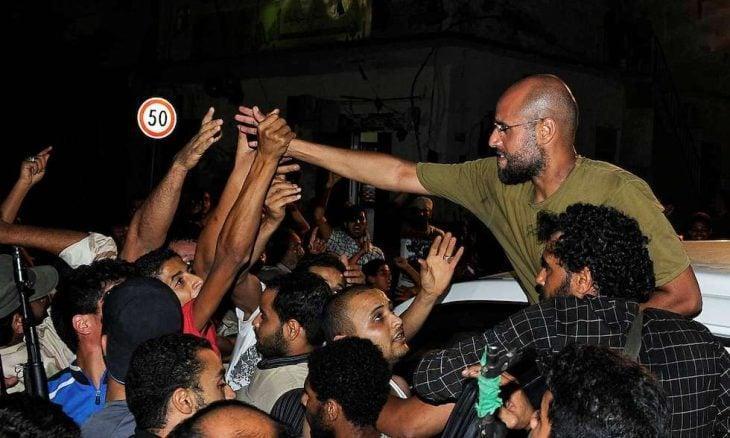
Saif al-Islam Gaddafi, son of former Libyan leader Muammar Gaddafi, has reportedly been killed in Zintan. His death was confirmed by Libya’s official news agency and various associates, who described it as an assassination. The circumstances remain unclear, with conflicting reports about the attackers and the involvement of local military groups.
Africa-Press. Saif al-Islam, the son of former Libyan leader Muammar Gaddafi, has been killed, according to an announcement by Libya’s official news agency.
The agency cited a post by Abdullah Othman, adviser and head of Saif al-Islam Gaddafi’s political team, confirming his death without providing further details.
Othman said that “four armed men stormed Saif al-Islam’s residence near the city of Zintan, disabled the surveillance cameras, and carried out his execution”.
Marcel Ceccaldi, Saif al-Islam’s lawyer, said he was “killed by a four-man commando” at his home in Zintan, western Libya. The French lawyer added that the identity of the attackers remains unknown, noting that he had been informed about security concerns surrounding his client around ten days earlier.
Mohamed Abdel Mottaleb Al-Houni, a former adviser to Saif al-Islam during the “Libya Tomorrow” project, wrote on Facebook: “A treacherous hand has assassinated a man who loved Libya and dreamed of its prosperity and revival: Saif al-Islam Gaddafi”, according to the Libyan outlet Al-Wasat.
Khaled Al-Zaidi, Saif al-Islam’s lawyer before the International Criminal Court, also announced his death in a Facebook post. A source close to Saif al-Islam confirmed the killing, describing it as an “assassination operation”.
Moussa Ibrahim, former spokesman for Muammar Gaddafi’s regime, also mourned Saif al-Islam on Facebook.
The 444 Combat Brigade, affiliated with Libya’s Tripoli-based Government of National Unity, denied any involvement in Saif al-Islam’s death. In a statement posted on Facebook, it said it had no connection to the clashes reported in Zintan or to reports of his killing, stressing that it has no military presence in the city and received no orders to pursue him.
The reports come amid longstanding uncertainty surrounding Saif al-Islam Gaddafi’s movements over recent years, as his name continued to feature in Libya’s political landscape, particularly amid speculation about a possible political and electoral comeback in a country gripped by deep divisions and a protracted transition.
Saif al-Islam Gaddafi remains one of the most prominent figures of Libya’s former regime. In November 2021, Libya’s High National Elections Commission accepted his presidential candidacy before the vote was later suspended and his bid invalidated. In May 2025, the Libyan Supreme Court overturned a death sentence issued against him in 2015. He had spent five years in prison before being released in April 2016, according to his lawyer at the time.
Saif al-Islam Gaddafi has been a significant figure in Libya’s political history, often seen as a potential successor to his father, Muammar Gaddafi. Following the fall of the Gaddafi regime in 2011, he faced various legal challenges, including a death sentence that was later overturned. His political aspirations have persisted despite the tumultuous landscape of Libyan politics, characterized by divisions and ongoing conflict.
In recent years, Saif al-Islam’s name resurfaced in discussions about Libya’s future, particularly regarding elections. His candidacy for the presidency was accepted in late 2021 but was ultimately invalidated.