What You Need to Know
Senegal’s Foreign Minister Sheikh Niang and Armed Forces Minister General Biram Diop visited Guinea-Bissau to address the ongoing political crisis following the suspension of elections and the declaration of a military transitional phase. They met with Guinea-Bissau’s transitional president and emphasized the need for a return to constitutional order and the resumption of electoral processes.
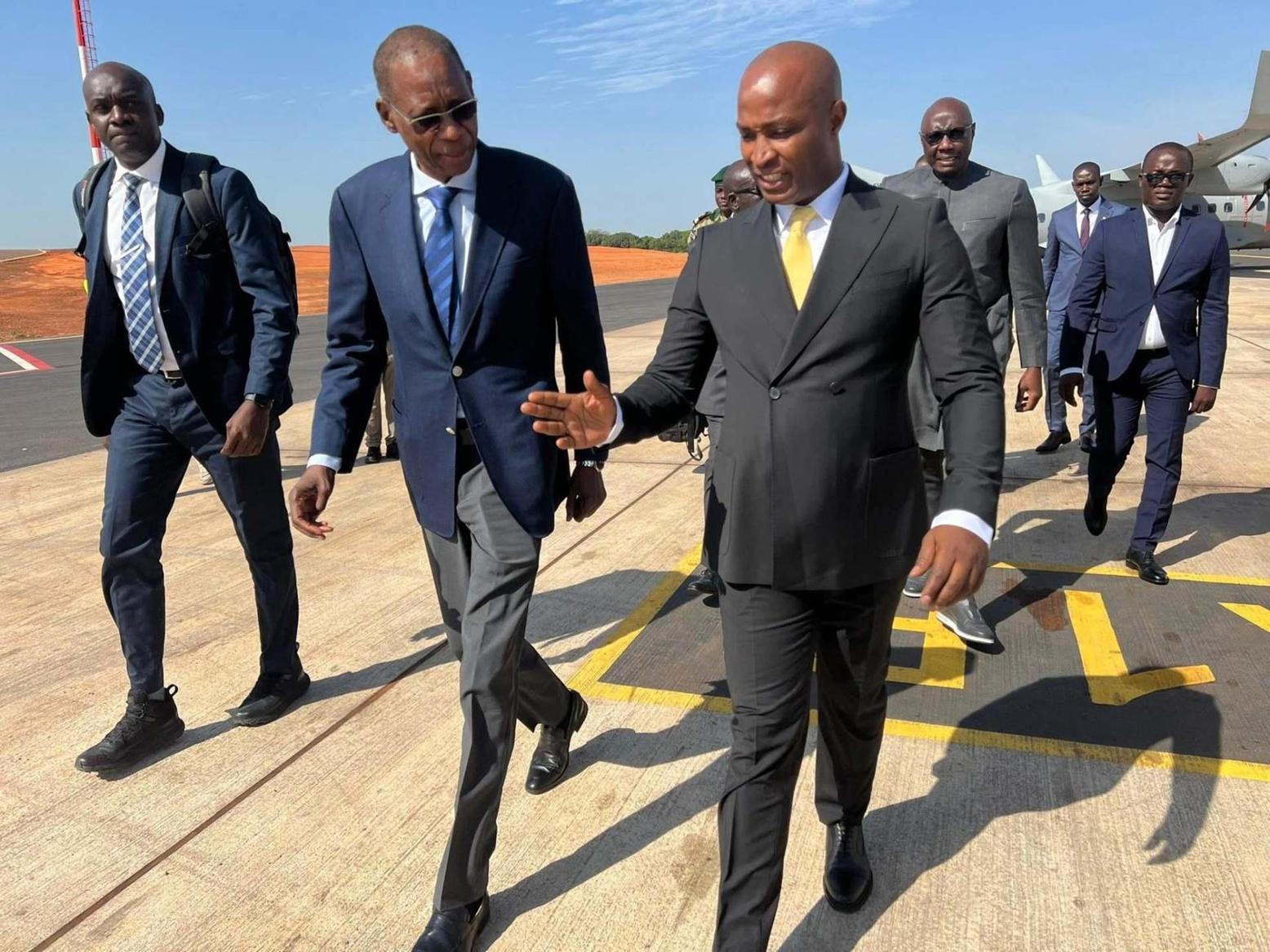
Africa. Senegal’s Foreign Minister Sheikh Niang and Armed Forces Minister General Biram Diop arrived in the capital, Bissau, for an official visit amid a severe political crisis following the suspension of the electoral process and the announcement of a military transitional phase in Guinea-Bissau.
According to Guinea-Bissau’s “Voice of the People” radio, the Senegalese delegation was received by Guinea-Bissau’s Foreign Minister João Bernardo Vieira at Osvaldo Vieira International Airport before the two ministers met with transitional President General Horta N’Tam.
Dakar has adopted a position described as pragmatic and moderate. Minister Sheikh Niang stated in a television interview on December 16 that his country condemns the coup and demands a return to constitutional order and the resumption of the electoral process.
Prime Minister Ousmane Sonko condemned what he termed a “conspiracy,” emphasizing the need to respect constitutional legitimacy.
Despite initial rejection of the idea of a year-long transition, Niang clarified that Senegal accepted this proposal “within a defined framework,” justifying it with diplomatic realism, while the Economic Community of West African States (ECOWAS) adopts a more stringent stance.
The minister also stressed the geographical and security links between southern Senegal and northern Guinea-Bissau, asserting that solutions should originate from the directly involved countries.
Ongoing Political Tensions
The political crisis remains unresolved, as opposition figure Domingos Simões Pereira is imprisoned, while candidate Fernando Dias da Costa, who declared victory in the elections, has sought refuge in the Nigerian embassy in Bissau.
Former President Umaro Sissoco Embaló was released after a brief detention and was transferred to Senegal before moving to the Republic of Congo.
ECOWAS has rejected the transition timeline proposed by the military, affirming that the November 23 elections were “free, transparent, and peaceful” according to its monitoring mission and other international partners.
The organization has called for the immediate release of political detainees, the formation of a short-term inclusive transitional government, and the protection of national institutions.
It also announced the dispatch of a high-level mission and a committee of chiefs of staff, warning of sanctions against any party obstructing the return to constitutional order.
Guinea-Bissau has faced repeated political instability since its independence in 1973, characterized by coups and transitional governments. The recent political crisis escalated after the suspension of elections, leading to international concern and intervention from regional bodies like ECOWAS, which has historically played a role in mediating political disputes in West Africa.
Senegal, sharing geographical and security ties with Guinea-Bissau, has taken a pragmatic approach to the crisis, advocating for a diplomatic resolution while balancing its national interests.