What You Need to Know
The leader of South Sudan’s armed forces has given his soldiers a week to eliminate a rebellion in the east that threatens the capital, Juba. Recent clashes have raised fears of a renewed civil war, as the opposition has made significant territorial gains. The situation remains tense as international calls for peace grow.
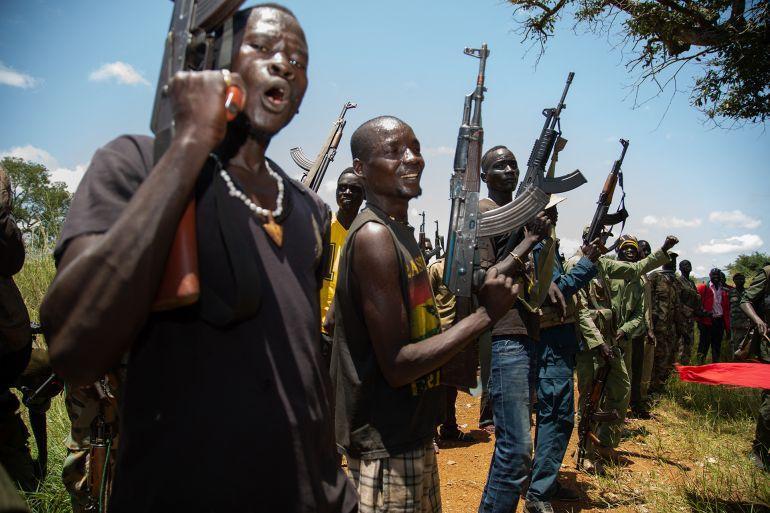
Africa-Press. The leader of the armed forces in South Sudan has given his soldiers seven days to “crush the rebellion” in the east, which poses a potential threat to the capital, Juba. A local journalist reported that the Sudan People’s Liberation Army – In Opposition recently launched attacks and seized several areas in Jonglei State. These recent clashes have threatened the city of Bor, the capital of Jonglei, which is a two-hour drive from Juba.
Currently, the leader of the Sudan People’s Liberation Army – In Opposition, the First Vice President Riek Machar, is on trial for charges of murder, treason, and crimes against humanity, which he denies. Concerns are growing that these clashes could ignite a full-scale civil war in the country.
The conflict in South Sudan, the world’s newest nation, erupted in 2013, two years after independence, when President Salva Kiir accused Machar of conspiring to overthrow him.
The 2018 peace agreement ended the civil war that claimed nearly 400,000 lives, but it has not been fully implemented, and relations between Kiir and Machar have deteriorated amid ethnic tensions and sporadic violence.
Reinforcements from the South Sudanese army have been deployed to Bor, which was the first area captured by opposition forces during the conflict from 2013 to 2018. The city is considered a strategic stop on the road to the capital.
General Paul Nang Majok, the Chief of Defense Staff, told his soldiers: “We have brought you here for a specific mission.” He added: “I give you only seven days to complete the mission – crush the rebellion in those areas and reclaim them.”
The South Sudanese army is receiving support from Ugandan soldiers, though their exact number is unknown. One report suggested that there are 4,000 troops, but this figure has not been confirmed.
The Sudanese Broadcasting Corporation (SSBC) reported that the soldiers are now preparing to advance towards areas controlled by the Sudan People’s Liberation Army – In Opposition.
Analysts believe that the threats from the Sudan People’s Liberation Army – In Opposition to advance towards Juba aim to pressure the government to release Machar.
Earlier this week, Kiir dismissed Machar’s wife, Angelina Teny, from her position as Minister of Interior in the national unity government, appointing someone from his party instead. This move has raised criticism and fears that it could escalate the conflict.
The United Nations peacekeeping mission in South Sudan (UNMISS) has called for an immediate cessation of hostilities in Jonglei and other areas experiencing violence in the country.
The Acting Head of the UNMISS, Kiki Gbeho, urged South Sudan’s leaders to commit to an “immediate cessation of hostilities, de-escalate tensions, and promote reconciliation and peace through inclusive dialogue within the framework of the peace agreement.”
The United Nations Human Rights Commission in South Sudan has expressed grave concern over the deteriorating political and security situation, echoing a similar message from the UNMISS.
The Chairperson of the Commission, Yasmin Sooka, expressed deep concern over reports of repeated airstrikes on parts of Jonglei, resulting in civilian casualties, destruction of homes, markets, and medical facilities, and causing mass displacement.
Earlier this month, the Acting Chief of Staff of the Sudan People’s Liberation Army – In Opposition, General Peter Thok Chuol Lawak, issued a warning to the residents of Juba, stating that his forces would launch attacks near the city.
General Thok wrote: “This warning precedes imminent military confrontations in Juba. We strongly advise all citizens of South Sudan in the areas on the outskirts of Juba to either evacuate or stay in their homes.”
The governor of the state that includes Juba, Emmanuel Adil Anthony, urged residents to ignore the threats issued by the Sudan People’s Liberation Army – In Opposition.
South Sudan gained independence in 2011 but has faced ongoing conflict since 2013, primarily due to power struggles between President Salva Kiir and former Vice President Riek Machar. The civil war has resulted in significant loss of life and displacement, with peace agreements often failing to hold. The 2018 peace deal aimed to end the violence but has not fully resolved the underlying tensions, leading to sporadic violence and political instability.
The recent escalation in violence highlights the fragile state of peace in South Sudan. The opposition forces have threatened to advance towards Juba, raising concerns about the potential for a renewed civil conflict.