Africa-Press. Sudan’s Minister of Foreign Affairs, Mohiuddin Salem, confirmed that his country has become “closer to peace” as the armed forces make progress on the ground, emphasizing the government’s refusal to enter into negotiations with the Rapid Support Forces.
No Negotiation with the Rapid Support Forces
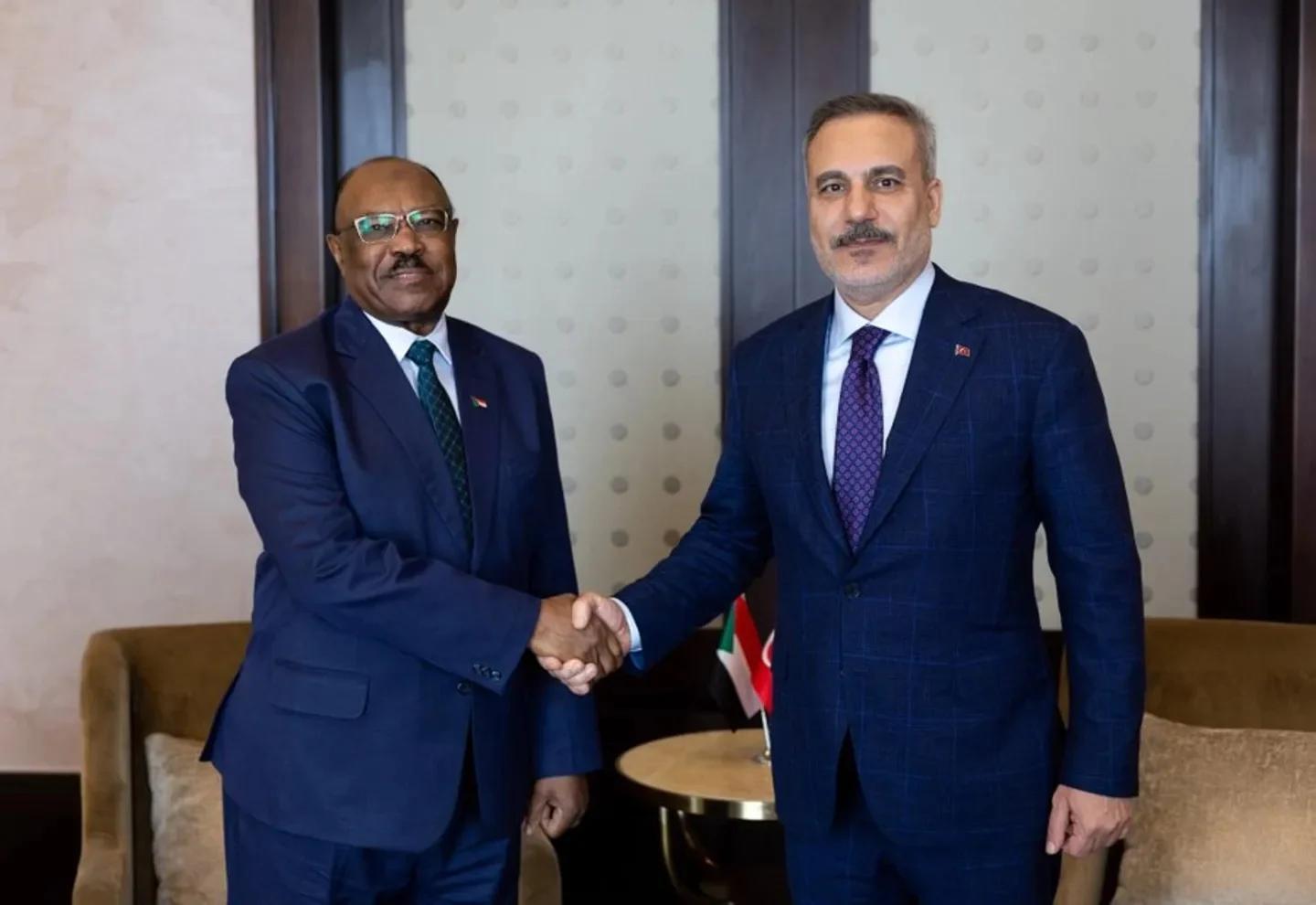
His statements came after meeting with his Turkish counterpart, Hakan Fidan, during the laying of the foundation stone for the new Sudanese embassy building in the Turkish capital, Ankara, during an official visit to Turkey on July 28 and 29, 2026.
Salem noted that the Rapid Support Forces have been classified as a “terrorist militia,” and that most of those currently fighting alongside them are “mercenaries,” thus the Sudanese government sees no room for negotiation with them.
He added, “It is not logical to negotiate with a mercenary fighting on my land,” affirming that Khartoum’s position is based on not entering into any negotiations with the party that is waging war against the army.
Sudanese Initiative to End the War
The Sudanese minister indicated that his government presented a clear and explicit initiative to the United Nations Security Council on December 22, 2025, outlining its vision for dealing with the Rapid Support Forces and ending the war.
He explained that the initiative reflects the Sudanese government’s approach to the peace process, at a time when Khartoum had previously announced its readiness to engage with serious initiatives aimed at stopping the war, within a roadmap that includes disarming the Rapid Support Forces, implementing security arrangements, and launching a Sudanese-led political process.
Salem stated that he exchanged views with his Turkish counterpart regarding the comprehensive approach adopted by the Sudanese government to achieve peace, without announcing the details of the role Ankara might play in this process.
Turkey a Partner in Reconstruction
The Sudanese Foreign Minister described Turkey as a “strategic ally,” asserting that restoring stability will open the door for broader cooperation between the two countries in rebuilding what the war has destroyed.
He stated that “the army’s progress on the ground brings Sudan closer to peace, which will pave the way for a strategic partnership that benefits from Turkish expertise and technologies in various sectors.”
He added that Turkish companies will be an essential part of the rehabilitation process in Sudan, expecting Turkey to be among the first countries involved in reconstruction projects in the coming years.
Khartoum has expressed interest in attracting Turkish investments in the energy, infrastructure, agriculture, and industry sectors, alongside efforts to reactivate institutions and facilities affected by the war.
Growing Relations between Khartoum and Ankara
Salem’s visit to Turkey is part of increasing political communications between the two countries, which included the Turkish president, Recep Tayyip Erdogan, receiving the head of the Sudanese Transitional Sovereignty Council, Abdel Fattah al-Burhan, in Ankara in early June 2026.
Ankara reaffirms its support for Sudan’s sovereignty, territorial integrity, and national institutions, while Khartoum relies on the participation of Turkish companies in reconstruction, transport, energy, and essential services projects after stability is restored.
The laying of the foundation stone for the new Sudanese embassy building in Ankara signifies the two countries’ intention to enhance their diplomatic presence and expand bilateral cooperation in the upcoming phase.