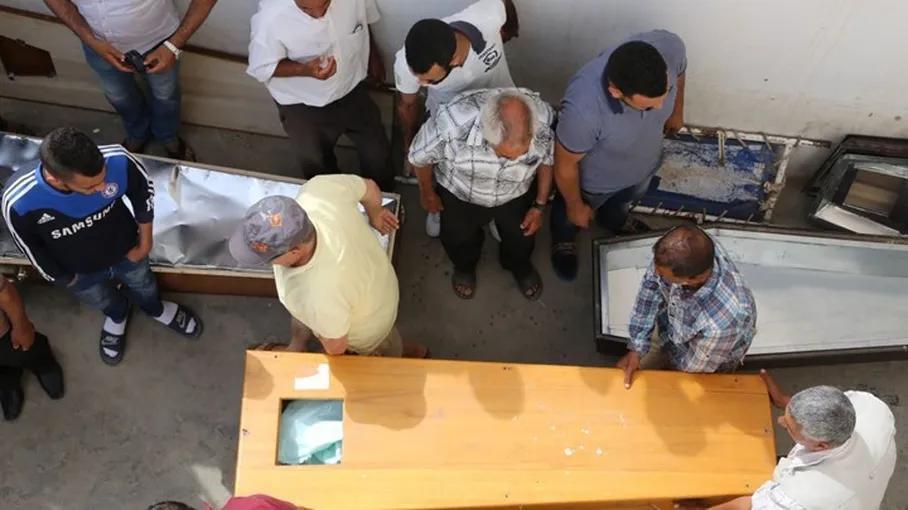
Africa-Press. The hospital in Ben Guerdane, southeastern Tunisia, received at least 19 bodies of migrants recovered from the sea over the past two days, coinciding with ongoing search operations for missing persons after a boat carrying 15 Tunisians sank off the coast of the area at the end of the weekend.
The head of the Tunisian Observatory for Human Rights, Mustafa Abdel Kabir, stated that authorities are conducting genetic analyses to identify the bodies and determine if they all belong to the passengers of the recently sunken boat. The National Guard reported on Sunday evening that 12 bodies had been recovered from the boat, including three on Saturday and nine on Sunday, while the search for missing persons continues.
The boat had set sail from the shores of Ben Guerdane on August 19, according to local sources, carrying 15 people, including 14 from Ben Guerdane and one from Zarzis. Authorities reported that one participant in the migration attempt survived, while search operations at sea continued with the participation of units from the maritime guard, civil protection, and the navy, in addition to helicopters from the guard and army.
Possibility of Other Boats
The discovery of 19 bodies raised questions about the possibility that some of the bodies are linked to other drowning incidents in the maritime area between southeastern Tunisia and western Libya.
Abdel Kabir noted that identifying the bodies and their source requires the results of genetic tests and security investigations, pointing out that sea currents can carry bodies away from drowning sites, thus finding them off Ben Guerdane or Zarzis does not necessarily prove their connection to the boat that sank on August 22.
One of the fishermen involved in the search operations mentioned that among the recovered bodies were individuals believed to be from sub-Saharan African countries, which strengthens the hypothesis that some bodies may be linked to another boat, although this has not been officially confirmed yet.
Authorities are concurrently conducting procedures to identify the victims through DNA samples provided by the families of the missing, in preparation for completing legal procedures and returning the bodies to their families.
Protests in Ben Guerdane
The drowning incident coincided with nighttime protests in Ben Guerdane, where young people took to the streets demanding improvements in living conditions and economic development in the area.
Protesters set fire to tires and blocked roads, while police used tear gas to disperse them, according to media reports and circulating testimonies. Protesters linked the drowning incident to the economic and social conditions in the area, arguing that limited job opportunities drive some youth to attempt to migrate by sea to Europe.
The protests come in a border area that relies on sectors of its economy related to trade and activities linked to the border with Libya, while demands for development and job opportunities have been present in local protests over the past years.
Tightening Control on Migration Routes
Tunisia and Libya are among the main departure points on the central Mediterranean route, which witnesses attempts to cross towards Italy and other European countries. In recent years, Tunisia has tightened control over its coasts and maritime borders, alongside European cooperation that included funding and equipment to support border monitoring and combat irregular migration.
The number of departures from Tunisian shores has decreased recently, but the risks associated with maritime crossing remain, especially with the use of small and unfit boats for long distances, which brings with it the dangers of drowning and getting lost at sea.
The Ben Guerdane incident also occurs amid ongoing debate regarding Tunisian-European cooperation on migration issues. Tunisia and the European Union signed a memorandum of understanding in July 2023 that includes economic support and cooperation on migration and border protection, with part of the funding allocated to enhance Tunisia’s capabilities to combat irregular migration.
In contrast, human rights organizations, including Human Rights Watch and Amnesty International, have criticized European and Tunisian policies regarding migration, warning of their implications for the rights of migrants and asylum seekers. These organizations state that the focus on preventing access to Europe should be accompanied by guarantees to protect the rights of migrants and address the causes of migration.
The final toll of the Ben Guerdane incident remains undetermined, pending the completion of search operations, genetic tests, and the identification of the bodies recovered from the sea.