Africa-Press. The United States is close to reaching an agreement with Mali’s government that would allow American drones and fighter jets to resume flights over the country to gather intelligence on armed groups linked to Al-Qaeda, according to U.S. sources cited by Reuters.
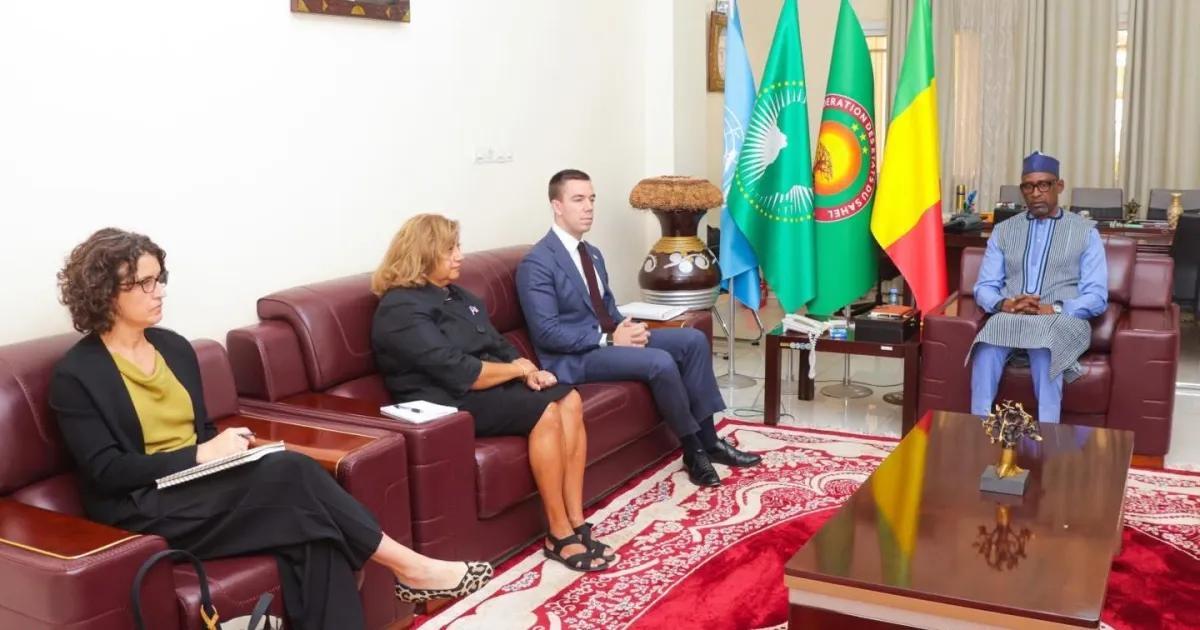
The move comes after Washington lifted sanctions last month that targeted Mali’s defense minister and several senior officials, previously accused of cooperating with Russian mercenaries—one of Bamako’s key demands. The Malian government described the lifting of sanctions as “a step toward improving relations between the two countries while respecting national sovereignty.”
Washington is seeking to strengthen its intelligence capabilities in the Sahel region, where the influence of Jama’at Nusrat al-Islam wal-Muslimin (JNIM), an Al-Qaeda-linked group, has been growing. Part of the U.S. effort is also linked to attempts to locate an American pilot kidnapped in Niger last year and believed to be held in Mali by the same group.
Fluctuating relations
Relations between Mali and the United States have been strained in recent years, particularly after military coups in Sahel countries and their growing alignment with Russia for security support. In December, Mali, Niger, and Burkina Faso imposed travel restrictions on Americans in response to their inclusion on a U.S. travel restriction list.
At the same time, Mali faces mounting pressure as armed groups expand their influence despite a decade of French and Western intervention, followed by the involvement of Russian mercenaries in the conflict. Recent militant attacks have targeted major roads and gold mining sites, triggering a fuel shortage in the capital, Bamako.
Reuters reported that former U.S. officials believe allowing surveillance flights to resume would also benefit Mali by providing intelligence capabilities it currently lacks. The United States previously shared intelligence that helped target militant leaders last year. It remains unclear where U.S. aircraft would be based if Bamako grants permission, though countries such as Côte d’Ivoire and Ghana have been mentioned as possible options.