
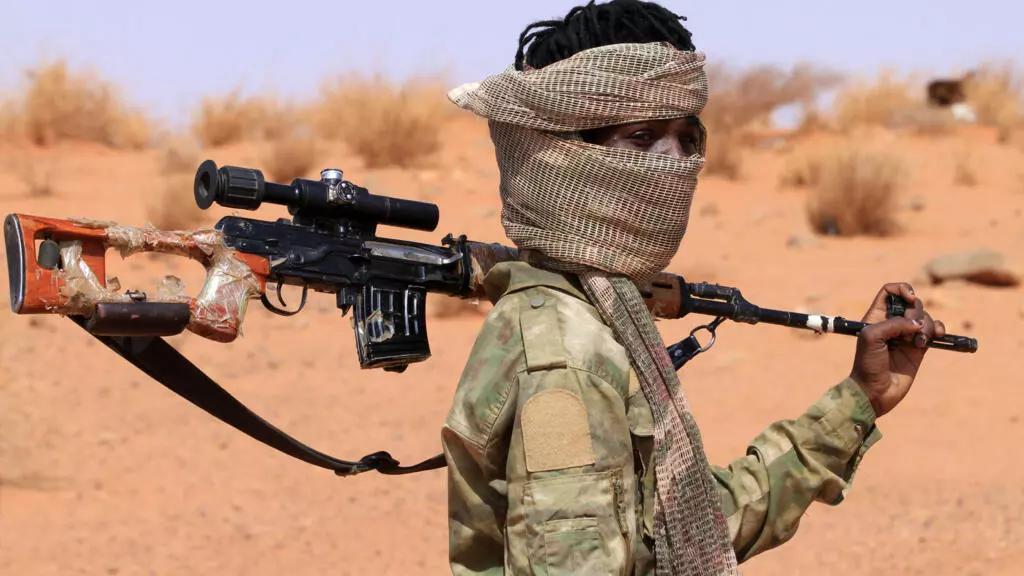
Africa-Press. Washington has proposed to the United Nations to expand the arms embargo imposed on the Darfur region of Sudan to cover the entire country, noting that the conflict in Sudan could escalate regionally. The embargo on arms supplies to Darfur, in place for over two decades, is set to expire on September 12, 2026, unless a new resolution is reached.
Expanding the arms embargo to include all of Sudan requires a vote in the Security Council, but Russia, which holds veto power in the Security Council, warned on Monday against imposing new decisions that could affect the Sudanese army.
During the regular Security Council meeting on the situation in Sudan, the U.S. presidential advisor for African and Arab affairs, Masad Boulos, stated that the council must “take steps to curb the escalation of conflict, especially as external support also threatens to draw more regional and neighboring parties into the conflict in Sudan.” He added, according to a local source, “For this reason, the United States has proposed a strong measure to expand the arms embargo to cover all of Sudan.” The proposal also includes adding drones to the arms embargo and increasing the number of monitoring experts overseeing the existing embargo.
Boulos added that the proposal aims to enhance coordination among these monitors and other expert teams to monitor violations of the arms embargo, asset freezes, and travel bans previously imposed on conflict parties.
The United Nations warns of the consequences of the war in Sudan
For her part, the UN Assistant Secretary-General for Political Affairs, Rosemary DiCarlo, warned of the “catastrophic consequences” of the conflict in Sudan on the Sudanese people. DiCarlo stated, “The repercussions of this conflict will be long-lasting and should shock us all. Thirteen million people have fled their homes, including about 8.7 million internally displaced across Sudan,” adding that the UN High Commissioner for Human Rights documented around 1,400 civilian deaths from January to June of this year, including about 1,100 people killed by drone strikes.
She estimated that the death toll could reach hundreds of thousands, stating, “Given the ongoing fighting and difficulties in accessing affected areas, it is impossible to obtain reliable figures, but it is likely that the number has reached hundreds of thousands.” She spoke of the recurrence of “brutal mass killings and atrocities, the abduction of women and girls, and mass rapes as recurring patterns.”
She noted that the UN High Commissioner for Human Rights has documented 838 victims of sexual violence since the war began, most of whom are women and girls. She mentioned the targeting of “drones, which both sides of the conflict have repeatedly launched at markets, schools, fuel stations, and water infrastructure.” She stated that the fighting in Sudan has recently been characterized by “intensive use of drones and limited ground confrontations in areas less affected by the rainy season. The fighting has concentrated in North Kordofan, West Darfur, North Darfur, and Blue Nile states.”
The UN official pointed to “renewed fighting near Sudan’s borders, increasing the risk of the conflict spreading to neighboring countries on a larger scale.” She also expressed concern over the increasing complexity of the conflict, stating, “The advanced weapons being used indicate continued external support for both sides.”
The official spoke about the progress of the personal envoy of the UN Secretary-General to Sudan, Pekka Haavisto, under extremely difficult and complex conditions. She added that the envoy “encouraged both sides to undertake unilateral releases of detainees, alongside prisoner exchanges, with special attention to the most vulnerable groups, such as children and women,” noting that the envoy will travel to Sudan soon to continue these talks and push them forward. She mentioned ongoing consultations with international actors in the region and beyond, including through his recent visits to Kenya, Chad, Uganda, and Turkey.
She emphasized the “urgent need for more international attention and action to push both sides to change their calculations. This includes sending strong and unified messages from this council urging both sides to return to serious and meaningful negotiations without further delay.”