Africa-Press. The relationship between Madagascar and France shifted dramatically within just 24 hours, moving from peak tension to an immediate attempt at containment, following the detention of a former French military officer in Antananarivo on charges of involvement in a “conspiracy to destabilize.” Between Tuesday evening and Wednesday evening, political decisions and diplomatic communications unfolded, revealing the fragility of the relationship between the former colonial power and the new transitional authority, six months after the October 2025 coup.
The deputy public prosecutor announced in a video statement on Tuesday evening that former French military officer Guy Barret was placed in pre-trial detention at the high-security Tsiafahy prison on charges including “spreading false information aimed at disrupting public order, and conspiring to sabotage infrastructure,” particularly electricity lines and thermal stations belonging to the public company Jirama.
According to a local source, the plan involved inciting security forces to revolt and causing widespread power outages, with the execution date set for April 18, according to the same source. Authorities based their investigation on a WhatsApp group named “Revolution of Brave Citizens,” as reported by the agency. The Malagasy army officer Colonel Patrick Rakotomanjaka was also referred for investigation as a partner in the case.
On the same day, the Malagasy foreign minister summoned the French ambassador to inform him that one of the embassy staff – according to a local newspaper – a former colonel in the French army, had become “persona non grata.” Paris quickly responded in kind, summoning the chargé d’affaires of the Malagasy embassy to protest “strongly,” and confirmed through a spokesperson that it “categorically rejects any accusation of destabilizing the transitional government in Madagascar,” describing the allegations as “baseless and incomprehensible.”
Containment Phase
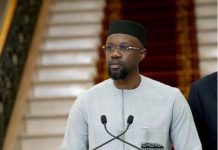
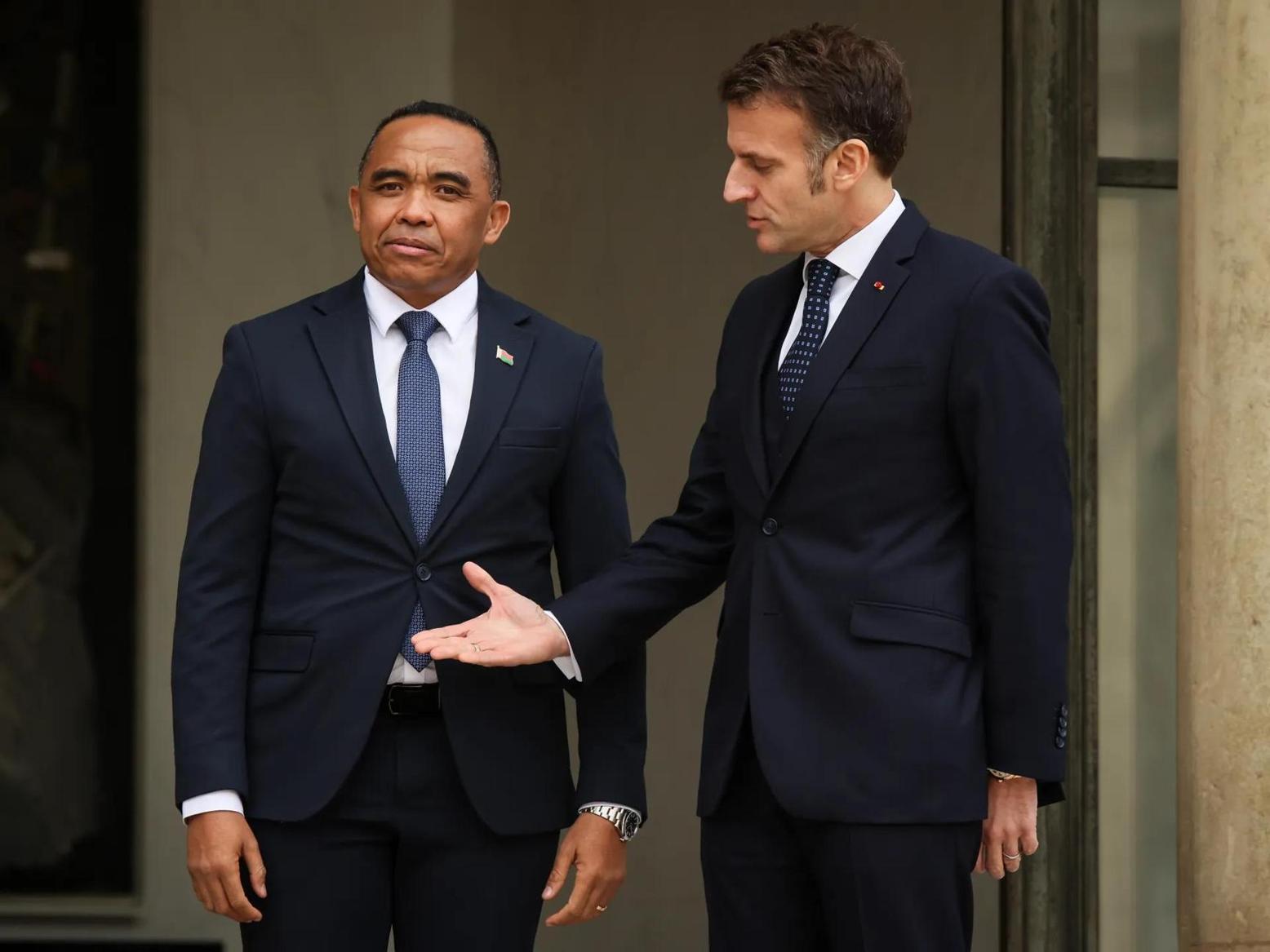
However, the diplomatic course saw a notable shift. The Malagasy presidency announced on Wednesday evening that transitional president Michel Randrianirina had a phone call with his French counterpart Emmanuel Macron, during which both parties described the incident as an “isolated act,” emphasizing the need to “make necessary efforts so that this incident does not affect the dynamics of cooperation between the two countries,” and agreeing that “betting on mutual trust is the path to building a lasting partnership.”
According to Madagascar Tribune, the statement from the Malagasy presidency reflected a “clear retreat” from the sharp tone that had been present just hours earlier, as the authority invoked “the normal exercise of sovereignty,” while simultaneously relying on the Vienna Convention on Diplomatic Relations – according to a French newspaper – which allows for the expulsion of diplomats without official justification.
Observers interpreted the rapid tone of containment as a result of French economic pressures, especially since Paris remains – according to a local agency – the largest bilateral donor to Madagascar, contributing around $80 million to sanitation, food security, and judicial reform programs.
Turning East
The crisis comes amid accumulated tensions since October 12, 2025, when the elite “Cabsat” unit ousted President Andry Rajoelina, who fled – according to a local source – on a French military plane following an agreement with Macron, a matter that many Malagasy view as a “collusion” that tarnishes Paris’s image. Since then, the new foreign policy has shown a clear eastern pivot.
On February 19, 2026, Randrianirina chose Moscow as the destination for his first trip outside the continent, where he met President Vladimir Putin, before meeting Macron in Paris five days later. Moscow had previously sent a military plane to Antananarivo on December 20, 2025, carrying 40 soldiers and 43 boxes of weapons, including assault rifles, sniper rifles, and anti-tank launchers, according to the president of the Malagasy National Assembly.
The website Defense Web, which focuses on African defense issues, noted that the “African Legion” (the former African branch of Wagner) offered personal protection to Randrianirina, in exchange for what is likely to be mining contracts in graphite (Madagascar is the second-largest global producer with 89,000 tons annually) and cobalt. Randrianirina announced in an interview with Sky News his intention to seek BRICS membership.
Open Wounds
The Barret case confirms that the relationship between Antananarivo and Paris is now walking on a minefield, as any arrest of a French citizen or any expulsion of a diplomat is enough to trigger a diplomatic spiral requiring direct presidential intervention for containment.
However, what phone calls cannot resolve is what they reveal, as the relationship between the large island and its former colonizer is no longer governed by the old “francophone intimacy,” but by fragile balances that awaken with every tremor. Will we enter a phase of “permanently tense relations” managed cautiously by both parties, similar to what Paris experiences with some of its former colonies? Or is the “Guy Barret” case merely a precursor to a deeper rupture that will be imposed by a later political moment?