Africa-Press. Mali appears to be entering a new and more hardline phase in its long war against armed groups, after authorities launched an unprecedented package of security measures combining substantial financial incentives, strict field restrictions, and broad societal mobilization. From placing multi‐million‐dollar bounties on the heads of armed group leaders, to banning motorcycles across most of the country, and converting dozens of forests and nature reserves into closed military zones, Bamako is sending a clear message: the confrontation has entered a stage of comprehensive escalation.
However, these measures—introduced following a series of bloody attacks, most notably the April 25 attack that killed Mali’s defense minister—raise questions about their ability to shift the balance of a conflict that has entangled the country in a complex armed insurgency for more than a decade, amid the expansion of armed groups and the decline of government control over vast areas.
Security Escalation After Painful Attacks
Recent months have witnessed a marked increase in the pace of attacks carried out by armed groups linked to Al-Qaeda and ISIS in Mali, particularly in the central and northern regions, with armed activity expanding toward areas near the borders with Niger and Burkina Faso.
The most severe blow to the Malian authorities came in late April, when a major attack resulted in the death of the defense minister. The development was widely viewed as a dangerous indicator of the armed groups’ ability to breach security fortifications and reach sensitive targets.
This comes at a time when the military government, led by Colonel Assimi Goïta since the 2021 coup, faces mounting pressure to demonstrate its capacity to restore security stability, having justified its continued hold on power by the need to eradicate terrorism and restore state sovereignty.
Millions of Dollars for the Heads of Leaders
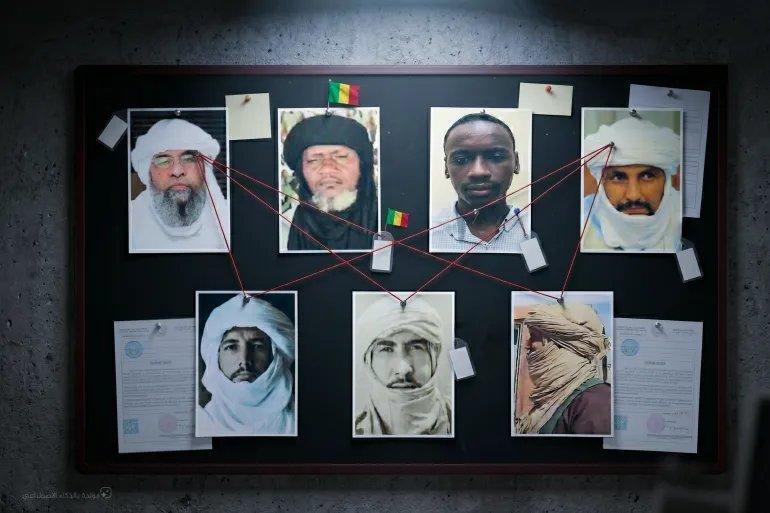
In a move reflecting the scale of official concern, the Malian government announced a massive financial rewards program totaling 7.5 billion CFA francs—approximately $12.4 million—for information leading to the arrest or elimination of seven of the country’s most prominent armed group leaders.
Topping the list is Iyad Ag Ghali, leader of the Group for the Support of Islam and Muslims (JNIM), affiliated with Al-Qaeda. Authorities allocated a reward of two billion CFA francs for information leading to his capture or “neutralization.”
Ag Ghali is one of the most prominent armed figures in the Sahel region. He began his career in politics and diplomacy before becoming one of the leading figures in the Tuareg rebellion, later heading a powerful jihadist alliance operating in northern and central Mali.
He also faces international prosecution: the United States has designated him as a terrorist, and the International Criminal Court has issued an arrest warrant against him.
The rewards program does not stop with Ag Ghali. It also includes Amadou Koufa, commander of the Macina Katiba and deputy leader of the group in central Mali, with a reward of 1.5 billion CFA francs offered for information leading to his capture or death.
Koufa is known for his recruitment capabilities within local communities, particularly among members of the Fulani ethnic group, making him one of the most influential leaders in central Mali.
The list also includes Aboulaye Mamadou Bakaye Diallo, known as “Jolybib,” Al-Abbas Ag Intalla, and other figures active between northern Mali and the broader Sahel region.
Why Is Bamako Betting on a Rewards Policy?
This approach aims to encourage local residents and potential collaborators to break the barrier of fear and provide intelligence that would help the army reach armed group leaders who are difficult to track in complex desert and mountainous environments.
The policy resembles models used by other countries in counterinsurgency efforts, such as Nigeria against Boko Haram or the United States in programs targeting Al-Qaeda leaders.
Yet the success of this approach in Mali remains uncertain, given the fragile trust between local populations and the state, as well as fears of reprisals against those who cooperate with authorities—particularly in areas where armed groups wield strong social and tribal influence.
Some experts also argue that financial incentives alone are insufficient in a complex conflict environment where security, ethnic, economic, and political considerations are deeply intertwined.
The Motorcycle Ban: Security Measure or Burden on the Population?
Alongside the rewards policy, Malian authorities announced strict measures targeting modes of transport widely used by armed groups, foremost among them motorcycles.
The government decided to suspend the use of motorcycles with an engine capacity of 125 cubic centimeters or more outside major cities, while halting their importation, sale, and distribution for one year, renewable.
Authorities argue that armed groups use these vehicles to carry out hit‐and‐run attacks and move swiftly across rugged terrain while bypassing security checkpoints, particularly in rural areas where heavy military vehicles face mobility challenges.
The decision follows similar policies implemented by neighboring countries such as Burkina Faso and Niger, after motorcycles became a central element in the tactics of armed groups in the Sahel.
However, the move has sparked widespread social and economic concerns. Millions of Malians rely on motorcycles as their primary means of transportation, especially in villages and remote areas with weak infrastructure.
In many regions, motorcycles are used to transport patients, students, and agricultural goods, and they represent a key source of income for thousands working in local transport services.
Critics argue that the new restrictions could further isolate rural communities and deepen feelings of marginalization—conditions that armed groups themselves may exploit to strengthen their influence.
Forests Turned Into Battlefields
In another escalation, Bamako announced the militarization of 39 forests and nature reserves, converting them into closed military zones.
The decision is based on a growing conviction within the military establishment that these areas have, in recent years, become rear bases for armed groups, used for hiding, training, storing weapons, and planning attacks.
Under the new measures, the Malian army will be granted broad authority to conduct sweeping operations, airstrikes, and ground assaults, with any movement within these areas considered a potential target.
However, the decision also raises humanitarian and environmental concerns. Some local communities depend on forests for grazing, agriculture, and firewood collection, which could exacerbate economic pressures on residents.
Observers also warn of the possibility of field errors or civilian casualties, particularly in areas where population movement overlaps with armed activity.
National Mobilization or Militarization of Society?
In parallel with military measures, the government launched a broad mobilization campaign involving traditional and religious leaders as well as civil society organizations, aimed at strengthening security cooperation and encouraging citizens to report suspicious movements.
Authorities seek to frame the fight against armed groups as a national cause requiring broad societal participation, rather than merely a military confrontation led by the state alone.
However, some observers believe this approach could create local divisions, particularly if accusations and reporting are used as tools for settling tribal or social scores.
The Russian Role: Growing Support, Limited Results
On the ground, the Russian African Corps— which replaced the Wagner Group in supporting the Malian army—continues to participate in military operations against armed groups.
In the latest developments, the corps announced it had carried out airstrikes targeting a camp in the Diabaly area in central Mali, citing intelligence indicating the presence of Sedan Ag Hita, one of the prominent leaders of the Group for the Support of Islam and Muslims, at the site.
However, sources close to the group denied his death, and no independent evidence has emerged to confirm his fate.
Despite increased military cooperation with Russia following the withdrawal of French forces and UN troops, security outcomes remain subject to debate, as Bamako has yet to halt the expansion of armed groups or prevent major attacks.
Will the Measures Change the Rules of the Game?
More than a decade after the outbreak of the security crisis, Mali appears to stand at a difficult crossroads. On one hand, the recent measures reflect an official desire to shift toward a more offensive and comprehensive phase in combating armed groups. On the other hand, the nature of these steps reveals the magnitude of the pressures facing the state and the inability of previous approaches to achieve decisive results.
Armed groups are no longer confined to the north of the country; they have expanded toward the center and south, with their influence also extending into Niger and Burkina Faso within a complex regional landscape.
Ultimately, the new measures may provide the Malian army with additional tools for maneuvering and exerting pressure, but they are unlikely to be sufficient on their own to resolve the conflict unless accompanied by political and developmental solutions addressing the root causes of the crisis—poverty, marginalization, weak public services, and local conflicts.
As Bamako continues to raise the level of confrontation, the question remains open: will the policy of a security crackdown succeed in altering the balance of war, or is Mali entering a new chapter in a prolonged conflict that drains both the state and the entire Sahel region?