Yasser Youssef Ibrahim
What You Need to Know
This article examines the recent wave of military coups in Africa, focusing on the role of young officers and the influence of former colonial powers, particularly France. It discusses the challenges to democracy and governance in various African nations, highlighting the social, economic, and cultural factors contributing to political instability.
Africa. When discussing democracy as a system of governance in Africa, countries can be divided into three main blocs. The first bloc consists of nations that have successfully established stable democratic experiences, such as South Africa, Botswana, Namibia, Ghana, and Senegal. The entrenchment of democracy in these countries is evidenced not only by the regularity of elections but also by the ruling parties’ acknowledgment of their electoral losses and the rise of opposition parties to prominent positions, as seen in South Africa. This is a rare case in a continent still searching for effective governance.
The second bloc includes countries that employ formal democratic procedures to mask dictatorial regimes that reinforce the principle of one-man rule. In Cameroon, President Paul Biya has secured an eighth term while approaching his ninety-third birthday after ruling for 43 years. In Uganda, President Yoweri Museveni is preparing to run for a seventh term.
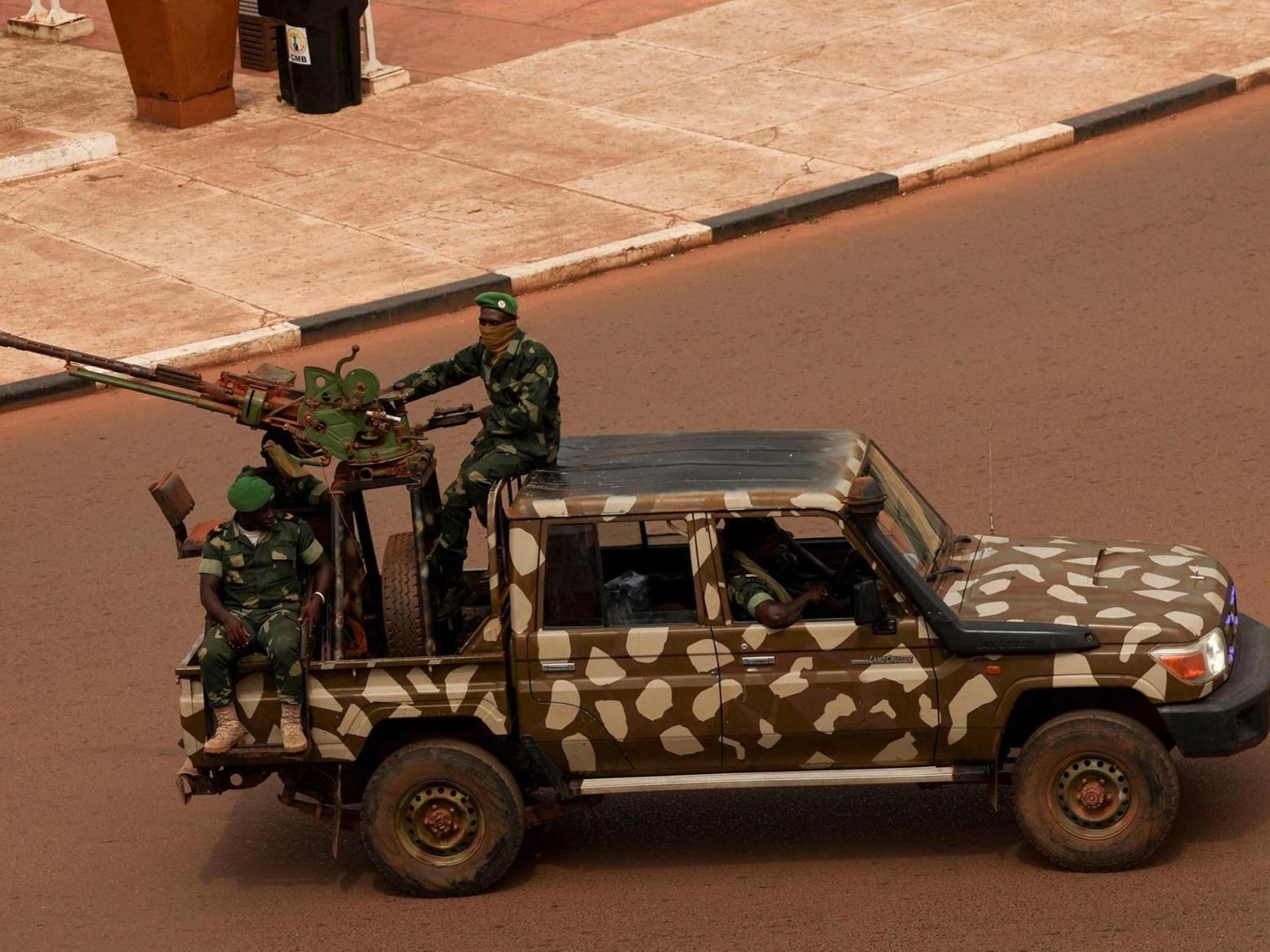
The third bloc comprises nations that see no need for any formal democratic processes, as their military leadership has taken power by force through military coups. This article will focus on this bloc.
In Mali and Guinea, the leaders of these nations established a union of progressive states, adopting one-party socialism and ruling with an iron fist, consolidating power and creating a corrupt environment with weak governance structures.
Despite the African Union’s efforts to build a cohesive legislative framework to promote democratic experiences and combat unconstitutional changes of elected governments among its member states—through the adoption of the African Charter on Democracy, Elections, and Governance in 2007—this noble endeavor has not prevented the recurrence of military coups and violent military interventions.
Since the adoption of the African Charter on Democracy in 2007, approximately 15 military actions have successfully seized power, while other attempts have failed in a continent still seeking political stability and the foundations of good governance.
Following a wave of coups in the last five years, particularly in Francophone countries, including Mali, Guinea, Guinea-Bissau, Burkina Faso, Niger, Gabon, and Madagascar, the recurring question is: why has this phenomenon persisted in Africa? Why are military forces still heavily involved in the political affairs of these nations, while the world witnesses a rapid shift towards values of freedom, justice, and respect for human rights and peaceful transfer of power and wealth?
A quick response some may resort to is the weakness of the sanctions imposed by the African Union’s founding law and Article 25 of the African Charter on Democracy, which suspends membership and prohibits coup perpetrators from participating in Union activities. However, this response is incomplete and merely procedural.
The roots of this phenomenon can be traced to social, economic, and cultural factors related to the failure of the nation-state after the colonial era, the strategic confusion of the elite that inherited the colonizers’ legacy, and their lack of deep awareness of the social structures that shape the consciousness of African peoples. Additionally, there has been an inability to devise systems suitable for these social structures and a failure to develop frameworks that reflect the realities and cultures of these societies, deeply rooted in Africa’s ancient history.
Since 2020, there have been eight military interventions that changed the leadership in their respective countries. Excluding Sudan due to its complex political crisis, commonalities can be observed in the remaining countries: Mali, Guinea, Burkina Faso, Niger, Gabon, Madagascar, and Guinea-Bissau.
All these nations are Francophone countries previously colonized by France. Despite the theoretical end of the colonial era since the 1960s, France has maintained a significant military presence and economic grip in these countries.
These nations fall under the African franc zone, managed by France in 14 African countries, which requires these nations to deposit 50% of their foreign currency with France in exchange for maintaining a fixed exchange rate.
As a result of this unbalanced relationship, public anger towards the French presence in the region has grown, and this discontent has been directed towards national governments perceived as protectors of French interests, working against the national interests of their countries.
As public anger reached its peak, the military intervened to seize power under nationalistic slogans aimed at reclaiming national sovereignty and establishing a national identity for the citizens of these countries, free from domination and exploitation.
These military governments did not hesitate to expel French military presence; within five years, French forces left the countries where military coups occurred, along with other nations such as Chad, Senegal, and Côte d’Ivoire.
While France was folding its flags and ending a historical military presence, Russia entered through the doors left open by France, welcomed by national public opinion in those countries that do not view it as an exploiting and conspiring ally against African peoples.
The pressing question remains: was the only viable option to replace the French colonizer and its allied governments the military intervention and establishment of military governments? Or could there have been a more challenging yet secure path towards building strong, politically stable, and economically prosperous nations in the long term?
The reality is that armies have exploited the situation of national failure and foreign interventions to seize power, without considering that this situation will recreate the same environment that led to this failure. Consequently, the same vicious cycle will persist in these countries. The facts indicate that colonial presence can be eliminated without falling into the trap of military coups, as seen in Senegal and Ivory Coast.
Most countries that have experienced military interventions, including Sudan, share similarities in the social structures that produced the national elite and established political power since before independence. The state structure has remained structurally fragile, unable to manage demographic diversity in a way that achieves national harmony.
As a result, most of these countries have descended into civil wars and armed internal conflicts as a direct consequence of the failure to produce a national project that accommodates the aspirations of various population groups while respecting their specificities.
These countries have also suffered from economic difficulties and rising living costs, despite possessing natural resources that could have made them among the richest nations if managed well.
Since their early independence, these countries have sought to import foreign governance models and apply them in environments that do not socially or culturally accept those experiences. The elites ignored the traditional legacies that had supported the peoples of these nations before colonization, which had contributed to the establishment of successful and stable kingdoms.
In Mali and Guinea, leaders of those countries formed the Progressive States Union when they imported one-party socialism and ruled their nations with an iron fist, accumulating power in their hands. This created a corrupt environment and weak governance structures that could not withstand the crises facing their countries, paving the way for military adventurers to turn these nations into stages for broadcasting military marches, signaling the overthrow of a corrupt regime and the establishment of another that is even more corrupt and harsher on the people.
This is the same path that Hamani Diori took in Niger when he seized control of the country after its independence in 1961 and ruled for 14 years until military change brought the country into the same tunnel of vicious cycles. The situation is not much different in Sudan and Chad.
Why did Senegal and Botswana succeed?
In stark contrast to the experiences observed in these countries and other African nations, Senegal and Botswana represent different models in addressing social and political challenges. They can be seen as affirmations of the academic hypothesis reached by authors Daron Acemoglu and James Robinson in their book “Why Nations Fail: The Origins of Power, Prosperity, and Poverty,” which concluded that the failure and success of nations fundamentally depend on the nature of their public institutions. Inclusive economic and political institutions can encourage economic growth or become extractive and obstruct growth.
The authors assert that nations fail when they have extractive economic institutions supported by political institutions that hinder economic growth. The founding fathers in both countries were aware of these facts; in Botswana, which was considered the poorest country at its independence in the early 1960s, where Britain left only 12 kilometers of paved roads, it now stands as one of the fastest-growing economies with one of the highest per capita incomes in Africa.
The reason is that it began building inclusive institutions immediately after independence, establishing democratic practices that contributed to political and economic stability, alongside leadership committed to the principles of the rule of law, peaceful transfer of power, and equitable distribution of wealth.
In Senegal, the established representative traditions, which began in the mid-19th century, spared the country from slipping into a one-party system, as the historic president Léopold Sédar Senghor voluntarily relinquished power. The democratic traditions have continued to this day despite attempts to circumvent them.
The success achieved in these two countries, contrasted with the failures observed in some African nations, clearly confirms that the necessary condition for development and prosperity passes through political stability.
To achieve this stability, these countries urgently need to reconsider their public systems and institutions; they require an independent and fair judiciary free from executive interference, a neutral civil service not subject to favoritism and nepotism, and strong transparency systems to combat corruption from any source.
Above all, authorities need to achieve a historical reconciliation between the state and its social components, where citizens enjoy their full rights without fearing the confiscation of their private property or the arbitrary actions of authorities, whether they support or oppose the political system.
Unless this is achieved, fears remain, and it is likely that the experiences of young officers who have advanced to positions of power with their shiny medals and broad ambitions will end in another cycle of failure, preparing for another wave of military interventions.