What You Need to Know
Africa is experiencing a faster rate of warming than the global average, leading to increased heatwaves, altered rainfall patterns, and extreme weather events. Despite contributing only 2-4% of global greenhouse gas emissions, the continent faces significant challenges, including food insecurity and water scarcity, exacerbated by climate change effects and funding gaps.
Africa. Africa is experiencing a faster rate of warming than the global average, with increasing heatwaves, altered rainfall patterns, and extreme weather events reshaping living conditions across the continent, despite its limited role in causing the climate crisis.
According to the World Meteorological Organization, temperatures in Africa have steadily risen since 2000, with the average surface temperature in 2024 being approximately 0.86 degrees Celsius higher than the average from 1991 to 2020.
North Africa recorded the highest temperature change, with an increase of 1.28 degrees Celsius above the 1991-2020 average, making it the fastest-warming region on the continent. In contrast, the southern part of the continent saw an increase of about 0.2 degrees Celsius per decade, as reported by the World Meteorological Organization.
The organization indicates that climate shocks are pushing millions of Africans toward food insecurity, water scarcity, health risks, and climate migration, while gains in adaptation and clean energy are being undermined by accelerating climate impacts and funding gaps across the continent.
Africa contributes only 2% to 4% of global greenhouse gas emissions, despite housing about 17% of the world’s population. The carbon footprint of an African individual is the lowest globally, averaging just one ton of carbon dioxide annually, compared to the global average of 4.69 tons per person.
Despite contributing minimally to the climate crisis, Africa bears the brunt of its environmental and climatic impacts. In November, during a meeting with G20 leaders in Johannesburg, UN Secretary-General António Guterres emphasized that Africa will pay a “deadly price” for climate change.
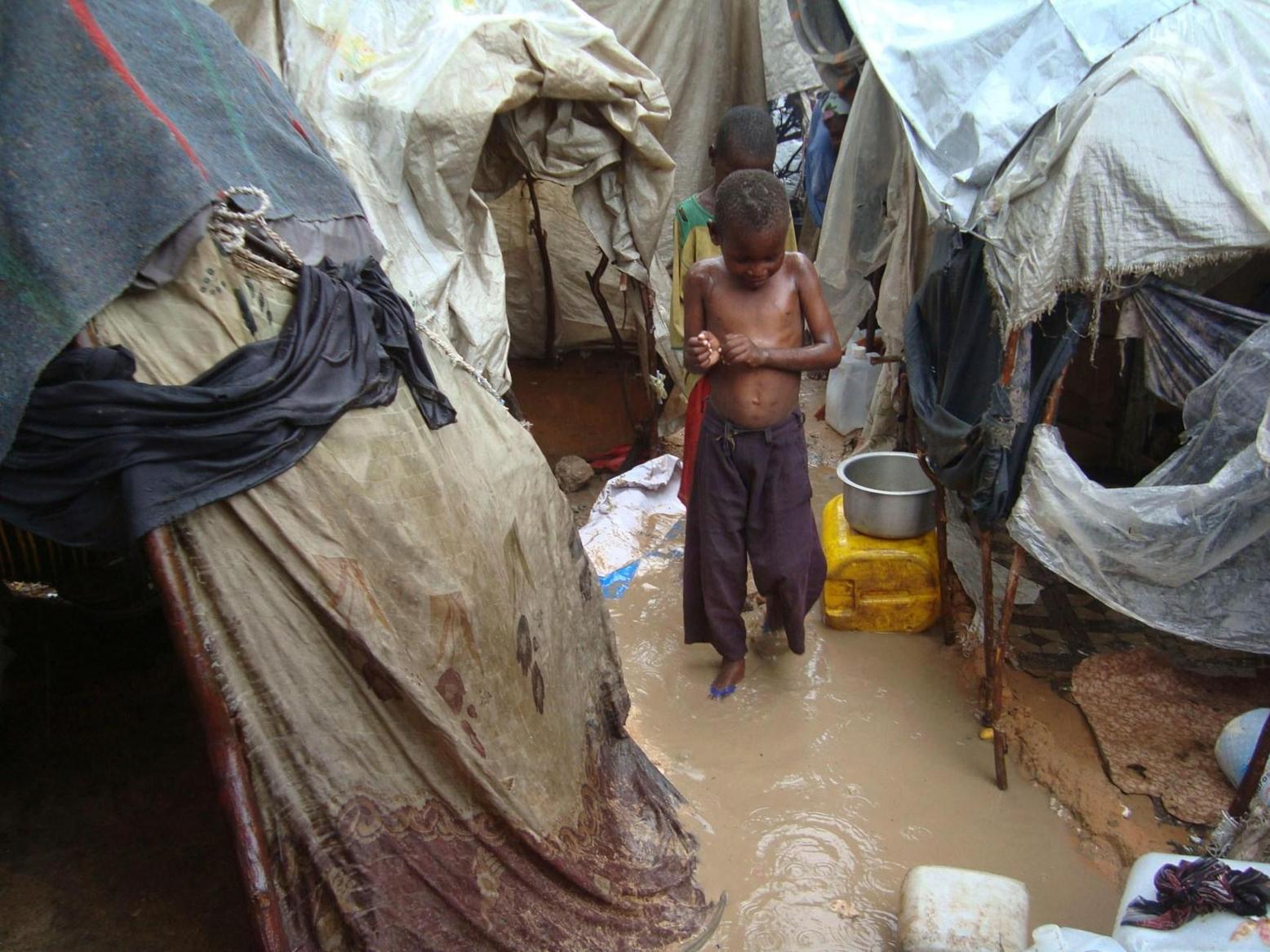
Rainfall patterns across the continent are undergoing severe changes, with increased heavy rainfall and flooding in East, West, and Central Africa, contrasted by prolonged droughts in other areas.
Moreover, Africa’s forests, once a natural carbon sink, have turned into a net source of carbon dioxide emissions due to deforestation and degradation. The Democratic Republic of the Congo alone has lost approximately 52 million acres (218,000 square kilometers) of tree cover between 2001 and 2024, releasing around 13 gigatons of carbon dioxide.
In the Horn of Africa, water scarcity is worsening, with droughts between 2021 and 2023 affecting over 24 million people, leading to water shortages and deteriorating food security.
African coastlines are experiencing sea-level rise at rates exceeding the global average, resulting in coastal erosion, flooding, and saltwater intrusion, particularly along the Indian Ocean and West African coasts.
High Costs
Estimates suggest that around 55 million people in West and Central Africa faced food insecurity during the drought season in 2024, a fourfold increase compared to five years ago. Agricultural productivity growth in Africa has declined by 34% since 1961, marking the largest decrease globally.
Despite the population growing from 800 million to 1.3 billion between 2000 and 2020, hundreds of millions still lack access to safe drinking water, and approximately 250 million Africans suffer from water stress. It is projected that water scarcity could displace up to 700 million people by 2030.
Adaptation needs in Africa are estimated at around $70 billion annually, yet the continent received only $14.8 billion in climate financing in 2023, with losses and damages from climate change expected to reach between $290 billion and $440 billion by 2030.
African countries lose an average of 2% to 5% of their GDP, with many allocating up to 9% of their budgets to respond to extreme climate events.
In sub-Saharan Africa, adaptation costs are estimated to range from $30 billion to $50 billion annually over the next decade, which is between 2% and 3% of the region’s GDP.
It is also estimated that without adequate measures, up to 118 million people living in extreme poverty (on less than $1.90 a day) will face droughts, floods, and extreme heat in Africa by 2030.
Health risks associated with climate change are rising, with heat, malnutrition, malaria, and diarrheal diseases expected to cause an additional 250,000 deaths annually worldwide between 2030 and 2050, with Africa projected to account for more than half of these deaths.
Climate change imposes additional burdens on poverty alleviation efforts and severely hinders growth, necessitating actions to adapt to climate change, including investments in meteorological infrastructure and early warning systems to prepare for increasing hazardous and impactful events.
Since 2000, Africa has seen a steady rise in temperatures, with the World Meteorological Organization reporting an increase of approximately 0.86 degrees Celsius above the 1991-2020 average by 2024. Northern Africa has experienced the most significant temperature rise, while the continent’s overall contribution to greenhouse gas emissions remains minimal despite its large population.