
What You Need to Know
Efforts to protect South Africa’s albatross population from lethal fishing lines are gaining momentum. With innovative solutions like bird-scaring lines, conservationists aim to reduce bycatch and ensure the survival of these endangered seabirds. Community involvement and training programs are also playing a crucial role in this initiative.
Africa. Twenty-seven nautical miles off Cape Point, a small tour boat cuts through a calm Atlantic, its passengers calling out seabird names as albatrosses and other endangered species circle overhead. Run by a local source, the non-profit trip takes birdwatchers from Cape Town to a place where these ocean birds are easier to see than on land.
The skipper scans the horizon for fishing trawlers. When he finds one and steers closer, the sea fills with wings. Hundreds of birds gather behind the vessel, drawn by an easy meal: discarded fish heads and guts thrown overboard as crews sort and process their catch. Birds squabble for scraps and sometimes dive toward nets to grab fish—behavior that can turn fatal in seconds.
The danger comes from industrial fishing gear. Long-line fishing uses lines that can stretch about 100 km (62 miles) and carry around 4,000 baited hooks, often set for large fish like tuna. Seabirds lunge for the bait, become snagged, are dragged underwater, and drown. This kind of unintended killing is known as bycatch, and albatrosses also die when they become entangled in the heavy cables that haul nets back up to the boat.
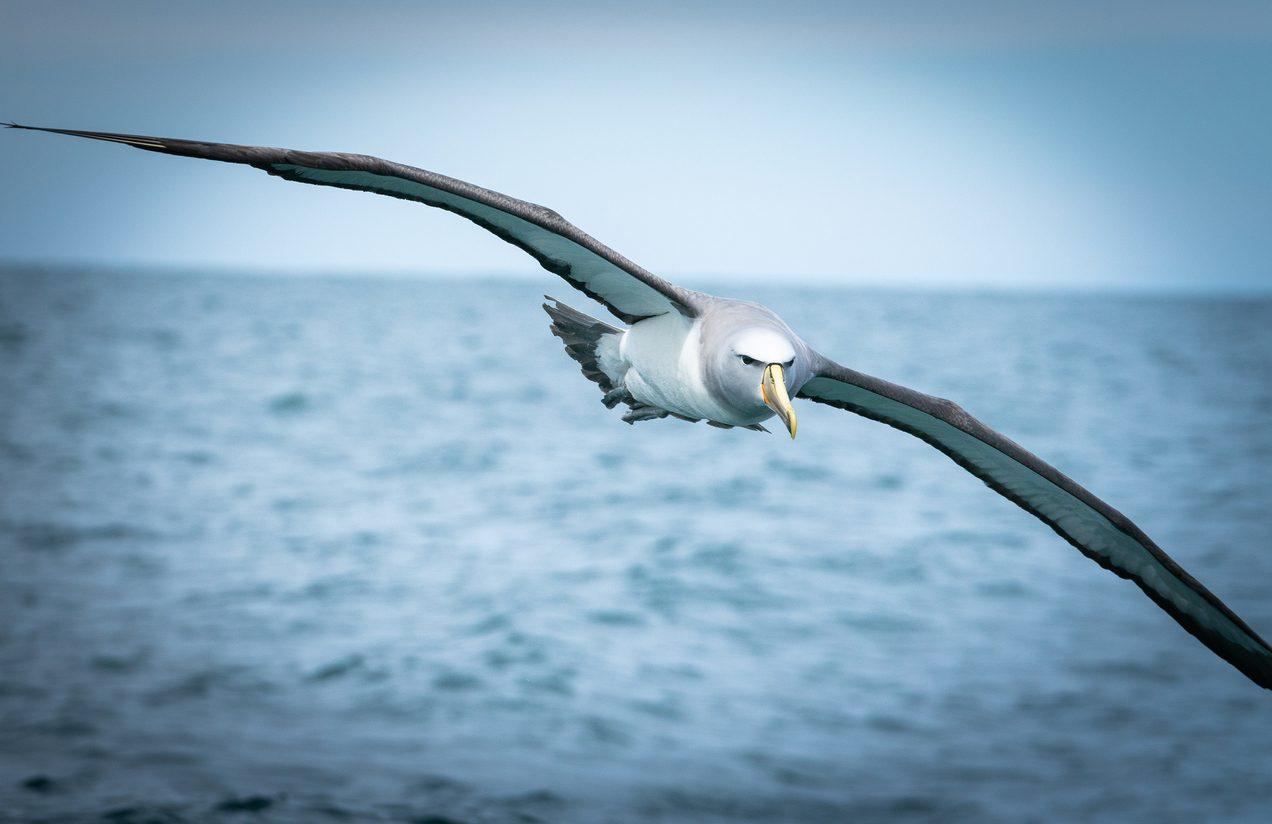
Albatrosses are especially exposed because they spend nearly half their lives on the high seas, repeatedly crossing paths with fishing vessels. Seabirds are among the most threatened bird groups globally, and albatrosses illustrate why: there are only 22 species worldwide, and 15 are threatened by fishing activity. Living almost entirely on squid and fish caught at sea, they encounter fishing boats more than most birds do.
Their breeding biology makes every adult loss even more costly. Albatrosses mate for life and typically lay only one egg every two years, raising chicks on breeding islands while both parents share feeding duties. If one parent is injured or dies at sea, the chick often cannot survive on the efforts of the remaining parent alone, wiping out a two-year reproductive investment. When a pair bond is broken, it can take four years—or more—to form a new partnership and resume breeding, slowing population recovery dramatically.
A practical solution is surprisingly simple: bird-scaring lines—essentially nautical scarecrows—deployed behind vessels to keep birds away from hooks, nets, and cables. Colorful plastic streamers flutter in the wind above the gear, creating a moving barrier that deters birds. Made from plastic tubing, rope, and streamers, the lines are cheap and easy to produce.
In Cape Town’s Ocean View community, BirdLife South Africa partners with the Ocean View Association for Persons with Disabilities, training disabled workers to build these bird-scaring lines. For participants—some from fishing backgrounds—the work restores purpose, provides skills, and adds income that can supplement disability grants, while giving families time to work knowing loved ones are cared for.
Fisheries benefit too, because preventing bird bycatch can also protect profits. The lines—also known as “tori lines,” from the Japanese word for bird—were pioneered in the late 1990s by a Japanese fisherman frustrated by losing valuable catch when birds took baited hooks. A large tuna can be worth around $10,000 (£7,400), while a dead bird brings no value, making the economic incentive clear.
Even so, usage is not always consistent. Some crews, pressed by time constraints, safety concerns, and quota pressures, skip deploying the lines, turning conservation into an ongoing process of negotiation and reminders.
The long-term results show what sustained effort can achieve. Since the Albatross Task Force was established in 2004, southern African fisheries have seen about a 90% reduction in seabirds killed at sea. The aim now is to replicate this approach elsewhere, so albatrosses can keep breeding and surviving across the world’s oceans.
Albatrosses are among the most threatened bird species globally, with 15 out of 22 species facing risks from fishing activities. Their unique breeding biology, which includes mating for life and raising one chick every two years, makes population recovery challenging. The introduction of bird-scaring lines has emerged as a practical solution to mitigate the dangers posed by industrial fishing gear, significantly reducing seabird deaths at sea.