
What You Need to Know
Chad has announced the indefinite closure of its borders with Sudan, citing repeated incursions and violations by conflicting forces in Sudan. The government aims to prevent the conflict from spilling into its territory and to ensure the safety of its citizens and refugees. This decision follows recent military actions in the region, highlighting ongoing tensions.
Africa-Press. Chad has announced the closure of its borders with Sudan “until further notice” due to what it described as repeated incursions and violations committed by conflicting forces in Sudan.
A statement from the Chadian Ministry of Information indicated that the government “informs the national and international public that the border between Chad and Sudan is closed as of the date of this statement and until further notice.”
The statement added that this decision comes in response to the repeated incursions and violations committed by conflicting forces in Sudan within Chadian territory.
It clarified that the decision “aims to prevent any risk of the conflict extending into national territory, protect our citizens and refugee populations, and ensure stability and the safety and unity of our homeland.”
Two days ago, the Sudanese army and allied forces in Darfur repelled an attack by the “Rapid Support Forces” on the border town of Tine.
Drone Attacks
On another note, a source from the Sudanese army reported that the Rapid Support Forces targeted the city of Al-Obeid, the capital of North Kordofan state, with three attack drones in the early hours of today.
The source added that the army thwarted the attack of two drones, while the third failed to achieve its target and dropped its missile in areas devoid of any military objectives, according to him.
He continued that the city of Al-Obeid in North Kordofan has been repeatedly subjected to drone attacks by the Rapid Support Forces.
The Sudanese army has deployed reinforcements from airborne forces to the city of Damazin in the Blue Nile region.
The army indicated that this step comes to bolster the efforts of the armed forces to cleanse all areas of the Rapid Support Forces.
The commander of the fourth division in Damazin, Major General Ismail Al-Tayeb, stated that the airborne forces arriving in Damazin will be a qualitative addition to end the rebellion of the Rapid Support Forces, as he put it.
In contrast, forces allied with the Rapid Support Forces accused the army of targeting the town of Mustariha in North Darfur.
Targeting a Hospital
The “Revolutionary Awakening Council” in Sudan announced on Sunday evening that a hospital and citizens’ homes in the “Mustariha” area were subjected to shelling by drones belonging to the “Rapid Support Forces.”
The council’s statement mentioned that the Rapid Support Forces targeted the area’s hospital three times, the guesthouse of the council’s president, Musa Hilal, and citizens’ homes twice, as well as a mourning council for one of the citizens in the area.
Of the 18 states in the country, the Rapid Support Forces control the five western Darfur states, except for parts of North Darfur, which remain under the army’s control, which exerts its influence over most of the remaining states, including the capital, Khartoum.
Darfur constitutes about one-fifth of Sudan’s total area of more than 1.8 million square kilometers, but most of the 50 million Sudanese live in areas controlled by the army.
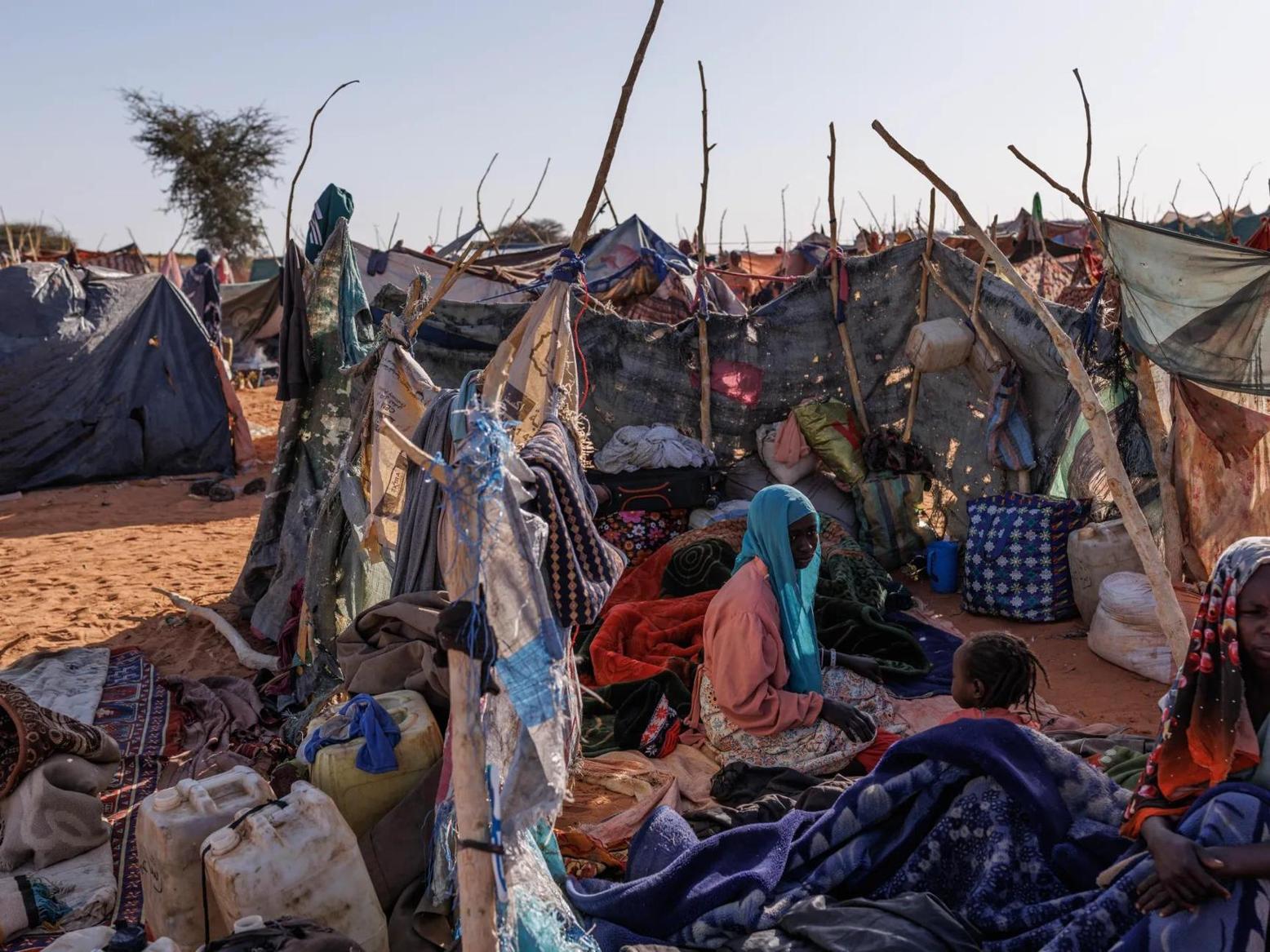
Since April 2023, the Rapid Support Forces have been fighting the Sudanese army over a dispute regarding the integration of the former into the military institution, leading to famine amid one of the worst humanitarian crises in the world, the deaths of tens of thousands of Sudanese, and the displacement of about 13 million people.
Chad and Sudan have a long history of conflict and border disputes, often exacerbated by internal strife within Sudan. The recent escalation of violence in Sudan, particularly involving the Rapid Support Forces, has led to increased security concerns for Chad. The closure of borders is a strategic move to protect national sovereignty and maintain stability in the region, especially as millions of Sudanese face humanitarian crises due to ongoing warfare.