What You Need to Know
In a significant diplomatic event, the Democratic Republic of Congo and Rwanda signed a peace agreement in Washington, attended by U.S. President Donald Trump. The agreement aims to resolve a long-standing conflict that has claimed millions of lives. Both leaders committed to fulfilling their obligations under the agreement, which includes economic integration and cooperation.
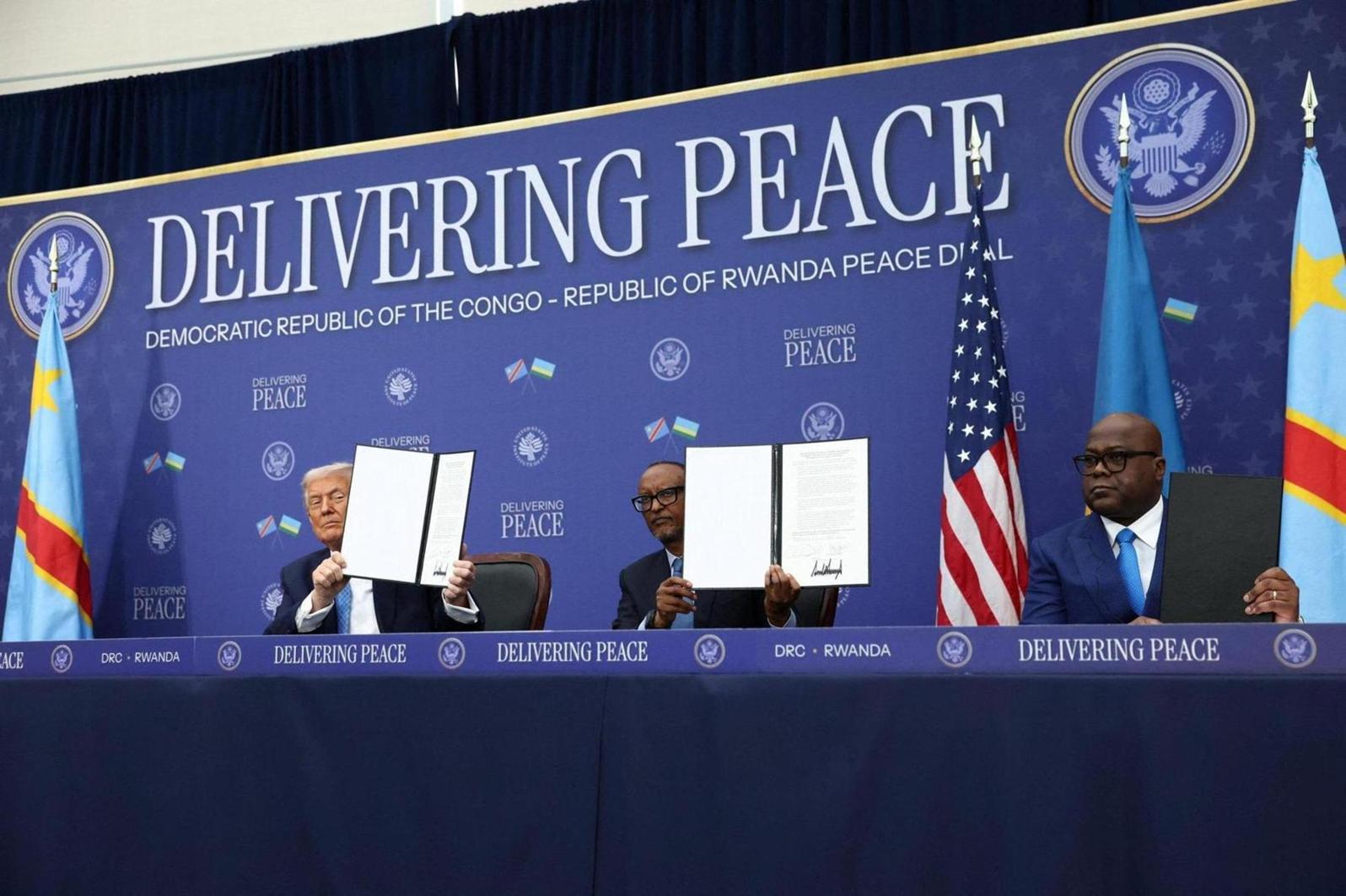
Africa. A peace agreement was signed in Washington between the Democratic Republic of Congo and Rwanda, attended by U.S. President Donald Trump, who described the agreement as historic and a resolution to a decades-long war.
Presidents Félix Tshisekedi of the Democratic Republic of Congo and Paul Kagame of Rwanda signed two main documents: the first summarizes the peace agreement initially signed in June, and the second establishes a framework for regional economic integration reached last month.
During the signing ceremony in Washington, Trump stated that the agreement ends one of the longest conflicts in the world, which has claimed over ten million lives, praising the two leaders for their long discussions to end the war.
He added, “This is a great day for their countries and for Africa,” noting that the agreement halts decades of violence and bloodshed and begins a new era of peace and cooperation between the two nations.
Trump remarked that the conflict in Eastern Congo is the eighth war “we are ending since my return to power,” thanking Qatari Prime Minister and Foreign Minister Mohammed bin Abdulrahman Al Thani, calling him a “great man” for his role in the agreement between the Democratic Republic of Congo and Rwanda.
Trump indicated that the United States will sign bilateral agreements with both Rwanda and the Democratic Republic of Congo to purchase natural resources from them.
In turn, the President of the Democratic Republic of Congo officially committed to fulfilling all obligations arising from the peace agreement with Rwanda in good faith, while the Rwandan president thanked the Qatari Prime Minister, representing Emir Tamim bin Hamad Al Thani, for his role in the agreement with the Democratic Republic of Congo.
Trump hopes that the agreement will pave the way for the United States to access vital minerals in Eastern Democratic Republic of Congo, a region experiencing violence and containing reserves of many essential components used in modern technology sectors, such as electric vehicles.
Field Developments
Simultaneously with the signing of the agreement, fierce battles continued in Eastern Democratic Republic of Congo, where the armed group “M23,” which the United Nations claims is supported by Rwanda, has made advances against Kinshasa’s forces in recent weeks.
The long-standing conflict erupted in late January when “M23” took control of the key cities of Goma and Bukavu. Following the June agreement, “M23,” which denies any connection to Rwanda, and the Kinshasa government pledged to cease hostilities after Qatari mediation, but both sides have since exchanged accusations of violations.
The Democratic Republic of Congo is the largest producer of cobalt in the world, a key mineral for electric vehicle batteries, and also contains other vital minerals such as copper.
The conflict between the Democratic Republic of Congo and Rwanda has deep historical roots, stemming from ethnic tensions and regional power struggles. The two nations have experienced a tumultuous relationship, particularly since the Rwandan Genocide in 1994, which led to a massive influx of Rwandan refugees into Congo and subsequent conflicts. Efforts to broker peace have been ongoing for years, with various agreements attempted, but lasting resolutions have remained elusive due to ongoing violence and political instability in the region.