Africa-Press. The Economic Community of West African States (ECOWAS) has strongly rejected accusations directed at it regarding interference in the internal affairs of Guinea-Bissau, affirming that its role is limited to supporting mediation efforts and political accompaniment in accordance with the collective mandate issued by the Conference of Heads of State and Government, amid ongoing political tensions related to the transitional phase and the repercussions of the electoral crisis in the country.
ECOWAS’s position came in response to allegations raised by the electoral commission of former presidential candidate Fernando Dias da Costa, which accused the regional organization of interfering in the internal political process. ECOWAS firmly denied these accusations, emphasizing that it does not interfere in the sovereign affairs of member states, and that all its actions are conducted within the framework of the mandate granted to it by member states.
The organization clarified that its mission in Guinea-Bissau is limited to conducting technical consultations with the transitional authorities regarding the preparation of a political roadmap for the return to constitutional order, confirming that it has not announced or endorsed any arrangements or procedures of a constitutional nature, and that what has occurred is merely within the scope of technical consultations aimed at supporting the political process.
ECOWAS stressed that these consultations should not be interpreted as an attempt to influence the institutional framework of the state or impose political directions, affirming that all decisions related to the future of the country remain the exclusive jurisdiction of the national institutions in Guinea-Bissau and the will of its people.
The organization called on all political parties to exercise restraint and engage in constructive and responsible dialogue aimed at enhancing national stability and maintaining internal cohesion, while creating the appropriate conditions to solidify the democratic process and ensure the success of the transitional phase.
This controversy arises amid the ongoing political crisis that followed the coup on November 26, 2025, which disrupted the electoral process before the official announcement of its final results, leading the country into a transitional phase led by the military institution.
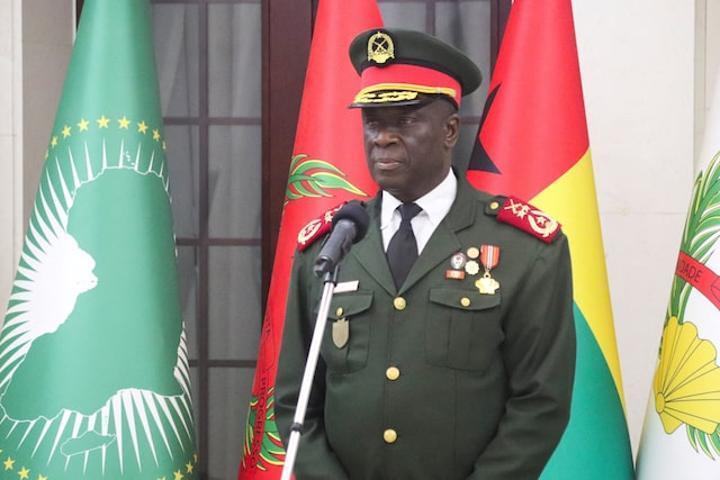
Currently, the transitional phase is managed by General Horta Enta-a Na Man, in his capacity as head of the Supreme Military Command for restoring national security and public order, alongside a transitional government headed by Prime Minister Elidio Vieira T. The military authorities justified their seizure of power by citing a severe political crisis following the elections and what they considered a threat to the stability of the country, prompting them to suspend the functioning of state institutions and adopt a timeline for the transitional phase.
Both the Economic Community of West African States (ECOWAS) and the African Union have previously condemned the unconstitutional change of power in Guinea-Bissau and decided to suspend the country’s membership in several regional mechanisms, while continuing their diplomatic efforts and mediations aimed at creating the appropriate conditions for restoring constitutional order.
In conclusion, ECOWAS reaffirmed its commitment to continue supporting a peaceful and inclusive political process led by national parties in Guinea-Bissau, contributing to the success of the transitional phase and the scheduled general elections in December 2026, which are considered a key milestone for restoring constitutional governance and political stability in the country.