What You Need to Know
Egypt has called on Nile Basin countries to cooperate and reject unilateral actions, announcing a new funding mechanism of $100 million to support dam projects in southern Nile Basin countries. This comes amid escalating tensions with Ethiopia over the Grand Ethiopian Renaissance Dam, which Egypt fears will negatively impact its water share.
Africa-Press. Egypt has called on Nile Basin countries to cooperate and uphold the spirit of brotherhood while rejecting unilateral actions. It announced a new funding mechanism of $100 million to support dam projects in southern Nile Basin countries amid escalating tensions with Ethiopia over the Grand Ethiopian Renaissance Dam.
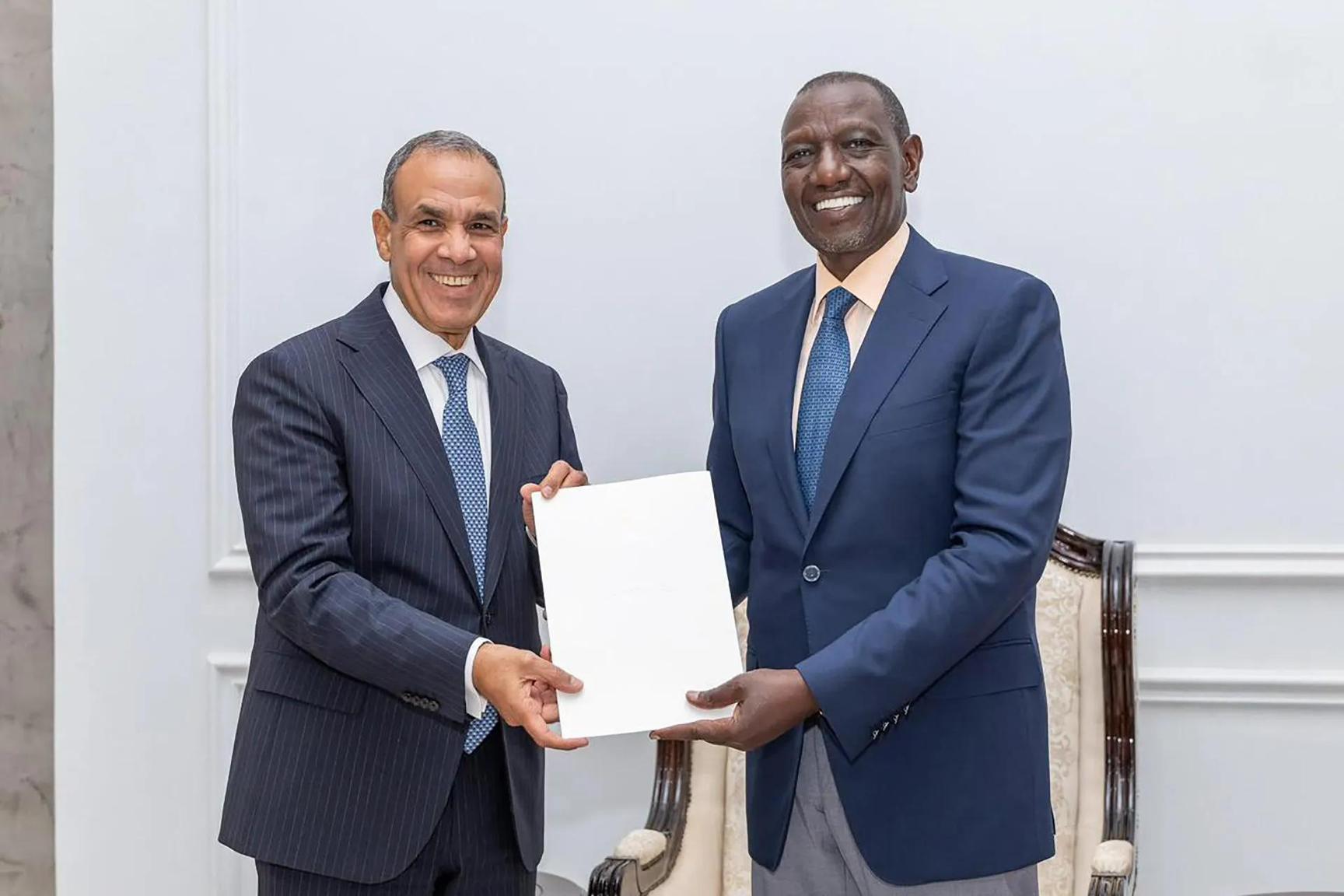
During a meeting on Monday with Kenyan President William Ruto in Nairobi, Egyptian Foreign Minister Badr Abdel Atti emphasized the importance of cooperation and integration among Nile Basin countries to achieve mutual benefits. He stressed the need to adhere to consensus and brotherhood among the basin countries to restore inclusivity and reject unilateral actions, according to a statement from the Egyptian Foreign Ministry.
Abdel Atti carried a written message from Egyptian President Abdel Fattah al-Sisi to his Kenyan counterpart, praising the elevation of relations between the two countries to a strategic partnership and the signing of the “Cairo Declaration” during Ruto’s visit to Cairo at the end of January.
Egyptian Minister of Irrigation Hani Sweilam revealed a new Egyptian funding mechanism of an initial $100 million to support the study and implementation of dam projects in southern Nile Basin countries, welcoming support for Kenyan dam projects through this initiative.
The initiative includes drilling groundwater wells, constructing rainwater harvesting dams, implementing and operating modern irrigation systems, and building capacities and training.
Sweilam emphasized the importance of maintaining the Nile Basin Initiative as the “common framework for all basin countries,” citing successful international experiences in river basin organizations that demonstrate the “importance of cooperative frameworks” based on respect for international water law, consideration of all parties’ concerns, and the promotion of consensus.
This visit comes amid a deep-rooted water crisis centered around the Grand Ethiopian Renaissance Dam, the largest water project in Africa, built on the Blue Nile in the Benishangul-Gumuz region near the Sudanese border since 2011. It aims to generate about 6,000 megawatts of electricity and store 74 billion cubic meters of water.
Egypt and Sudan, the downstream countries, fear that the dam will negatively impact their shares of Nile water and are calling for a legally binding tripartite agreement regarding the dam’s filling and operation.
In contrast, Ethiopia believes that an agreement is unnecessary, asserting that it does not intend to harm the interests of any country, which has led to a three-year freeze on negotiations before they resumed in 2023 and were again suspended in 2024.
Egypt and Sudan welcomed former U.S. President Donald Trump’s offer to mediate in resolving the Nile River dispute with Ethiopia, following his announcement of readiness to resume mediation between Egypt and Ethiopia to fundamentally and permanently resolve the issue of Nile water sharing.
The situation is further complicated by the 2010 Entebbe Framework Agreement signed by Ethiopia, Rwanda, Tanzania, Uganda, and Burundi, with South Sudan joining in July 2024, amid ongoing Egyptian and Sudanese opposition. Cairo and Khartoum argue that it does not respect agreements that define their water shares and grant them veto rights over any projects that could negatively impact water quantities or timing.
In October 2024, the Egyptian Ministry of Irrigation urged Nile Basin countries that signed the Entebbe Agreement to reconsider their positions and return to discussions on cooperation.
The Nile River is shared by 11 countries: Egypt, Sudan, Ethiopia, South Sudan, Uganda, Kenya, Tanzania, Rwanda, Burundi, the Democratic Republic of the Congo, and Eritrea.
The Nile River is shared by 11 countries, including Egypt, Sudan, and Ethiopia, which have long-standing disputes over water rights and usage. The Grand Ethiopian Renaissance Dam, initiated in 2011, has been a focal point of tension, with Egypt and Sudan fearing it will diminish their water supply. The 2010 Entebbe Agreement, signed by several upstream countries, further complicates the situation, as Egypt and Sudan oppose it, believing it undermines their historical water rights.