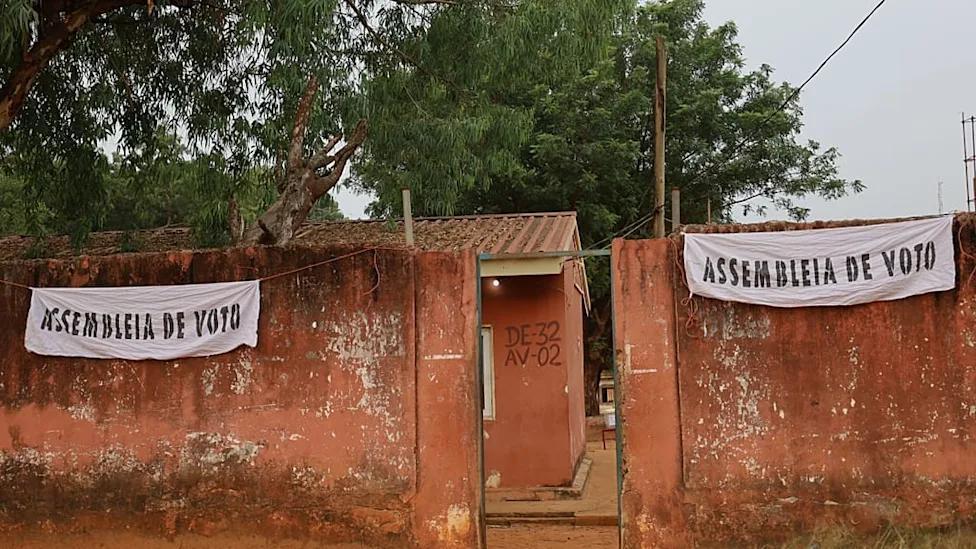
Africa-Press. Guinea-Bissau began counting votes after polling stations closed for the constitutional referendum called by transitional authorities, amid a clear disparity regarding voter turnout. Opposition parties and civil society organizations reported low participation and called for a boycott of the referendum.
Voters were asked to vote “yes” or “no” on the implementation of a new constitution approved by the transitional national council. The proposed reform aims to shift the governance system from a semi-parliamentary system, which transitional authorities deemed unstable, to a more powerful presidential system.
Polling stations closed at 5 PM local time, after which the vote counting commenced. The electoral commission announced that the turnout was 55%, despite low participation reported at several polling stations during voting hours. Results are expected to be announced on Tuesday, according to a source within the electoral commission.
During the day, estimates of participation varied. A spokesperson for the electoral commission described the turnout by midday as “reasonable,” while the opposition claimed that participation was low.
In the capital, Bissau, where it rained throughout the morning, turnout appeared limited at several polling stations, with voters arriving in small numbers from midday, leaving some centers nearly empty. The opposition, which called for a boycott of the referendum in protest against its organization and what it described as restrictions on civil liberties, quickly shared images of nearly empty polling stations in the capital.
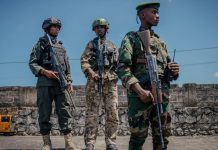
In other parts of the country, participation levels varied. In the eastern region of Bafata, voters cast their ballots in small, quiet groups, according to the electoral commission, which confirmed the deployment of security forces at all polling stations.
In the Gabu region, turnout was sporadic, and a decrease in voter numbers was noted in agricultural areas in the south, particularly around Quinara and Tombali, coinciding with the peak of the rainy season.
Several civil society representatives and opposition parties believe the low turnout reflects the success of their call to boycott the referendum. In the evening, the Popular Front, a civil society platform comprising over 50 organizations, welcomed what it termed a “historic boycott” of the referendum.
The Front considered the referendum “unconstitutional and illegal,” arguing that it was organized by an unelected transitional government. It also expressed its rejection of the reforms, which it claimed would entrench an excessively powerful presidential system.
The electoral commission, for its part, confirmed that the turnout was 55%, while the referendum took place without international or independent observers. The referendum is viewed as a key milestone ahead of the general elections scheduled for December 6, which aim to restore civilian rule in the country amid a politically tense atmosphere and widespread disputes regarding the legitimacy of the constitutional amendment process.
Opposition parties, in particular, oppose the radical reworking of the country’s fundamental law by an unelected transitional government, arguing that the process occurred without sufficient dialogue with various political forces and components of society.
The proposed new constitution includes extensive changes to the political system, notably granting the head of state greater powers, including the ability to appoint and dismiss the prime minister, appoint or dismiss the government, and dissolve parliament.
The project also proposes reducing the number of parliamentary members from 102 to 65 and decreasing the number of electoral districts from 29 to 12, a move authorities claim aims to reduce public spending and reorganize state institutions.