
What You Need to Know
The Amhara regional government and the Fano Popular Movement in Ethiopia have signed a historic peace agreement, concluding over two years of conflict. The deal, facilitated by the African Union and IGAD, aims to foster dialogue and stability in the region. Leaders from both sides emphasized the importance of peace and the need for other factions to join the dialogue process.
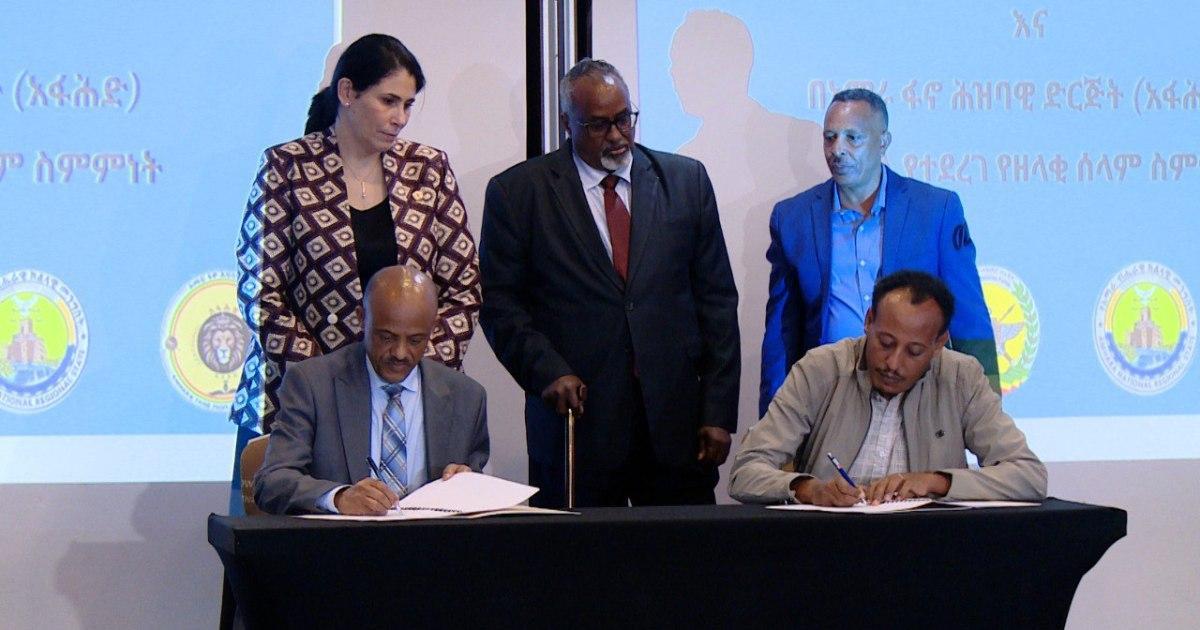
Africa. The Amhara regional government and the Fano Popular Movement have concluded over two years of fighting by signing a peace agreement, the first of its kind between the two parties, following extensive negotiations facilitated by the African Union and IGAD.
The agreement was signed in the presence of Salma Hadadi, Deputy Chairperson of the African Union Commission, and Mohamed Abdi, Deputy Secretary-General of IGAD. The regional government was represented by Governor Aregash Kbede, while Captain Masresha Seteng signed on behalf of the Fano Popular Movement.
African Union Commends the Agreement
Salma Hadadi stated that the agreement represents a “new beginning,” noting that the door is open for all factions wishing to join the peace process. She added that the continent needs to silence the guns and promote dialogue, considering this step a reflection of an African vision for resolving internal disputes.
IGAD Calls for Commitment
Mohamed Abdi emphasized the importance of the agreement, stating that it reflects IGAD’s efforts to establish peace in a region known for conflicts. He explained that while signing the agreement was easy, adhering to its terms is the real challenge, urging other factions to adopt dialogue and engage in the peace process.
Regional Government: War Brings Only Losses
Governor Aregash Kbede explained that negotiations took several rounds before reaching a comprehensive agreement, affirming that war has not yielded any gains, but rather brought losses and suffering to the people of the region. He called for a change in the culture of resorting to arms and urged other factions to abandon fighting and join the peaceful path, considering the agreement an achievement that gives citizens a sense of security after years of turmoil.
Fano: Dialogue is Wisdom, Not Defeat
Captain Masresha Seteng, representing the Fano Popular Movement, confirmed that the decision to sign came after realizing that war was no longer an option and that dialogue is the best way to resolve disputes. He stressed that resorting to dialogue does not signify political defeat but reflects wisdom, announcing that the war is over for them and that they will work with the government to achieve the aspirations of the population.
Fano Forces
The term “Fano” emerged in 2016 during youth protests in the Amhara region, playing a prominent role in the political changes that ousted the Tigray People’s Liberation Front in 2017. As conflicts escalated, Fano’s military factions began to form in 2019, expanding their influence during the Tigray War, benefiting from official logistical support, which raised concerns for both the federal and regional governments.
Following the signing of the Pretoria Agreement and the end of the Tigray War, the Ethiopian government announced in 2023 its decision to integrate all irregular forces under a central command, which Fano unanimously rejected. Despite its military presence, Fano lacks unified leadership or a comprehensive alliance, and its relationship with both the regional and central governments remains tense.
The Amhara region is characterized by its sensitive geographical location, bordering Eritrea and Sudan, in addition to the Tigray, Afar, Oromia, and Benishangul regions, placing it at the heart of Ethiopia’s complex balance of power.
The Fano movement emerged in 2016 during youth protests in the Amhara region, playing a significant role in the political changes that led to the ousting of the Tigray People’s Liberation Front in 2017. As conflicts escalated, Fano’s military factions formed in 2019, gaining influence during the Tigray War. Despite their military presence, Fano lacks unified leadership and maintains a tense relationship with both the regional and federal governments, complicating the political landscape in Ethiopia.


