What You Need to Know
A recent warning from UN experts highlights the alarming rise in violence against civilians in South Sudan, particularly in Jonglei state. The ongoing conflict has led to the displacement of over 180,000 individuals and numerous fatalities, raising concerns about the potential for widespread humanitarian crises and further destabilization in the region.
Africa-Press. A team of independent experts from the United Nations has warned of potential mass violence against civilians in South Sudan, where renewed fighting in the southern regions has resulted in the displacement of over 180,000 people and hundreds of deaths.
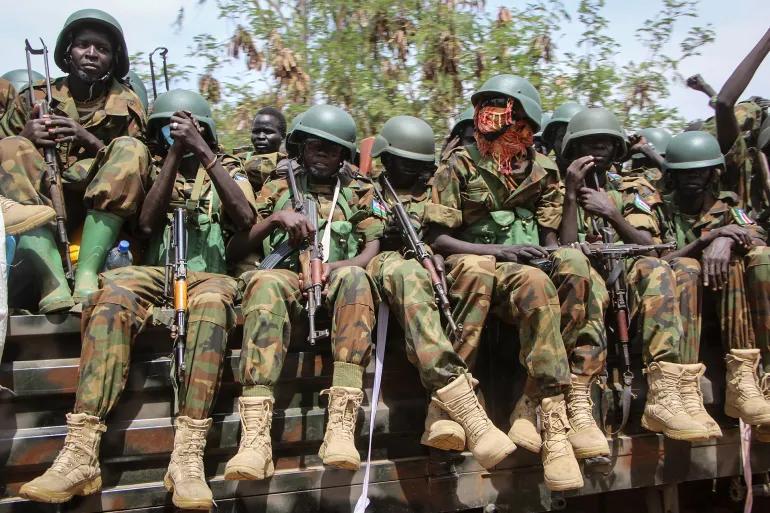
The South Sudan Human Rights Commission expressed its “grave concern” regarding the situation in Jonglei state, where battles have been ongoing since late December between the army led by President Salva Kiir and forces loyal to his former deputy, Riek Machar, who has been detained since March and is accused of committing “crimes against humanity.”
The UN experts stated that “incendiary” remarks made by some military officials and reports of large troop deployments “significantly increase the risk of mass violence against civilians and undermine the peace agreement” that ended a civil war lasting from 2013 to 2018.
This warning follows orders issued by army commander Paul Malong Awan last Wednesday to his troops in the region to “crush” the rebellion within seven days.
According to reports from various media outlets in South Sudan, another senior military official stated that “no one should be spared, not even the elderly.”
Authorities in South Sudan have reported that approximately 180,000 people have been displaced due to these clashes.
International Warnings
The UN Office for the Coordination of Humanitarian Affairs (OCHA) stated this week that South Sudanese authorities estimate the number of displaced individuals to be over 180,000 across four counties in Jonglei.
OCHA reported that the looting and confiscation of humanitarian assets by both sides have reportedly led to the suspension of essential health services for thousands of people.
Gul Badshah, operations director at Médecins Sans Frontières, based in Nairobi, Kenya, noted that they have faced difficulties in supplying teams on the ground in Jonglei, resulting in a “catastrophic” shortage of supplies.
He warned, “We have no supplies. Children will die; it’s that simple.”
Barny Afako, a member of the UN Human Rights Commission in South Sudan, stated in a statement, “What we are witnessing in Jonglei is not an isolated security incident but a serious escalation that is also manifesting in other areas of the country.”
He cautioned that “events in Jonglei could plunge the country into another dangerous cycle of violence.”
Random Attacks
Witnesses reported to Agence France-Presse that barrel bombs are being used indiscriminately, forcing civilians to flee to swamp areas.
One displaced individual told the agency that violent fighting occurred last week in Duk County after opposition forces took control of the area before being forced to retreat by government troops.
He added, “Many have been killed,” estimating the number at around 300 fighters, a figure that Agence France-Presse could not verify.
A source from a non-governmental organization in Juba, who requested anonymity, explained that fighting in Jonglei began in December in an area called Pibor.
He added that the government responded with “indiscriminate” airstrikes, including the use of barrel bombs against civilians deemed “hostile” to them, ordering them to leave areas controlled by the opposition.
Another source from a non-governmental organization confirmed that barrel bombs fell near health facilities.
He stated, “Various threats have been issued from both sides,” prompting many to flee to Bor, the capital of Jonglei state.
Local civil society leader Paul Deng Bol stated over the phone, “A large part of Jonglei has been classified as red zones, meaning a lack of humanitarian access and flights. People continue to flee, and their numbers are increasing in Bor day and night.”
He added, “We are witnessing a buildup of military forces on both sides, indicating that escalation is imminent.” He noted that estimating the number of casualties is impossible, as many residents “are still hiding in the bushes.”
Years of Conflict
The world’s newest nation has struggled with war, poverty, and rampant corruption since its separation from Sudan in 2011, with escalating violence currently concentrated in Jonglei state, located north of the capital, Juba.
Although the country has experienced violence in some areas for nearly a year, the conflict in Jonglei is broader in scope, even if it lacks the ethnic dimension of the bloody war between Kiir and Machar’s supporters, which resulted in 400,000 deaths between 2013 and 2018.
Kiir and Machar fought a five-year war after independence from Sudan, claiming 400,000 lives. A power-sharing agreement reached in 2018 established a fragile peace, but its provisions regarding elections and the integration of both sides’ forces have remained unfulfilled.
South Sudan possesses significant oil reserves, but pervasive corruption has made it one of the poorest countries in the world, with approximately 7.7 million of its 12 million citizens facing hunger, according to figures released by the World Food Programme in April.
South Sudan, the world’s youngest nation, has faced ongoing challenges since its independence from Sudan in 2011, including civil war, poverty, and corruption. The recent surge in violence, particularly in Jonglei state, reflects a broader pattern of conflict that has plagued the country, exacerbated by ethnic tensions and political rivalries between President Salva Kiir and former Vice President Riek Machar. Despite a peace agreement in 2018 aimed at ending years of civil strife, the implementation of key provisions has been slow, leaving many citizens vulnerable to violence and humanitarian crises.