What You Need to Know
Anicet-Georges Dologuélé, the opposition leader in the Central African Republic, has declared victory in the recent presidential elections held on December 27, 2020. He accused the government and the National Election Authority of widespread electoral fraud, asserting that the elections lacked transparency and were marred by manipulation. The ruling party has dismissed his claims as desperate and,
Africa. After about a week following the general elections in the Central African Republic, held on December 28, 2020, opposition leader and presidential candidate Anicet-Georges Dologuélé condemned what he described as “widespread fraud” that marred the electoral process, accusing the government and the National Election Authority of being behind it.
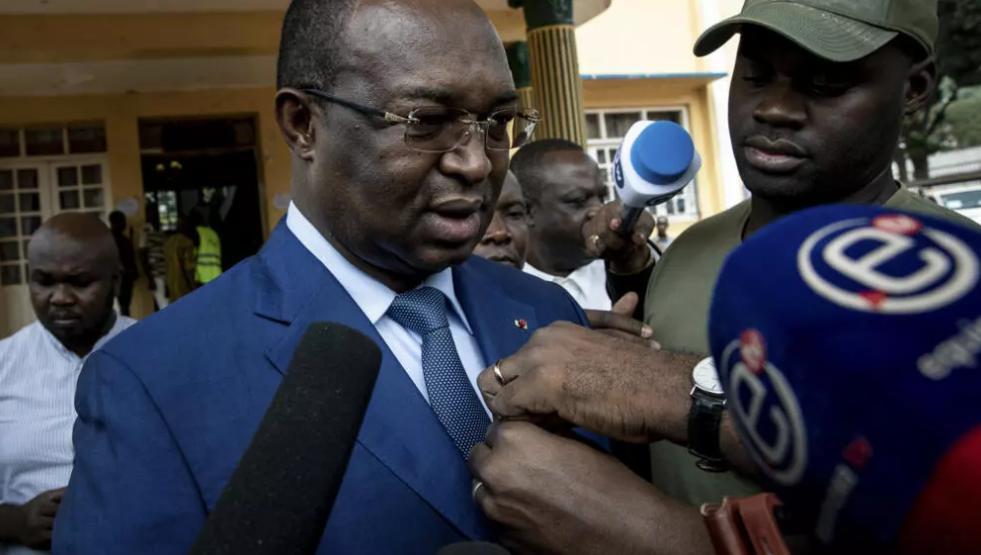
Dologuélé cast his vote at a polling station in the capital, Bangui, on Sunday, December 27, 2020, where he spoke to the media as the voting process commenced amid a tense and violent atmosphere, following clashes between rebel groups and government forces.
In a press conference held on Friday, January 2, in Bangui, the head of the Union for the Renewal of Central Africa (URCA) stated that his position was based on information and data collected by his party representatives deployed at polling stations across the country. He affirmed that the elections were not transparent, considering that attempts to manipulate the results were orchestrated by the ruling party, with support from the National Election Authority.
Dologuélé accused the authorities of establishing “systematic mechanisms” to falsify the election results, pointing to the involvement of several local officials, including governors and their deputies, in organizing what he described as a widespread fraud operation. The opposition leader declared his victory in the elections based on data collected by his campaign team, as well as reports he claimed were issued by reliable observers on the ground.
Dologuélé stated: “We have conflicting reports from polling stations, evidence of obstruction of elected officials’ work, and evidence of manipulation in the centralization of results, as well as the involvement of several governors and their deputies in organizing a widespread fraud operation. Everyone has seen videos on social media showing the distortion of polling station reports and their being thrown on the ground in neighborhoods. I am the winner, and I cannot acknowledge results I did not win; I will only recognize results that declare my victory.”
In contrast, the ruling party, the Movement of United Hearts (MCU), considered the opposition leader’s statements as “a desperate attempt to evade responsibility” and an implicit acknowledgment of defeat. The spokesperson for the Democratic Unity Movement, Évariste Ngamana, stated that the announcement of results is subject to clear constitutional and legal procedures.
Ngamana explained: “According to Article 71 of the Constitution and Article 121 of the Electoral Law, the institutions authorized to announce the preliminary and final results are the National Election Authority and the Constitutional Council. We are surprised by Anicet-Georges Dologuélé’s resort to this method, at a time when all candidates committed to remaining calm while awaiting the official results. It is a desperate attempt to evade responsibility. What evidence does he have to suggest these instances of fraud? For us, he is merely showcasing himself to the media because he knows he has already lost.”
For its part, the National Election Authority reaffirmed its commitment to transparency and integrity in managing the electoral process, emphasizing that all procedures were conducted in accordance with applicable laws. It also announced that the preliminary results of the presidential and legislative elections would be published on January 5, urging national and international public opinion to await the official announcement of the results.
Radio France Internationale
The Central African Republic has faced significant political instability since gaining independence in 1960, with numerous coups and civil conflicts affecting governance. The 2020 elections were particularly contentious, occurring in a climate of violence and unrest, as various rebel groups clashed with government forces, complicating the electoral process and raising concerns about the legitimacy of the results. The opposition’s allegations of fraud reflect ongoing tensions in a country struggling to establish democratic norms amidst ongoing conflict.