What You Need to Know
A recent internal meeting summary reveals that South African and American officials agreed that South Africa will not intervene in the controversial US program to resettle white South Africans as refugees. This decision follows tensions after South African authorities raided a US refugee processing center, leading to arrests and diplomatic backlash from Washington.
Africa. A summary of an internal meeting shows that American and South African officials reached an agreement during a closed meeting held in late December, allowing the United States to continue its controversial efforts to resettle white South Africans as refugees.
The meeting followed weeks of disruption to President Donald Trump’s main refugee program when South African authorities, in an unprecedented move, raided an American center processing refugee applications in Johannesburg, arresting contractors, which sparked angry reactions from Washington.
The raid resulted in the arrest of seven Kenyans working as contractors with an American refugee organization on charges of violating their visa conditions, in addition to the brief detention of American refugee officers.
In a meeting on December 23, the senior American diplomat in South Africa, Chargé d’Affaires Mark Dillard, received assurances from Pretoria that South Africa would not intervene in Trump’s program, according to a summary of the meeting signed by Dillard and sent to various American agencies.
“We may not agree with the classification of some South Africans as facing potential genocide, but their right to move to the destination of their choice is guaranteed, and the South African government will not intervene,” the summary quoted Thabo Thajji, one of the South African officials involved in the meeting.
At the same time, South African officials did not fully commit to investigating how a photo of an American refugee affairs official’s passport was leaked online, providing only a “lukewarm” response to Washington’s efforts to uncover the circumstances surrounding the incident, according to the previously unpublished meeting summary.
Trump had frozen the acceptance of refugees in the United States from around the world upon returning to the White House as part of his broader immigration crackdown. However, weeks later, he launched a campaign to resettle white South Africans of Afrikaner descent to the United States as refugees, claiming they were victims of racial persecution in majority-black South Africa. The South African government has vehemently rejected these claims, which echo far-right conspiracy theories.
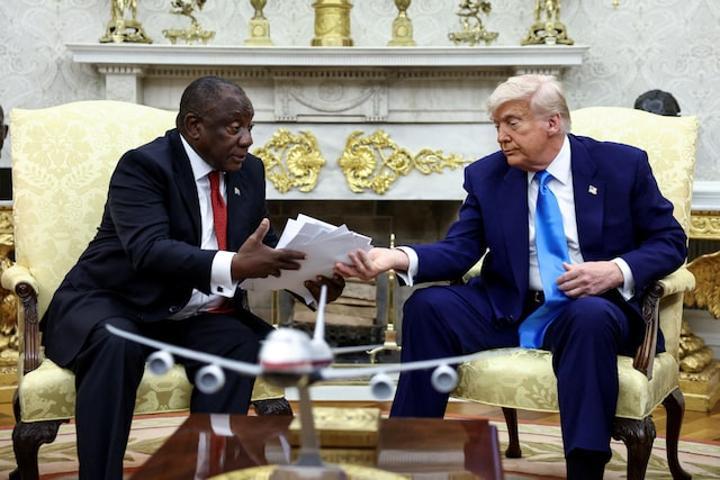
During a meeting in May with South African President Cyril Ramaphosa, Trump confronted his counterpart with false claims about genocide against whites in the country. Relations between the two countries worsened after Washington barred South Africa from participating in G20 meetings it will host later this year.
The U.S. State Department announced that despite the “unacceptable events” witnessed in December, its operations continue without any hindrance. The department clarified that the number of Africans arriving in the United States as refugees in December was higher than in any previous month, with even larger numbers expected in January.
The South African Department of International Relations and Cooperation denied any suggestion that its officials were negotiating with the United States regarding the refugee program.
The department stated in a press release: “Our position on the so-called ‘refugee protection’ for South African citizens is firmly based on a flawed premise lacking empirical evidence, and it has been rejected by South Africans from all backgrounds.
The refugee program for white South Africans has been a contentious issue, particularly under former President Donald Trump’s administration, which claimed that these individuals faced persecution in a predominantly black South Africa. This narrative has been widely criticized and dismissed by the South African government as unfounded and conspiratorial. The diplomatic relationship between the two nations has been strained, particularly following Trump’s claims and subsequent actions regarding immigration policies.