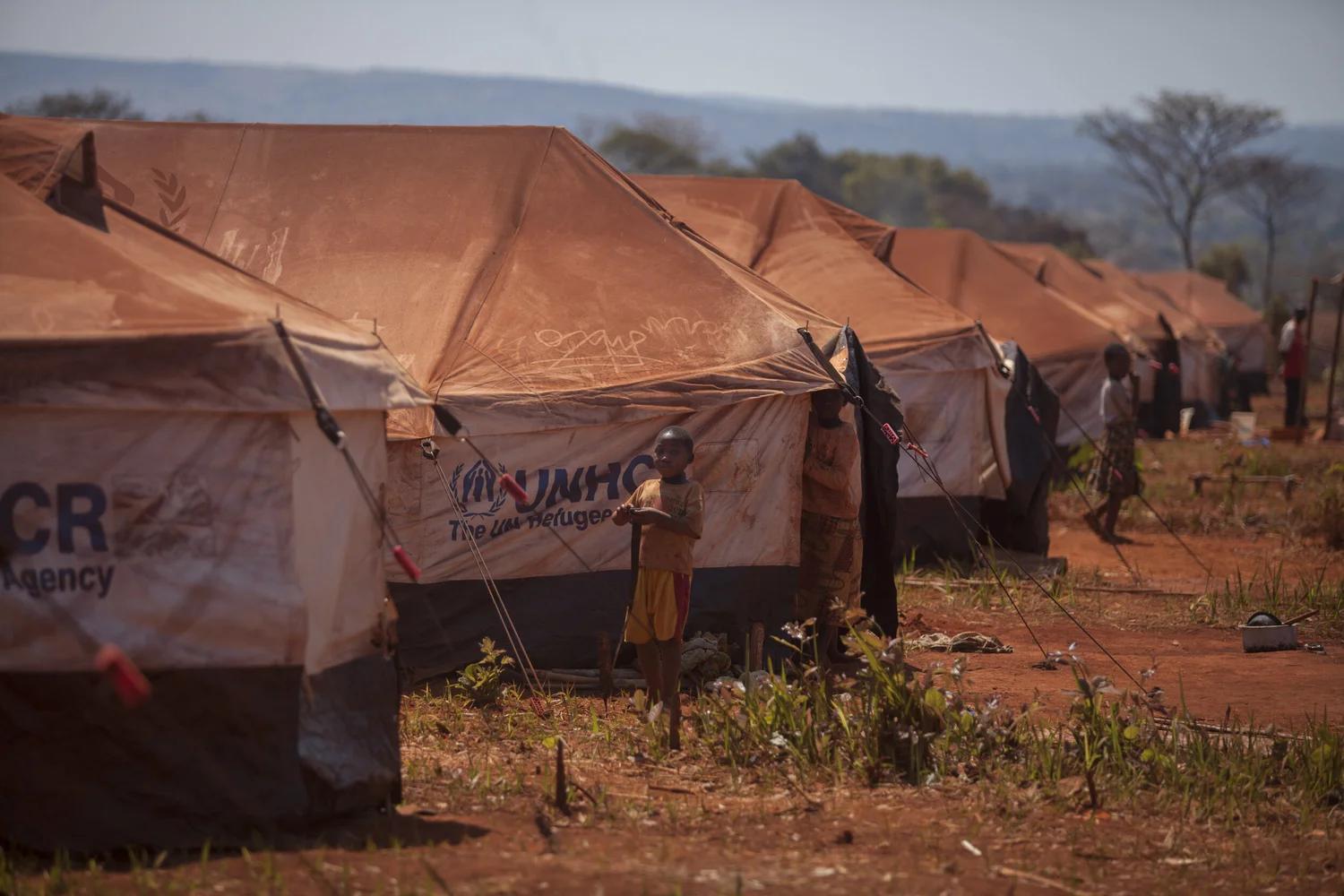
Africa-Press. Tanzanian authorities have closed the Nduta camp located in the northwest of the country, which housed thousands of Burundian refugees, in a move that has sparked human rights criticisms, especially following reports of forced repatriations of refugees to their home country, despite ongoing security and humanitarian concerns there.
According to human rights organizations and the United Nations High Commissioner for Refugees, the closure was part of an agreement between the governments of Tanzania and Burundi to repatriate tens of thousands as part of a plan to return around 100,000 refugees to Burundi before June.
The total number of Burundian refugees in Tanzania was estimated to be around 142,000, distributed between the Nduta and Nyarugusu camps until late 2025.
Human rights organizations, including the “Coalition for the Defense of Human Rights in Refugee Camps,” confirmed that about 3,000 refugees who were still inside the Nduta camp were forcibly gathered and transported back to Burundi in recent days.
Only about ten families remained in the camp, awaiting transfer to the Nyarugusu camp, according to a report from the organization.
The organization clarified that the closure was neither gradual nor voluntary as announced by the authorities, but came after months of escalating pressure on the refugees, including restrictions on their movement, tightening of humanitarian aid conditions, and linking access to food and basic supplies to registration in “voluntary return” programs.
It also noted that authorities had previously dismantled refugee homes within the camp, in addition to instances of threats and arrests, and actions described as “systematic intimidation” aimed at pushing residents to leave.
These developments have triggered a wave of international criticism, with 26 human rights organizations stating that what is happening constitutes “forced repatriation of refugees” that violates international law, which stipulates that any repatriation must be voluntary, safe, and dignified.
These organizations emphasized that conditions in Burundi remain unstable, and returning refugees face risks including arbitrary detention, enforced disappearance, and various forms of political and security persecution, making their forced return unsafe.
They also pointed out that some refugees who have already been returned were forced to flee again from Burundi to neighboring countries such as Uganda, Rwanda, Kenya, and Zambia, escaping threats they face in their home country.
In this context, authorities announced that the Nyarugusu camp, the last major camp for Burundian refugees in the country, will be closed on June 30, raising concerns about the continuation of mass repatriation without adequate protection guarantees.
Estimates indicate that hundreds of families have already been transferred from Nduta to Nyarugusu in a selection process described as controversial, amid accusations of a lack of transparency in determining who has the right to stay and who is to be deported.
For its part, the United Nations High Commissioner for Refugees confirmed that the closure of the camps is part of an agreement with the governments of both countries regarding “voluntary repatriation,” emphasizing that it is monitoring the situation and stressing the need for any return of refugees to be voluntary, safe, and dignified.
However, the agency faced sharp criticism from human rights organizations that accused it of not fulfilling its full role in protecting refugees, but rather indirectly facilitating forced repatriation processes.
These organizations expressed concern that the agency was aware of the pressures and violations against refugees, including deprivation of humanitarian aid, yet failed to stop the evictions or ensure effective protection for the most vulnerable groups.
Some reports also indicated that the agency had previously warned in 2019 about forced repatriation of Burundian refugees, raising questions about the recurrence of the same practices after years.
The repercussions of the closure of the Nduta camp are not limited to Tanzania, as reports indicate that thousands of refugees have attempted to flee to neighboring countries individually or collectively, fearing repatriation to Burundi, while others live in a state of instability after being transferred or losing their homes within the camps.
Humanitarian organizations warn that dismantling the camps so rapidly without safe alternatives could lead to a new humanitarian crisis in the region, especially given the limited capacity of neighboring countries and the difficulty of accessing essential protection services.
In light of these developments, human rights organizations have called on the government to immediately halt all forced repatriation processes and adhere to international laws regarding the protection of refugees.
They also urged the United Nations High Commissioner for Refugees to reassess its role in the matter and ensure that it does not participate in any actions that do not align with the principle of full voluntary return.
The organizations also called on neighboring countries such as Rwanda, Uganda, Kenya, and Zambia to open their doors to those fleeing from the camps and provide them with legal protection until permanent and safe solutions are reached.
Human rights organizations assert that the closure of the Nduta camp is not merely an administrative or humanitarian measure, but represents a dangerous precedent in handling asylum issues in East Africa, which could lead to a gradual erosion of the principle of international protection for refugees.
They warned that the continuation of this approach could reflect on other camps, primarily Nyarugusu, potentially opening the door to a new wave of unregulated displacement and instability in the region.
Amid this complex situation, the fate of thousands of Burundian refugees remains suspended between rapid political decisions and escalating humanitarian concerns, in one of the most sensitive crises in the Great Lakes region in recent years.