What You Need to Know
Tensions are escalating in Ethiopia’s Tigray region as large military forces gather, raising fears of renewed conflict. Reports indicate that both the Ethiopian federal army and Tigray forces are mobilizing troops, jeopardizing the fragile peace established in 2022. Local sources warn that without international pressure for dialogue, the risk of war will increase.
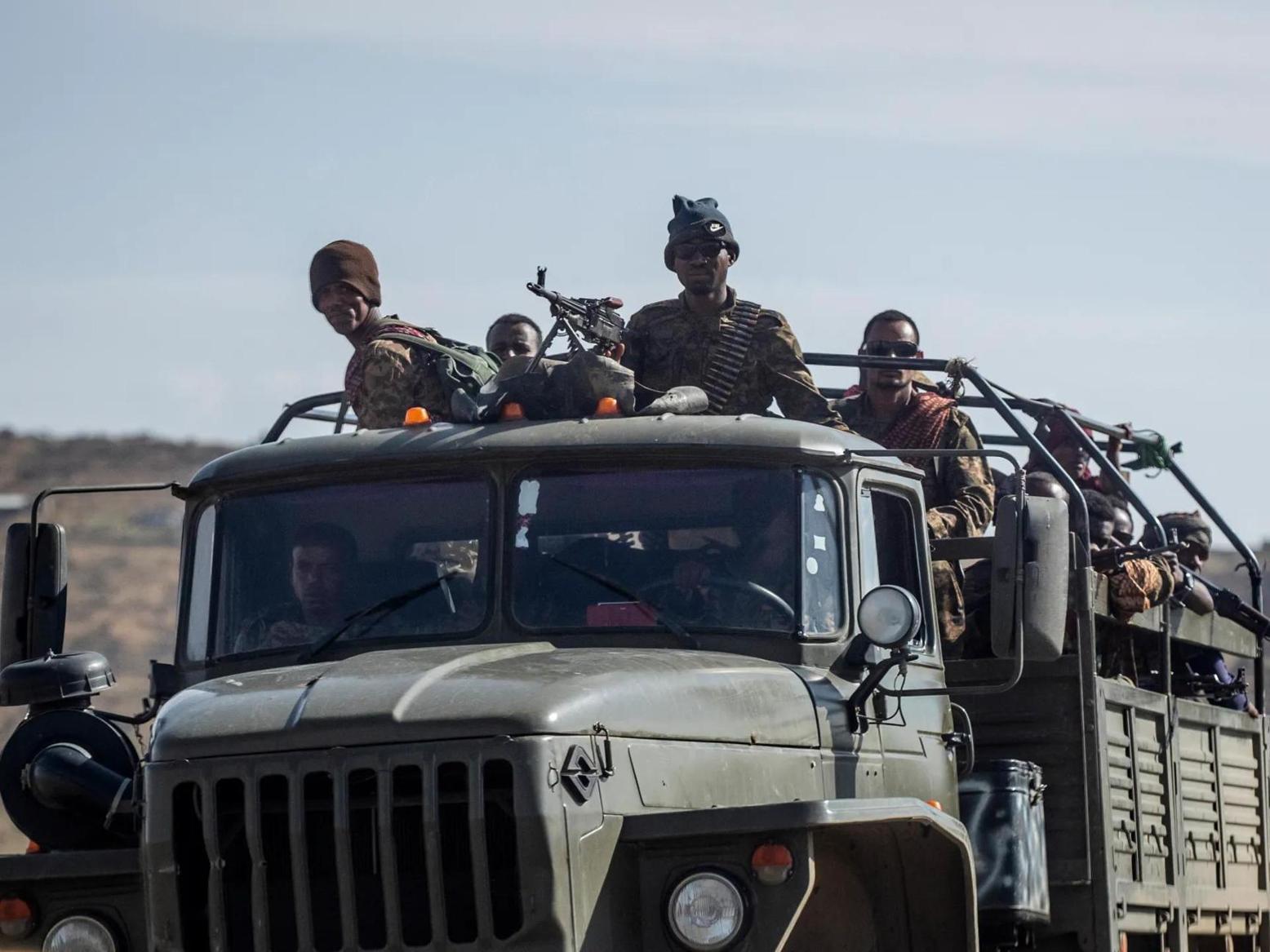
Africa-Press. Tensions have once again cast a shadow over the Tigray region in northern Ethiopia, amid reports of significant military buildups between the Ethiopian federal army and Tigray forces, a development that threatens the fragile “Pretoria Agreement” that ended one of the deadliest wars of the 21st century in 2022.
A diplomatic source, speaking on condition of anonymity, reported that “Ethiopian National Defense Forces are surrounding Tigray,” while also noting that regional forces are “also deploying towards their borders.”
The presence of such a large number of troops face-to-face is “not a good sign.”
In this context, a local source in Tigray confirmed the massive troop movements from both sides, warning that the risk of war will increase if the international community does not exert pressure to resolve disputes through dialogue.
Context of the Conflict
These developments come at a time when the peace agreement that ended the civil war (2020-2022) has not been fully implemented, following clashes between the federal army—then supported by local militias and the Eritrean army—and Tigray forces last January.
The previous war resulted in the deaths of at least 600,000 people, according to estimates from the African Union.
This military tension coincides with a deterioration in regional relations between Ethiopia and Eritrea. After fighting a common battle against Tigray forces, the ties between the two countries have recently declined, leading the Ethiopian government to accuse Asmara of supplying rebels with weapons, a claim denied by the Eritrean government.
Last week, the United Nations High Commissioner for Human Rights, Volker Turk, urged the parties in conflict to take urgent measures to de-escalate “before it is too late.”
It is worth noting that Eritrea gained independence from Ethiopia in 1993, and the two countries fought a border war from 1998 to 2000 that resulted in tens of thousands of deaths.
Who Are the Parties in the Conflict?
To understand the complex threads of the escalating crisis, the following outlines the map of the parties involved in the conflict and their recent transformations:
– Federal Government (Addis Ababa): Led by the central authority under Prime Minister Abiy Ahmed, it relies on the Ethiopian federal army as its military arm to implement its strategies.
– Tigray Defense Forces (TDF): Representing the military wing of the Tigray People’s Liberation Front, they defend the region’s borders and contested areas (such as Tselimti) and employ jamming techniques to counter federal air superiority.
– Eritrea (the unpredictable player): Transitioned from a strategic ally of Abiy Ahmed in 2020 to a “suspected adversary” in 2026, as Addis Ababa accuses it of secretly allying with former Tigray opponents to thwart Ethiopia’s regional ambitions.
– Local Militias: Prominent among them is the Amhara “Fano” militia, which controls disputed border territories, intertwining the conflict between central authority ambitions and ethnic disputes over land and resources.
The conflict in Tigray has deep historical roots, with Ethiopia and Eritrea having fought a brutal border war from 1998 to 2000, resulting in tens of thousands of deaths. Eritrea gained independence from Ethiopia in 1993, but relations have been tumultuous, particularly following the civil war in Tigray from 2020 to 2022, which claimed at least 600,000 lives according to African Union estimates. The fragile peace agreement reached in late 2022 has yet to be fully implemented, and recent military mobilizations threaten to reignite hostilities.