What You Need to Know
Senegal’s ascent in African football is a result of strategic planning and investment in human resources rather than mere chance. Following a historic World Cup performance in 2002, the nation faced setbacks but ultimately restructured its football system. With recent victories, including the African Cup of Nations titles, Senegal has established itself as a dominant force in the sport.
Africa-Press. Senegal’s rise in football to the top of the African continent was not the result of a happy coincidence or an exceptional generation, but rather the fruit of a long journey of failures, harsh reviews, and then calm planning and investment in people before results.
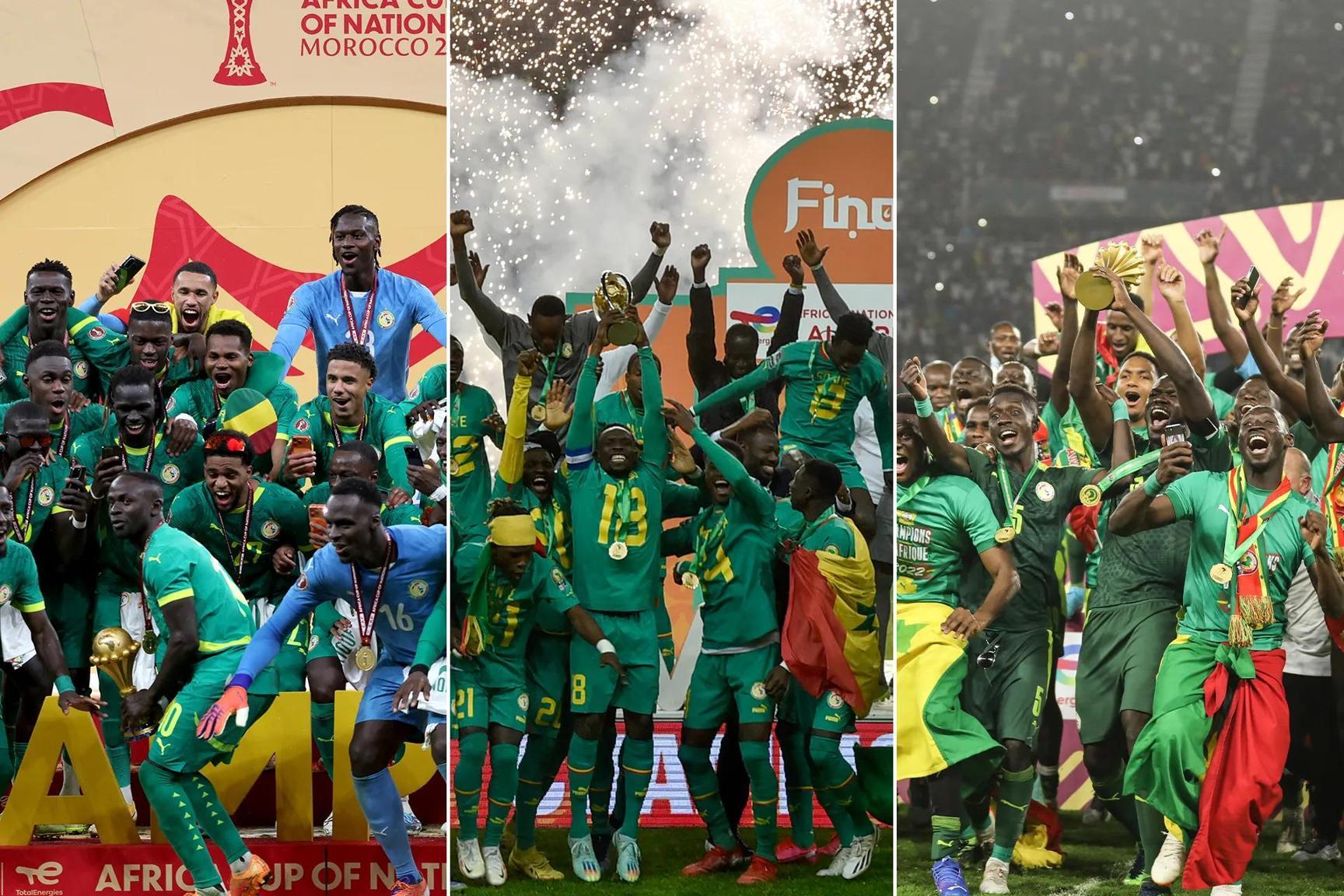
From the disappointment following the 2002 World Cup saga to dominating African championships over the last decade, Senegal has written one of the most complete stories of football transformation on the African continent. Today, it adds the title of the African Cup of Nations 2025 to its collection, following its 2021 victory, confirming that the journey is not yet over and that the chapters of success are still open.
2002: The Glory Before the Fall
On June 16, 2002, the Senegal national team entered history through the widest doors. In its first participation in the World Cup, it knocked out the defending champion France, drew with Denmark and Uruguay, and then eliminated Sweden with a golden goal from Henri Camara, reaching the quarter-finals and becoming the second African team to achieve this feat after Cameroon.
However, behind this glory, the system was fragile. Senegal had previously lost the African Cup of Nations final to Cameroon and failed to capitalize on its golden generation administratively and technically.
It settled for fourth place in the 2006 African Cup of Nations and then missed the World Cup and African Cup of Nations in 2010, marking one of the most frustrating periods in its football history.
2009: The Moment of Breakthrough and Beginning of Reconstruction
The year 2009 marked a real turning point. After dissolving the Senegalese Football Federation, Augustin Senghor was elected as the new president, leading a comprehensive restructuring process that included:
Organizing local tournaments, building a long-term strategy for all national teams, investing in grassroots training, trusting local coaches and expertise, and separating technical work from political pressures and immediate results in the background.
Private academies had begun their work years earlier, notably Génération Foot (2001) and Diambars (2003), laying the foundations for a true training revolution that would change the face of Senegalese football.
Stability: The Secret Weapon
While most African teams suffer from continuous administrative and technical changes, Senegal chose a rare path of stability. Augustin Senghor has been the president of the federation since 2009, and Aliou Cissé has been the coach of the national team.
Since 2015, local coaches have been in charge of all age categories. This stability has allowed for the construction of a team with a clear identity and a solid core of leaders like Idrissa Gueye, Sadio Mané, and Kalidou Koulibaly, with gradual renewal without shocks.
“The African Cup of Nations broke the barrier,” describes Demba Ba, referring to the victory in the African Cup of Nations 2021 (played in 2022) as a moment of mental liberation: “This cup broke the psychological barrier. Senegal knows how to win now.” After losing the 2019 final to Algeria, the team appeared more mature.
In Cameroon, they overcame all obstacles and were crowned continental champions for the first time in history at the expense of Egypt, closing the chapter of waiting that lasted half a century.
But the real surprise came later. A continental sweep: titles without exception within just 12 months, Senegal became the first African country to win all three major CAF titles:
The African Cup of Nations (senior team) in 2021 and 2025, the African Nations Championship (CHAN) in 2023, and the African Beach Soccer Cup.
Additionally, the U-20 African Cup and U-17 African Cup, a strong presence of the women’s national team, and constant qualification for World Cups in age categories.
Nine clubs out of 14 in the local league represented the national team in the CHAN, a stark indication of the depth of the base and not just a shiny peak.
Training
The true factory of titles, despite limited financial resources compared to North African countries, Senegal focused on investing in people:
Hundreds of coaches with CAF licenses (A, B, C, D). National training centers opened in 2013 and 2019, and academies are producing players for the biggest leagues. It is worth noting that Senegal is the second most represented foreign nationality in the French league after Brazil, and ahead of Argentina, despite its limited population.
The Paradox of Success
The local league remains the weakest link despite continental dominance; the Senegalese league is still semi-professional: low salaries with modest stadiums and infrastructure have accelerated the rapid migration of talents. With each title, the appetite of European and North African clubs increases, draining the local championship of its stars before they can reap the fruits.
Only academies, like Génération Foot in partnership with Metz, have managed to benefit economically from this success.
State Support
Between promises and waiting after winning the CHAN title in Algeria, President Macky Sall announced a national program to support football, granting players bonuses and land, and calling on the public and private sectors to invest in clubs.
However, the real challenge remains in transforming achievements into sustainable infrastructure: modern stadiums, regular funding, and reducing talent drain.
Senegal is no longer just a team – it is a system.
What Senegal is experiencing today is not a surge but the result of 15 years of planning and patience: a clear vision, investment in training, trust in local expertise, rare administrative stability, and a gradually entrenched culture of winning. Today, Senegal does not only compete for titles but imposes a model on the continent.
The biggest challenge remains to preserve this structure from being emptied by talent migration before it reaches its full peak.
Senegal’s football journey has been marked by significant highs and lows. The national team’s breakthrough came in 2002 when they reached the World Cup quarter-finals, defeating France. However, this success was followed by years of disappointment, including a failure to capitalize on their golden generation. In 2009, a major restructuring of the football federation initiated a new era of stability and growth, focusing on local talent development and strategic planning.