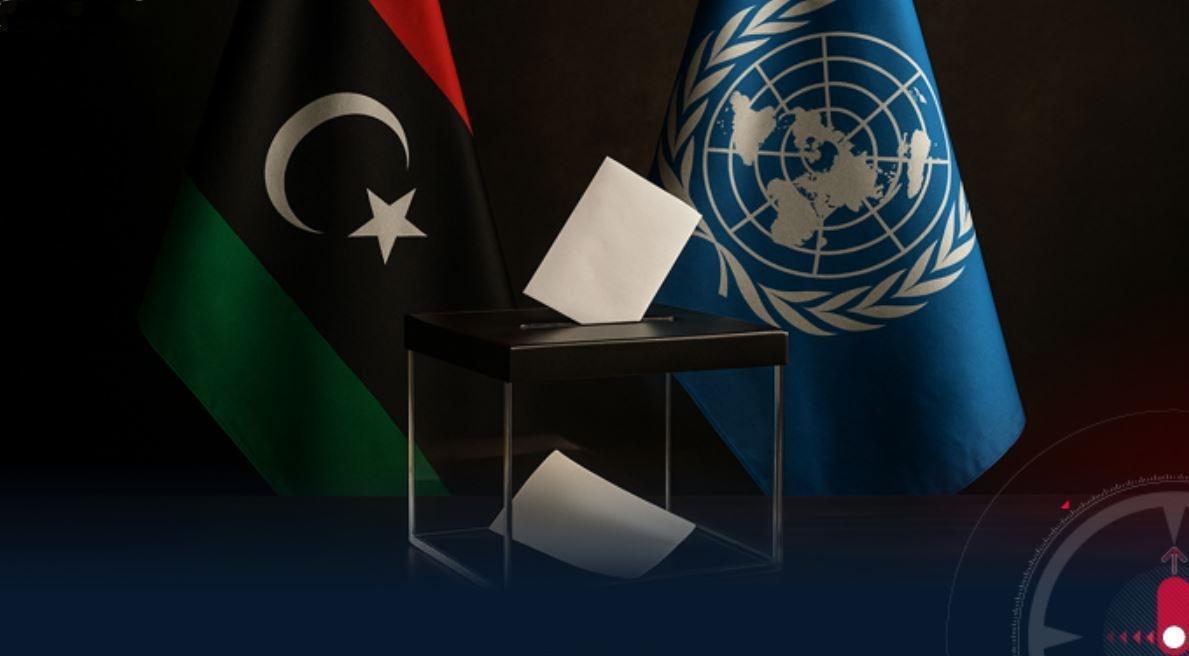
Africa-Press. An analytical report published by Middle East Monitor criticized the United Nations’ efforts to reach a political settlement to the Libyan crisis through its successive missions over a 15-year period, arguing that Libya has served since 2011 as a costly and repetitive “political testing ground.”
Rotation of Envoys and a Recurrent Deadlock
According to the report, 11 UN envoys have served in Libya since the overthrow of Muammar Gaddafi in 2011. Each envoy — the latest being Hanna Tetteh — arrives with promises of a “final roadmap” toward stability, only to end up at the same deadlock. What was designed as a bridge toward a sovereign democratic state has instead turned into the “entrenchment of a frozen state of chaos.”
External Solutions and a Sensitive Local Reality
The report argues that solutions formulated in Geneva, Skhirat, or Tunis often overlook the sensitivity of realities on the ground, resulting in a state trapped in permanent transition and a fragile balance, with rival administrations, fragmented security institutions, and foreign interests that find this status quo — described by the report as “comfortable and opportunistic” — to their advantage.
Structured Dialogue and Accusations of Deepening Fragmentation
The report notes that the structured dialogues facilitated by the UN Support Mission in Libya since late 2025 represent “the latest and most damaging experiment,” as they have, in its view, created incentives to deepen institutional fragmentation rather than promote a national vision paving the way for legislative and presidential elections. It points out that the weakness of this track lies in the fact that it produces mere “recommendations” lacking binding legal force and an executable framework.
Warning of Judicial Separation and Its Impact on Elections
The report continues by stating that a new conflict is emerging around the judiciary, with competing claims to constitutional legitimacy, threatening to turn the political stalemate into a “permanent judicial separation.” It argues that the process has failed to unify the state and has contributed to friction that pushed Libya’s House of Representatives to activate a Supreme Constitutional Court in Benghazi, thereby “entrenching judicial separation” and leaving Libya without a single agreed authority to resolve legal disputes. This, the report says, constitutes a “fatal blow” to any electoral roadmap, as the country would lack a neutral body to certify results or adjudicate constitutional challenges amid the continued absence of a constitution.
Ceasefire as the Only Achievement
The report states that the 2020 ceasefire remains “the only significant achievement” so far, but describes it as a “peace without purpose.” It argues that the international community, by institutionalizing temporary and non-binding dialogues, has created a frozen environment that incentivizes political actors to remain in a perpetual transition, where “progress” is measured by the number of meetings rather than by achieved stability.
Major Energy Deal and the Legitimacy Paradox
The report describes the recent $20 billion deal between Libya, France, and the United States as reflecting the “paradox of frozen chaos,” arguing that international powers are willing to sign long-term contracts with the government of Abdul Hamid Dbeibah despite ongoing controversy over its legal legitimacy, while attention remains focused on endless dialogue committees on governance and human rights.
Pragmatic Realism and a Dual Message to Libyan Actors
The report adds that the behavior of the international community reflects a shift away from multilateralism toward “pragmatic realism,” citing the diplomacy of Massad Boulos, senior adviser to Donald Trump on Arab and African affairs, and his recent meetings with officials from the Dbeibah government and military leaders. According to the report, this engagement sends a dual message: while the UN platform is formally dedicated to peacebuilding, the “real keys to legitimacy” lie on the ground, in weapons and revenues.
A Field of Experiments and International Errors
The report concludes that Libya has remained a “field for international experimentation and mistakes” rather than becoming a sovereign state with a unified legal framework. It argues that structured dialogue will remain “blind” and continue to produce more “frozen chaos,” despite having been ostensibly designed to dismantle it.