Africa-Press. Algeria has launched a new high-resolution Earth observation satellite, the second of its kind in less than two weeks and the sixth within Algeria’s satellite constellation that began in 2002. The move strengthens the country’s capabilities in space and satellite surveillance and contributes to enhancing and developing national capacities in both the civilian and military spheres.
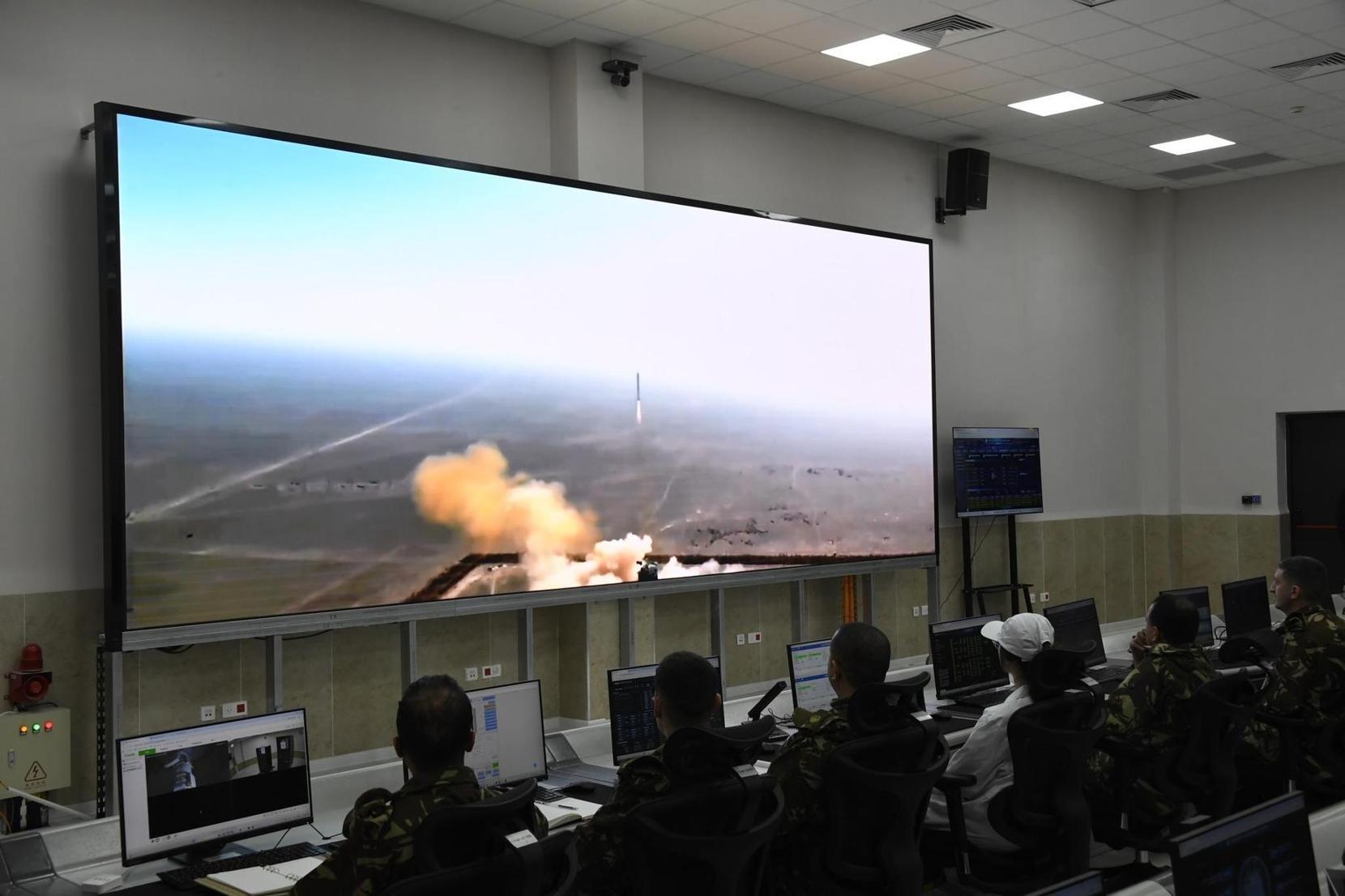
The satellite “Alsat B3” was successfully launched at dawn on Saturday from the Jiuquan Launch Center in northwestern China. In a statement, the Algerian Ministry of Defense said that the Chief of Staff of the People’s National Army, Army General Saïd Chengriha, followed the launch operation from the ground remote-sensing station near the capital, Algiers, “as part of ongoing efforts to strengthen and develop national capabilities in space surveillance and to complete the structuring of the high-resolution Earth observation system.” The ministry described the event as “a distinguished achievement and another milestone on the path toward building a new Algeria.”
According to the Xinhua News Agency, Algerian President Abdelmadjid Tebboune, during an exchange of congratulations with Chinese President Xi Jinping on the occasion of the launch of the Algerian remote-sensing satellite, said that “the successful launch constitutes another tangible achievement in aerospace cooperation between Algeria and China, and a new milestone in the development of bilateral relations, helping both sides expand the horizons of cooperation.” He added that Algeria is ready to continue deepening the comprehensive strategic partnership with China.
On the same occasion, the Chinese president stated that “the Algerian remote-sensing satellite project, which follows the launch of an Algerian communications satellite, represents a new success for China-Algeria cooperation in the aerospace field and an important manifestation of the comprehensive strategic partnership between the two countries.” He noted that Sino-Algerian relations have made significant progress in recent years, with continued strengthening of mutual political trust and fruitful practical cooperation, stressing that he “attaches great importance to developing bilateral relations and intends to work with President Tebboune to further enrich the comprehensive strategic partnership for the benefit of both countries.”
The Algerian Army Chief of Staff said that the project has received attention and follow-up from the highest authorities, praising the efforts of the Algerian Space Agency and the military personnel who contributed to its completion. He also commended Chinese support and urged Algerian staff working at the station to “make optimal use of the knowledge and expertise acquired, ensuring effective control of these satellites, not only in terms of operation and monitoring of their various subsystems, but also in continuing the development of space technology in Algeria,” according to the Ministry of Defense statement.
The launch of “Alsat B3” came less than two weeks after the successful launch of the high-resolution “Alsat A3” satellite on January 15, dedicated to monitoring in the field of geospatial intelligence and value-added geospatial information, such as maps and digital elevation models. The satellite launched today is the sixth of its kind since Algeria’s first satellite, “Alsat 1,” which was launched in November 2002 in cooperation with the British space center from a space station in Russia, in the presence of former President Abdelaziz Bouteflika, at a cost of $11 million.
In July 2010, Algeria launched the “Alsat-2A” satellite from the Satish Dhawan Space Centre in Sriharikota near Chennai, India. It featured high-resolution imaging capabilities and contributed to obtaining more detailed images that helped combat desertification, protect the environment, and detect earthquakes and major disasters, particularly following a series of natural disasters that affected several regions of Algeria, most notably the Bab El Oued floods in Algiers in November 2001 and the Boumerdès earthquake in May 2003.
This was followed by the launch of the “Alsat 2B” satellite in 2016. In December 2017, the “Alcomsat-1” satellite, dedicated to space telecommunications, was launched. It is controlled by engineers of the Algerian Space Agency from a central control room in the city of Boughezoul in Médéa Province, 160 kilometers south of Algiers, and a second room in the Bouchaoui area of the capital, for operating telecommunications systems.
Algeria is working to implement the “Algerian Space Program 2040.” In December 2018, it issued its first law regulating space activities. In August 2021, Algerian authorities relied on satellite imagery to monitor and map wildfires that affected 16 provinces, particularly in the eastern part of the country.