Abbas Mohamed Saleh, a researcher interested in political and intellectual issues
Africa-Press. Recently, international media attention has significantly focused on the issue of mercenaries in the Sudanese conflict, especially with the revelation of the central and decisive role that foreign mercenaries have begun to play in the developments of this war, which erupted in April 2023.
As the conflict escalates in its regional and international dimensions, silence regarding this international crime is no longer possible, despite the clear regional and international complicity in this regard. The matter is no longer limited to warnings about the dangers of external interventions, but has transformed into calls for accountability for the serious crimes committed by external parties that can no longer be overlooked.
The increasing media pressure and reports from international organizations led the U.S. Treasury in December 2025 to impose sanctions on a “transnational network” that includes Colombian citizens, although the sanctions targeted individuals rather than the entities employing them.
The Central Role of Mercenaries
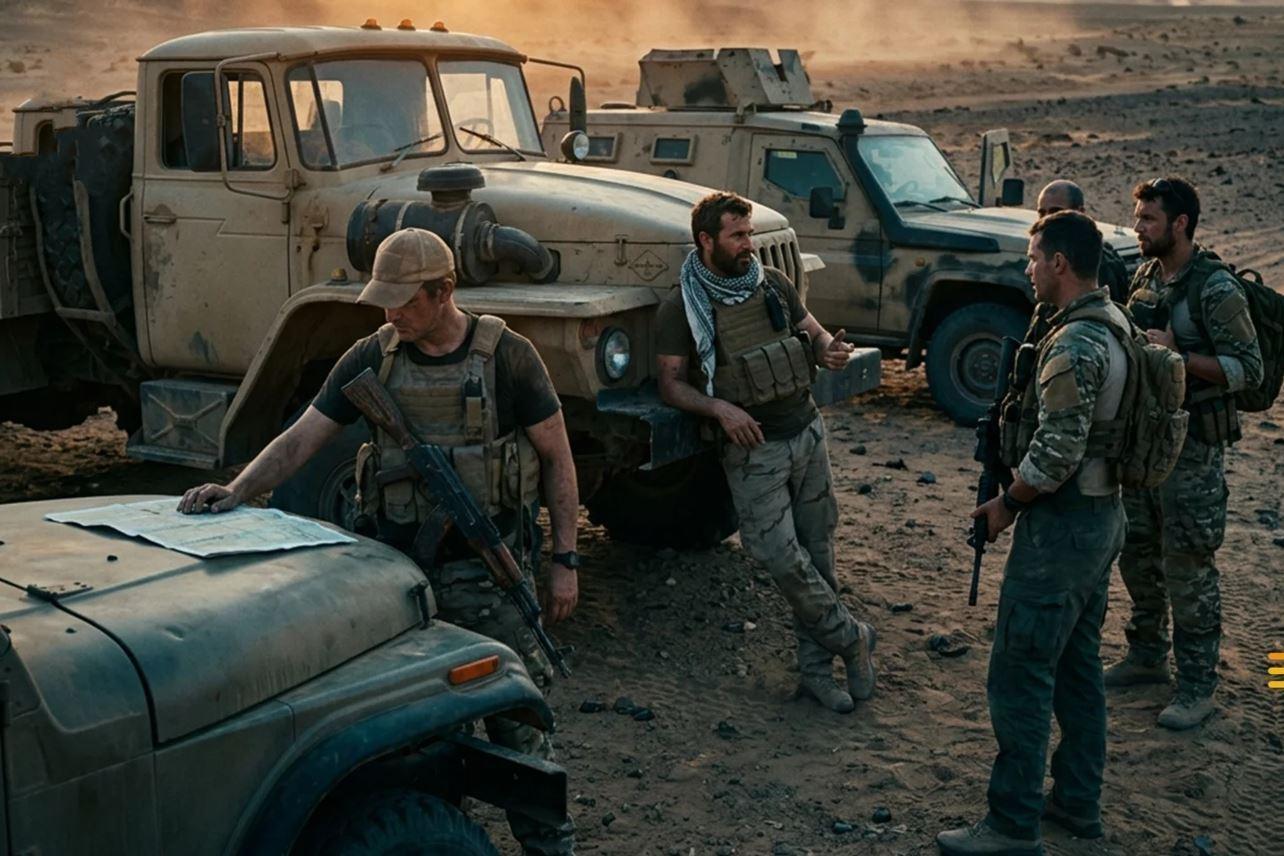
Available data indicates that the use of mercenaries in the Sudanese conflict began in the second year of the war, that is, from 2024 onwards, coinciding with the tightening control of the “Rapid Support Forces” rebels over the capital Khartoum and their expansion into central regions of the country. Following the defeats suffered by the Emirati-backed militias, which led to their retreat in central Sudan and the capital by May 2025, Abu Dhabi sought to adjust the balance of power by recruiting mercenaries using complex supply routes through Libyan areas controlled by the retired General Khalifa Haftar’s government and the Puntland region of Somalia, as well as Chad, to deliver weapons to the rebels.
More dangerously, in addition to their participation in supporting combat operations, these mercenaries have been involved in the torture and killing of civilians, especially in the Darfur region. The crimes that occurred in El Fasher (the capital of North Darfur), which was under a tight siege for more than a year and a half with the involvement of these foreign mercenaries, may amount to genocide and ethnic cleansing, according to the findings of the “Independent International Commission of Inquiry on Sudan” established by the UN Human Rights Council.
The involvement of foreign mercenaries in the conflict raises two important interconnected truths: First, the necessity of pressing Abu Dhabi to stop its support for the rebellion in Sudan and hold it accountable for its direct role in fueling the conflict despite its ongoing denial. Second, it reveals the nature of the central roles played by mercenaries, particularly Colombians, who, according to the “Financial Times” (August 15), formed “an organized force across several battalions” whose members received “specialized training in operating drones and air defense systems and radar at military facilities in the UAE before being deployed in Darfur.” The reliance on Colombians may be due to their lower cost, their availability in large numbers, their experience, or the existence of previous networks related to the UAE that facilitated their recruitment.
Regional Arc of Mercenaries
Since the early days of the rebellion, an organized regional network has emerged to manage and operate the supply lines for mercenaries, with direct and gradual involvement from Sudan’s neighboring countries, encompassing all neighboring states except Eritrea and Egypt. The “Rapid Support Forces” rebellion could not have transformed into a regionally characterized rebellion or expanded militarily within the country and moved easily across borders with neighboring countries without significant external support, particularly from the United Arab Emirates, which has bet on this rebellion to achieve its goals in Sudan.
With the spread of logistical support centers around Sudan’s neighboring countries, resorting to mercenaries to manage operational activities has become a natural matter. Thus, it can be said that the supply lines around Sudan have expanded to include several countries, forming an arc surrounding Sudan: extending from Kufra in Libya to Bosaso in Somalia. The presence of Abu Dhabi in southern Libya, where areas controlled by Khalifa Haftar are located, has been the major factor in the emergence of the mercenaries’ role, as existing lines and regional networks and infrastructure have enhanced the supply lines for the rebels.
Multiple Layers of Mercenaries
Although some international media outlets have reported figures regarding the number of mercenaries involved in fighting on behalf of Abu Dhabi alongside the “Rapid Support Forces” rebels, the ambiguous and secretive nature surrounding the transfer of mercenaries, along with the complicity of regional states and governments, has hindered the availability of accurate statistics. Nevertheless, recent media reports have revealed that “about 2,000 mercenaries from Colombia have arrived in Sudan to fight alongside the Rapid Support Forces,” and they have played “a prominent role in the operations of the Rapid Support Forces,” especially in the city of El Fasher, which fell in October 2025, where mercenaries stationed in southern Libya played a significant role in that.
In general, to fully understand the nature of the roles of foreign fighters in the Sudan war, there are two types of mercenaries in the Sudan conflict: international mercenaries, such as Colombian mercenaries, and regional mercenaries, such as members of Arab and non-Arab tribes in the Sahel and from South Sudan, alongside citizens from other countries in the region.
In addition to the primary factor represented by the pivotal role of regional powers, another phenomenon has emerged that has increased the pace of involvement of regional mercenaries from Sudan’s neighboring countries in this conflict. Some troubled neighboring countries found an opportunity in the Sudan war to rid themselves of their internal opponents by pushing them to work as mercenaries alongside the “Rapid Support Forces.” This largely explains the increase in the numbers of this specific group among the rebels, as the war has turned into a tool for eliminating political opponents under the guise of fighting in an external arena.
Motivations for Using Mercenaries
A report from the working group on the issue of using mercenaries as a means to violate human rights and hinder the exercise of people’s right to self-determination (October 2023) indicates that some countries have begun granting citizenship to mercenaries, making them citizens who fight for their benefit in other countries.
The fighting method employed by the “Rapid Support Forces” militia, which relies on “human waves” due to its military setbacks, especially after its defeats in Khartoum and Al-Jazeera, has led Abu Dhabi to resort to foreign mercenaries for several reasons: First, prolonging the fighting to exhaust the armed forces and pressure its leadership. Second, preventing the collapse of the “Rapid Support Forces” militia, as mercenaries help fill combat capabilities until it can rebuild its forces. Third, introducing qualitative capabilities in combat, such as using drones and communication systems and managing logistical support lines, which benefits the rebellion.
Moreover, there is also a very important factor in explaining Abu Dhabi’s early reliance on foreign mercenaries in the conflict, which is keeping the management and operation of some advanced weapons in the hands of experts who can be easily withdrawn, instead of relying on the less efficient and effective “Rapid Support Forces” elements, despite their extensive spread that has led to the fall of vast areas into their hands.
Weak Response from the African Union
Despite discussions within the organization in recent years, the African Union’s stance on the conflict in Sudan has, as usual, been characterized by weakness and hesitation. The shortcoming has not only been limited to the inability and dependence on external parties, but the response to the phenomenon of mercenaries in the Sudanese conflict has been one of the most apparent aspects of failure.
Despite the existence of a suitable legal framework, represented in the African Union’s treaty concerning the elimination of mercenaries in Africa (July 1977), which is being worked on for reactivation, the leadership of the organization has chosen silence to avoid losing “partners,” rather than adhering to principles and values. In this regard, the most dangerous aspect of the African Union’s silence is what the reliance on foreign mercenaries reveals about the serious repercussions on security and stability, and the spread of weapons and organized crime across borders in the continent.
The increase in mercenaries in the Sudanese conflict indicates a decline and erosion of the concept of sovereignty in African states, as many countries have become susceptible to the temptations of regional or international powers to compromise their sovereignty by allowing the exploitation of their lands and airspace.
This has led to the entrenchment of “fragmented sovereignty” or “disaggregated sovereignty,” where parts of these countries are under the control of regional parties and states that exploit them to serve malicious agendas, rather than the central state and internationally recognized governments, as observed in the case of areas controlled by Haftar’s government in Libya and Puntland in Somalia and their central role in the current conflict in Sudan.
The situation of the conflict in Sudan reveals that the phenomenon of mercenaries needs to be redefined, with the renewed involvement of mercenaries in some countries on the continent significantly, and the emergence of roles for private security companies, in addition to some regional powers seeking to expand the use of foreign mercenaries to achieve their geopolitical interests and objectives.
Therefore, the traditional definition of mercenaries as merely “a group of foreign fighters crossing borders to operate within countries for the benefit of one of the warring parties according to a financial agreement” is no longer sufficient; rather, mercenary networks have become a more complex phenomenon, especially with their integration into the policies of countries like the UAE, which has indeed become “a center for mercenary activities” in the world, according to Andreas Krieg, an expert in Emirati political affairs.