
Thabet Al-Amour, researcher in political science and international relations
Africa-Press. The Tunisian opposition, in all its forms, has failed to formulate a unified political stance to escape the current crisis and confront the economic decline and political stagnation. Similarly, the Tunisian presidency has not provided a model for good governance or uplifted the republic. Tunisia witnessed a wave of social unrest in late July, with citizens taking to the streets.
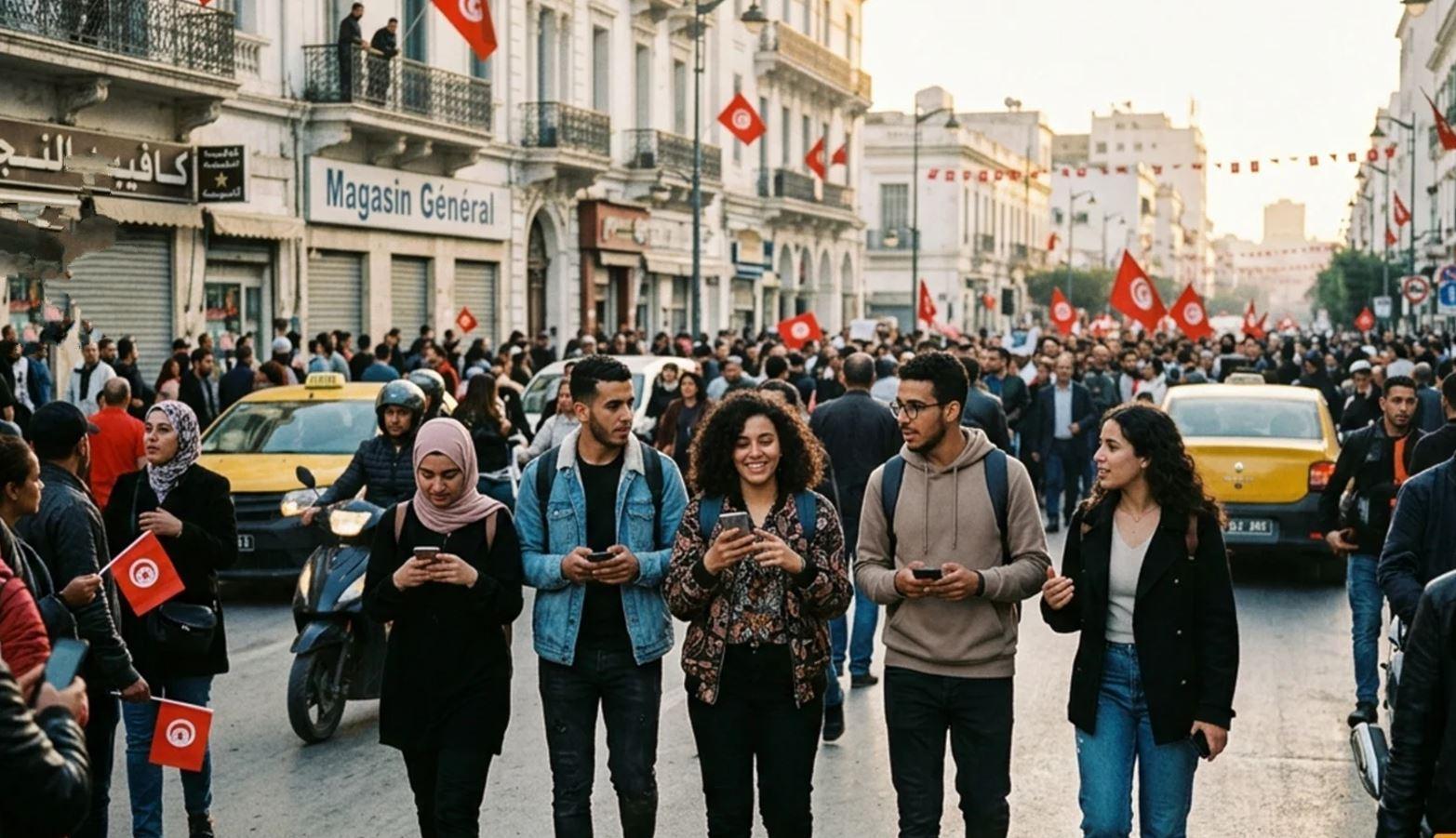
Throughout this period of back-and-forth between the regime and the opposition, there has been an unconventional social actor observing the scene and waiting for its outcomes. When the gathering dispersed to a significant nothingness, this actor decided to delve deeper into the situation. This actor is Generation Z, which has entered the scene in Tunisia to save the republic. Will they succeed in this endeavor?
Generation Z in Tunisia has captured the outcomes of the recent popular movement that ended in futility. They have thrown their weight behind the cause and started from where the movement left off; they launched a national petition titled “Saving the Republic,” demanding the withdrawal of confidence from President Kais Saied, his resignation, a return to the ballot boxes, and early presidential and legislative elections.
Generation Z’s emergence in the streets at this time does not seem to be a spontaneous reaction to the current state of Tunisia, but rather an organized action that has diagnosed the scene and understood its requirements. They began with the highest possible demand: the dismissal of the president and early elections. While the Tunisian opposition appeared fragmented, maneuvering without a clear roadmap, Generation Z’s demands, discourse, and positions seemed closer to the street and more expressive of it. Importantly, this generation transcends the opposition and does not accept its guardianship; it cannot be tamed by the regime.
In the language of the petition launched by Generation Z, there is an objective description of the scene in Tunisia and an analysis of the causes of the crisis, namely the absolute individual rule “Saied’s monopoly on power” and the absence of a clear developmental vision. The president squandered a historic opportunity for reforms and dismantling the corruption system, managing the state by relying on conspiracy theories instead of addressing problems and crises, restricting civil society and labor activism, and turning the judiciary into a tool for eliminating political opponents and pursuing dissenters.
The petition describes that Tunisians “have gained nothing from Saied’s rule except the dismantling of state institutions and the decay of its facilities. Instead of adopting genuine rescue policies and confronting reality, the authority chose to escape forward, without offering any consolation or respect for the suffering of the great Tunisian people amid the disasters and crises they have faced in recent months.”
Months before launching the petition, Generation Z had hinted at taking to the streets and reminded Tunisians of their presence. However, as is the case with all Arab political systems, President Kais Saied did not pick up on the signals, and it seems he was also late in understanding the causes, motivations, and outcomes. On January 18, 2026, a group from Generation Z marched, raising slogans rejecting the current reality and demanding an end to marginalization and exclusion, coinciding with the anniversary of the fall of Ben Ali’s regime. They raised the slogan “The game is over,” declaring their ability to mobilize and dominate the streets. However, these signals went unnoticed, and today Generation Z returns, raising the banner of “Saving the Republic.”
President Kais Saied succeeded in nationalizing state institutions and issues, taming and dismantling the opposition, and arresting anyone who disagrees with him. However, these tools and measures do not work with Generation Z, which is difficult to tame, dismantle, or arrest because its components are not easily encapsulated, its algorithms are open to the world, and its understanding of reality and its requirements is advanced compared to the regime.
Moreover, this generation knows its superior capabilities compared to those of the regime and its tools. This generation is the pulse of the revolution, its voice, its guardian, and its protector. Its goal is liberation, and its capital is the people and the street. Its determinants and calculations are entirely different from those of the opposition parties and political forces. Therefore, its chances for change are significant, real, and serious, and this generation will not stop until it achieves its goals and brings about change.
Generation Z’s ability in Tunisia to effect change and raise the banner of saving the republic is not a matter of testing or experimentation or a gamble between two opportunities; rather, it is a clear equation with direction and results. This generation will do what it wants and will not stop without bringing about change, and the support and motivation for that are available. All the reasons, factors, indicators, circumstances, and failures in the Tunisian scene confirm this.
The fuel for change that drives Generation Z is found in economic deterioration, rising unemployment, inflation, poverty, electricity outages, shortages of medicine and drinking water, and scarcity of bread, along with arrests, exclusion, marginalization, political stagnation, conspiracy theories, and a decline in freedoms. Thus, all the reasons for an explosion are present.
Generation Z will undertake two actions: first, adopting the concerns of the people that the regime and the opposition have ignored, and second, taking to the streets. This is sufficient to activate the explosive trigger and change the existing reality.
Unlike the regime and the opposition, Generation Z excels in understanding, describing, and diagnosing the scene, or in using unconventional means of expression and adopting non-ambiguous demands. However, it stands out in its understanding and utilization of technological advancements, digital tools, network organization, and leveraging social media platforms and digital mobilization capable of surpassing security pursuits. In addition, its social capital as an actor is increasing in strength, effectiveness, and ability to translate its demands through its adoption of soft power, in contrast to the regime’s reliance on hard power and confrontation.
Generation Z’s presence in the Tunisian scene is not a product of the moment when crises erupted and the opposition and authority failed to revive the country. This generation is the guardian of society and a refuge for the marginalized and disillusioned in a state that cares little for humanity. The strength of this generation lies in its motives and driving forces. It is a generation that rebels against the status quo, unlike previous generations that tend to accept reality as it is. Therefore, its emergence and movement will not cease without change, unlike traditional protests led by the opposition.
Generation Z understands the reprehensible competition between the regime and the opposition over power-sharing and its spoils. Therefore, it begins with clear demands that do not allow for interpretation or concession, starting with grassroots youth initiatives and then launching national petitions demanding an end to the monopoly on power, a retreat from political repression, a return to the democratic path, and early elections. It adopts living issues and improving services; above all, it does not seek to attain power.
Generation Z has presented its petition and revealed its demands, making it clear that it is the refuge of the street and its choice. However, the question remains: will Generation Z be able to save the republic and achieve radical change on its own? And is the dismissal of President Kais Saied the variable that, if it occurs, will resolve all the problems of the Tunisian republic?
The answer depends on the outcomes of the scene in Tunisia in the coming days. However, until that happens, we are faced with the implications brought about by Generation Z’s petition and its demands, including that betting on resolving the crisis through traditional means and dialogue between the regime and the opposition is no longer possible or effective, and that the people in Tunisia have surpassed that and no longer rely on it. Generation Z’s petition has broken the official narrative, and the youth’s demand for the president’s dismissal indicates that Kais Saied lost popular consensus from the very first minute, and that popular rejection is genuine and not merely a tool for the opposition, which has been surpassed by Generation Z.
Saving the republic and changing the regime in Tunisia will not happen merely because Generation Z has presented a petition demanding President Kais Saied’s resignation. However, the expansion of protests without the opposition jumping on board, and the participation of various groups, including doctors, journalists, and elites in the streets, will create a pressure situation and remind the authority of the cost of neglect, bringing the scene back to previous scenarios that Tunisia has experienced.
In conclusion, the cost of political neglect, denial of economic reality, and the retreat of the opposition are all reasons that have led to the inevitability of Generation Z taking to the streets. They may not succeed in saving the republic, especially if saving it is reduced to the president’s departure, but they have achieved two results: first, that there is an active and influential actor in the Tunisian scene that cannot be nationalized or tamed, and second, that the president and the opposition have no choice but to seek a solution and save what can be saved. Their failure means that they have no option but to respond to the demands of Generation Z’s petition.